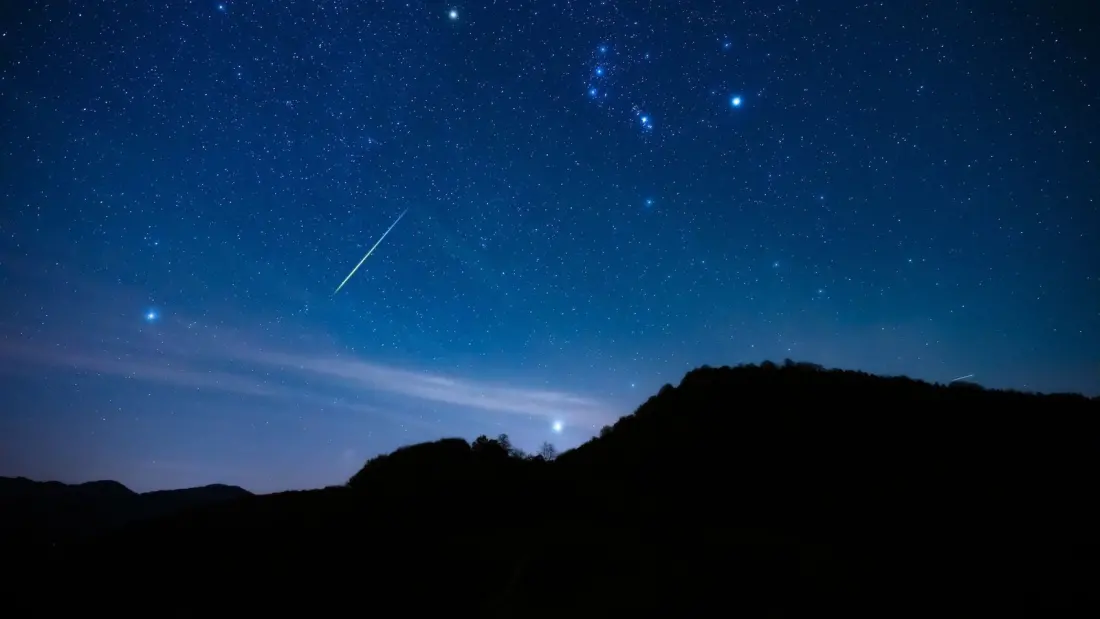
Every October, Earth drifts through the dust trail of Halley's Comet, and the result is one of the year's best meteor displays. The Orionids are active from early October to early November, but the peak comes on the night of October 21 into October 22 — and in Ontario, dark-sky parks are the places to be for it.
NASA rates the Orionids among the most beautiful showers of the year. The meteors slam into the atmosphere at roughly 66 kilometres per second, fast enough to leave glowing trails that linger for seconds or even minutes. Some flare into fireballs — prolonged bursts of light — and under properly dark skies you can expect to spot around 10 to 20 meteors an hour, framed by some of the brightest stars in the sky.
For the best view, get out of the city. Point Pelee National Park in southwestern Ontario has been a designated Dark-Sky site with the Royal Astronomical Society of Canada since 2006, and other top options include Torrance Barrens Conservation Reserve, Manitoulin Eco Park and Killarney Provincial Park. If you're stuck in Toronto, some of the larger city parks might still offer a glimpse — but light pollution is the enemy here.
Timing and technique matter. The show runs from after midnight until dawn. NASA's advice: bring a blanket, sleeping bag or lawn chair, lie flat on your back, and face southeast from the Northern Hemisphere. Give your eyes about half an hour to adjust to the dark, then just take in as much sky as possible.
One counterintuitive tip: don't stare at Orion itself. The meteors appear to radiate from that constellation (hence the name), but looking 45 to 90 degrees away from the radiant gives you longer, more dramatic streaks. Looking straight at the radiant only produces short, foreshortened flashes.
If clouds ruin the night, there's a consolation: the Orionids come from the same comet that gives us the Eta Aquarids in May, and Canada has more meteor showers on the calendar before the year ends.