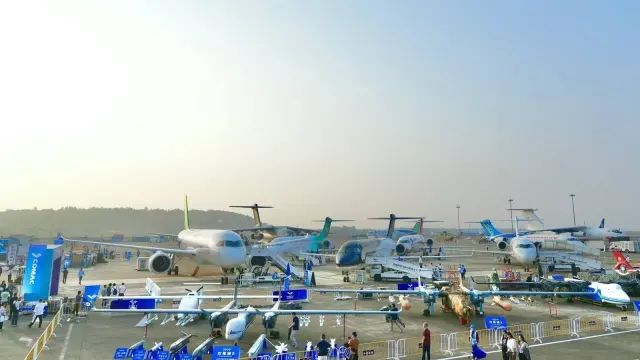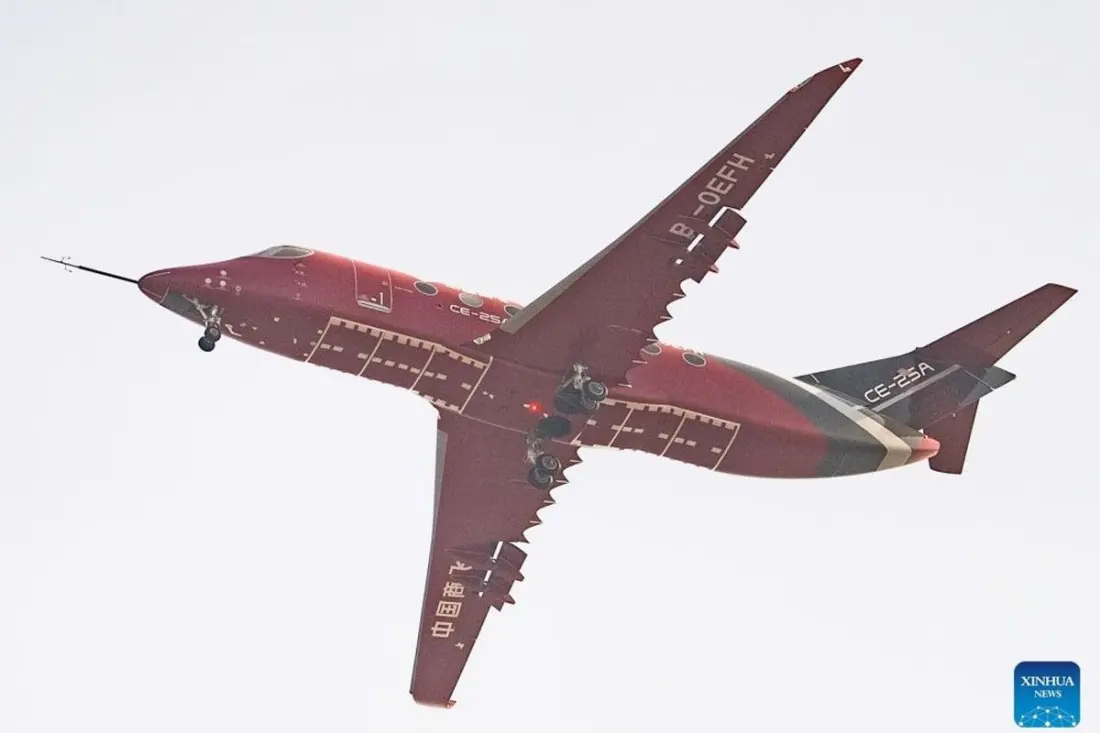
A 10-tonne electric commercial aircraft has completed its first crewed test flight in China, a milestone for battery-powered aviation. The CE-25A, built by the Commercial Aircraft Corporation of China (COMAC), flew for 17 minutes over Binzhou in Shandong Province, carrying two pilots and a flight-test engineer. COMAC reported that the aircraft behaved normally and hit all its performance targets.
The specs make it clear this is no scaled-up drone experiment. The CE-25A is designed to carry 19 passengers on intercity routes, with a cruising speed of 300 km/h, a cruising altitude of 2,400 metres and a range of 400 km. Backed by COMAC, battery giant CATL and Shanghai Jiao Tong University, the plane already flew autonomously without a crew back in February, so this crewed flight is the next step toward certifying it for paying passengers.
If 400 km sounds limiting, that's the current reality of battery-electric aviation — think short regional hops rather than long-haul flying. But it's exactly the market where electric planes could change things first: feeder routes between smaller cities, currently served by noisy, expensive turboprops.
China isn't the only player. Scotland's Loganair has committed to operating at least five Beta Alia CX300 all-electric aircraft from 2029, with options for five more, after agreeing the deal on day one of the Farnborough Airshow in July. That would make it the first European commercial airline to run an electric fleet, following a successful trial earlier in 2026. The airline says the planes can use existing runways and recharge in 20 to 40 minutes — and chief executive Luke Farajallah claims operating costs could drop by as much as 80 per cent while keeping regional routes alive.
For travellers, the practical upshot is that short-haul regional flying is on the brink of a shake-up. Quieter cabins, no fuel surcharges and cheaper fares on thin routes are plausible outcomes if these aircraft deliver on their economics. The CE-25A is still in testing, and a fleet of 19-seaters between Chinese cities is realistically a few years away. Loganair's 2029 target is firmer, meaning Scottish island-hoppers and Highland flyers could be among the first passengers anywhere to board an electric scheduled flight. Anyone with a regional trip in the second half of the decade has reason to watch this space.