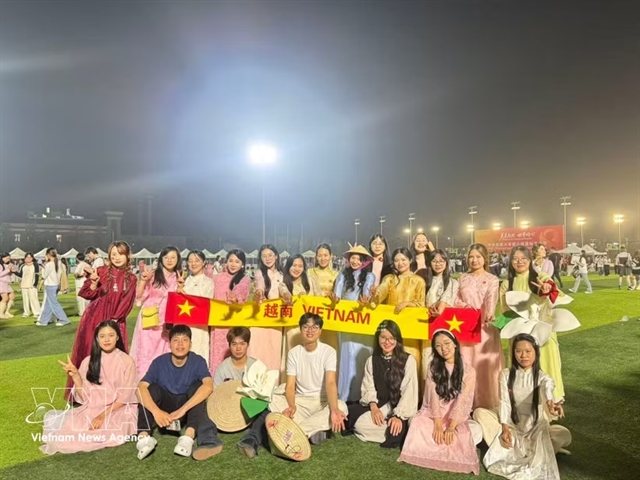
There's a slice of Hà Nội alive in Beijing. Ahead of Great National Unity Day (November 18) and Việt Nam Culture Day (November 24), Vietnamese expats living across China described how they keep the language, food and festivals of home going — and how that effort quietly doubles as cultural diplomacy with their Chinese neighbours.
Tô Trương Thị Hồng Hoài, who has spent nearly three decades in the Chinese capital, says the community's real strength is its networks. Newcomers get practical advice on study, work and daily life from those who arrived earlier; when a family hits hard times, visits and encouragement from fellow Vietnamese matter as much as any formal support. And when storms or floods strike Việt Nam, the diaspora follows the news, shares information and channels donations through recognised fundraising routes.
The calendar does a lot of the heavy lifting. Every Lunar New Year, the community wraps bánh chưng — the square sticky-rice cake that defines a Vietnamese Tết — cooks traditional dishes and sets up ancestral altars together. Mid-Autumn Festival and the Hùng Kings' Commemoration get their own gatherings, often organised by students, with cultural exchanges folded in so younger generations raised abroad still absorb the history behind the festivities.
Phạm Thị Hậu, more than a decade into life in China, treats the language itself as the project. She speaks Vietnamese with friends, reads Vietnamese papers, watches films and writes her diary in her mother tongue — and volunteers teaching Vietnamese to Chinese friends who want to learn. On campus she runs food stalls and photo exhibitions of Vietnamese scenery, and on social media she posts áo dài, tropical fruit and phở. When international friends sum up the country through a bowl of noodles or a conical hat dance, she counts it as a win.
Why should a traveller care? Because these are the people who make cultural exchange real on the ground, and their events are occasionally open to curious outsiders — a student Tết gathering or a campus food fair in Beijing can be a warmer introduction to Vietnamese culture than any restaurant. It's also a reminder of how much of a country travels with its people: the dishes, the holidays and the language survive borders when someone bothers to keep them going.
The expats' message to families abroad is simple and practical: speak the mother tongue at home, wrap bánh chưng with the kids, cook the Tết meal together and tell stories about grandparents and the old neighbourhood. Heritage, in their view, isn't maintained by grand gestures but by repetition — an annual rice cake, a shared language, a festival marked even when no one around you celebrates it. For anyone who has ever spent a big holiday far from home, that logic will feel familiar.