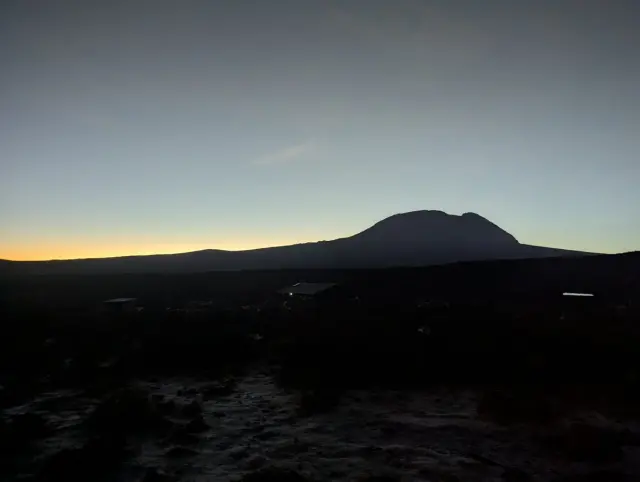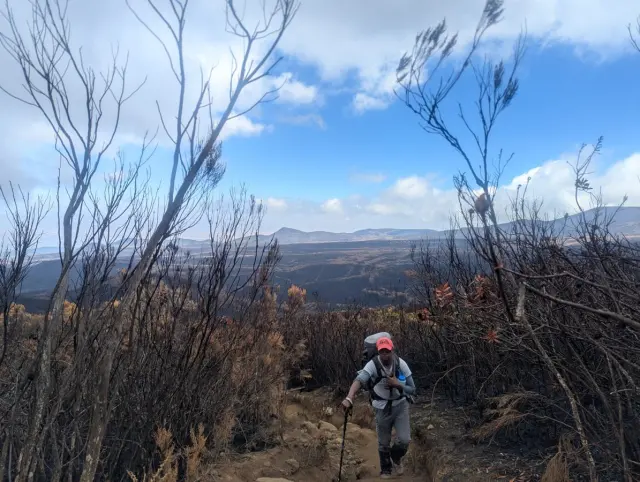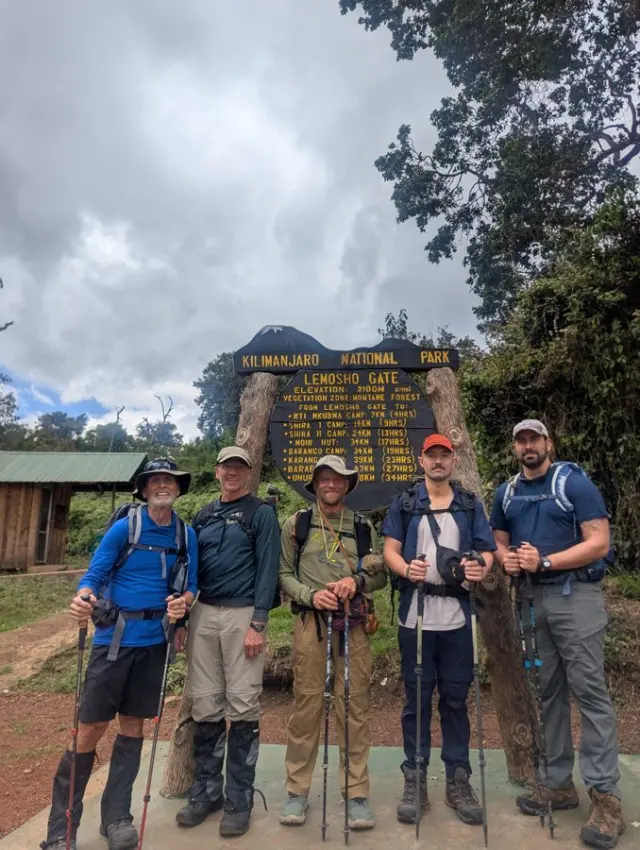
Frost on the tent at 13,650 feet, a snow-dusted volcano on the horizon, and lunch at a 150-foot rock tower — that's a typical day in the middle of a Kilimanjaro trek. A first-hand account from a hiker on the mountain's Lemosho route offers a useful window into what the acclimatisation days actually feel like, well before anyone talks about the summit push.
Day four runs from Moir Camp (4,155m) up to Lava Tower (4,630m) for lunch, then back down to Barranco Camp at roughly 3,950m. It's only about 10km of walking, and you end the day lower than you started. That's deliberate: the climb-high, sleep-low pattern is how your body adjusts to altitude without being hammered by it. Lava Tower itself is a hardened lava vent left standing after the softer rock around it eroded away — a striking lunch spot, though clouds can swallow it by midday.
The details in the account are the practical kind that matter if you're considering the trek. Nights are cold enough for frost inside camp, afternoon rain and thunder are routine, and keeping clothes off the tent floor is a real tactic rather than fussiness. Guides run a nightly health check after dinner — asking about headaches, nausea, appetite and breathlessness, plus a pulse oximeter reading — to catch acute mountain sickness early. Blood oxygen numbers alone don't decide anything; it's the trend combined with how you actually feel.
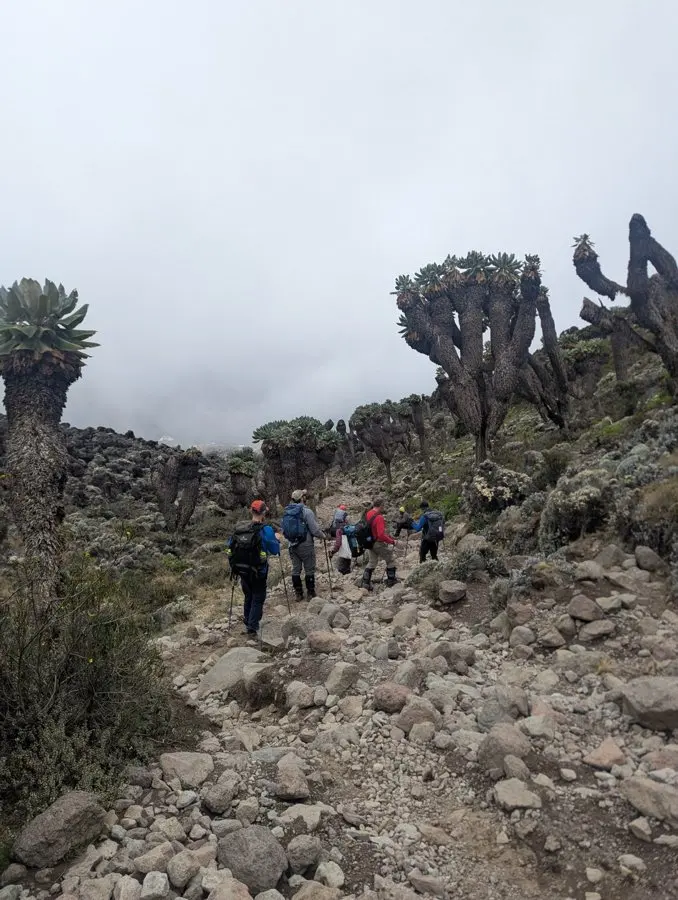
Barranco Camp is shared by both the Machame and Lemosho routes, so expect crowds and noise. Oddly, there's wi-fi — cables have literally been run up the mountain, with antennas scattered around camp. The downslope from Lava Tower is rocky and slower than you'd expect, which is where trekking poles and practice on rough terrain pay off. And the motto of the whole trip is Swahili: pole pole — slowly, slowly. Short mileage days are the norm, because altitude, not distance, is the enemy.
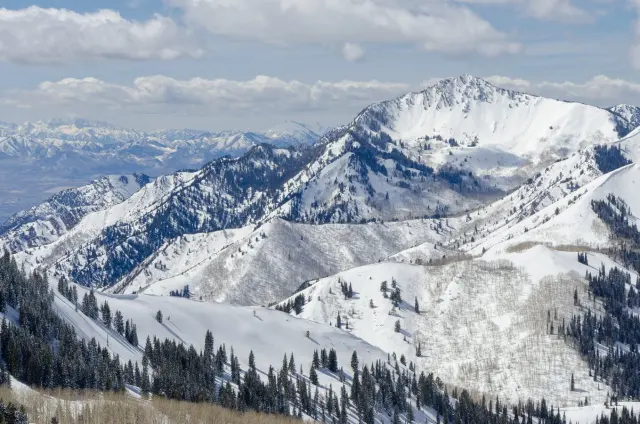
There are small rewards along the way. Giant senecio trees that resemble Joshua trees, and lobelias whose leaves close at night, trapping warmth for insects that birds then feast on at dawn. Snow on Kibo — Kilimanjaro's tallest and youngest volcano — after overnight flurries. City lights from Moshi twinkling down the valley at dusk, and the hunt for the Magellanic Clouds in the southern sky.
For anyone weighing up Kilimanjaro, the takeaway is that the trek isn't a physical epic in terms of daily effort — it's a week-long exercise in patience, hydration and letting your body adapt. If you can hike 10km on rocky ground and sleep cold, you've got the right skill set.