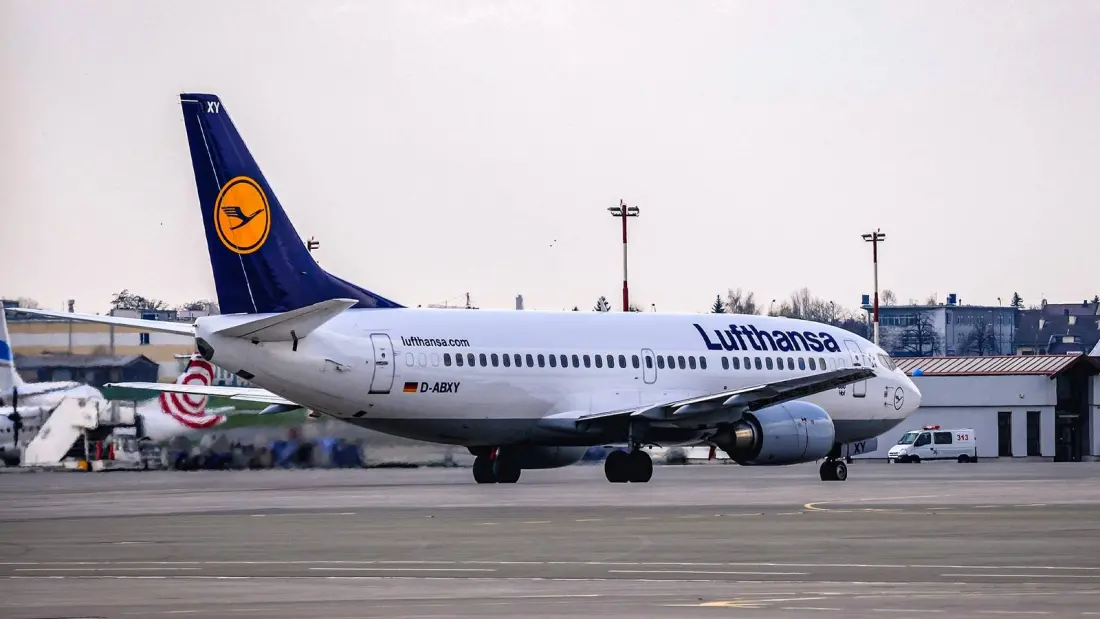
Back in the late 1970s, Boeing's narrowbody star wasn't the 737 at all — it was the three-engined 727, which ruled medium-haul routes while the 737 played second fiddle on regional flying. All of that changed with one aircraft: the 737-300, launched in 1984 and arguably the plane that set the 737 on the path to becoming the second-best-selling jetliner in history.
Boeing began studying the new variant in 1979 as the thirsty 727 aged and airlines asked for a better follow-up to the popular 737-200. The 737-300 delivered on both fronts. Its fuselage was stretched by roughly three seat rows, the wing got aerodynamic tweaks, and Boeing swapped the old Pratt & Whitney JT8Ds for modern CFM56-3 high-bypass turbofans. A new vertical stabilizer, refreshed cabin and updated flight deck rounded out the package. Airlines loved it — it burned less fuel than an MD-80 and became the go-to replacement for ageing 727s.
The 737-300's real legacy was turning the 737 into a family. Its success pushed Boeing to stretch the design again into the 737-400 (debuting with Piedmont in 1988) for airlines wanting more seats at barely higher fuel burn, and to shrink it into the long-legged 737-500 in 1990 as a direct successor to the 737-200. Together the Classic generation racked up 1,988 sales — 1,113 for the -300, 486 for the -400 and 389 for the -500 — beating both the 757 (1,049) and the MD-80 (1,191).
The 757 context matters here. Boeing's other new narrowbody of the era was a capable aircraft, but it launched in 1983 into a market shifting towards smaller planes, just as fuel prices fell. Many carriers kept flying depreciated 727s or bought the cheaper MD-80 instead. The 737-300, cheaper and smaller than the 757 yet far more efficient than what it replaced, filled that gap perfectly and quietly became the core of Boeing's single-aisle lineup.
There was a European twist. Airbus launched the fly-by-wire A320 in 1984 and put it into service in 1988 — bigger, faster and longer-ranging than anything in the Classic family. When United Airlines, widely expected to order 737-400s, chose the A320 instead, Boeing was forced to respond with the far more thorough 737NG overhaul in 1997. The redesigned wing, new CFM56-7 engines and modernized cockpit produced the 737-700 and, crucially, the 737-800, which slightly outsold the A320-200 despite arriving a decade later.
Why does this matter to a traveller? Nearly every short-haul flight you take today on a Boeing narrowbody traces its lineage to the 737-300's gamble in 1984, and the Airbus-Boeing rivalry it ignited is the reason we now have cheap, efficient single-aisle service on virtually every regional route in the world. Aviation nerds can still spot the odd Classic — distinguished by its squat engines and flat-bottomed nacelles — on charter and cargo flights, a living relic of the aircraft that saved the line.