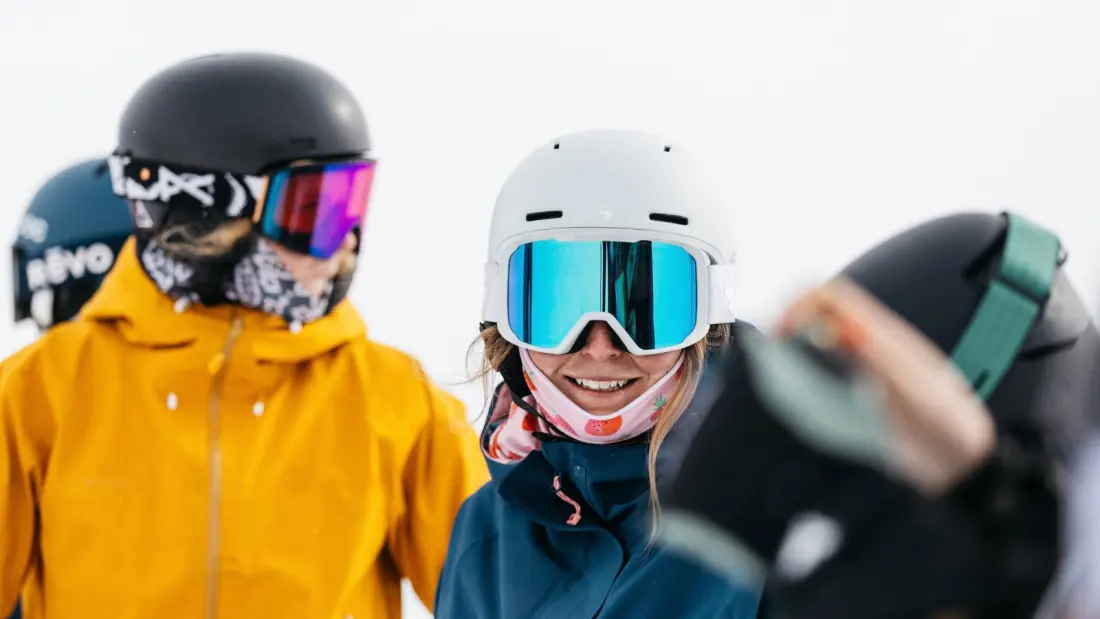
Ski Magazine's testers put 29 new goggles through a full season of real-world skiing — storm days at Jackson Hole, backcountry laps on Teton Pass, spring corn in the Swiss Alps, deep days in the Cascades — and their 2027 gear guide is now out. The takeaway for anyone planning a ski trip: the right goggle matters more than you think, and the best model depends heavily on your face shape, helmet and the conditions you actually ski.
Top of the list is the Salomon Skarn Prime at $295. Its 3D Sigma toric lens delivered the best optical clarity in the whole test, with a field of view one tester described as so wide it felt like seeing behind your own head. Triple-layer foam, a magnetic lens swap and a silicone strap that worked with non-Salomon helmets sealed the deal — the only gripes being the price and a fit that swamps smaller faces.
The budget star is the $100 Goodr Peak G. Testers rated it blind and were genuinely surprised by the lens quality once the price was revealed. You get two lenses including a low-light option, magnetic quick-swap and candy-coloured names like Vintage Snow Suit Ambitions. The trade-off: lenses can pop off if you tug them the wrong way. For about a third of the cost of the premium picks, it's a smart pick for anyone who loses or scratches goggles regularly.
Comfort honours went to the Giro Revolt Pro ($270), developed with freeride and park athletes like Maggie Voisin and Marcus Caston. Plush fleece-backed foam and strong venting meant testers forgot they were wearing them. The Adidas SP0120 ($271) won on peripheral vision; the Anon M5S ($300) has the most secure magnetic lens system in the test plus an optional magnet-attached face mask for $32 extra.
Fit gets its own awards: the ROKA Niseko ($295) is the pick for wider faces and works over glasses, while the Glade Adapt 2S ($149) suits smaller faces. Style points went to the Vallon Crossroads ($249) with its clean toric lens, and the Bollé Cerro ($110) is the low-light specialist. Topping the clarity chart was the Revo Solstice No. 9 ($299).
Why does this matter before your next ski holiday? Fogging, poor peripheral vision and a bad fit with your helmet are the things that ruin a powder day, and this guide covers all three across every budget from $100 to $300. The main pattern: magnetic lens-swap systems are now standard even at entry level, and toric lens shapes — which blend the wide view of cylindrical lenses with the clarity of spherical ones — are dominating the premium tier.