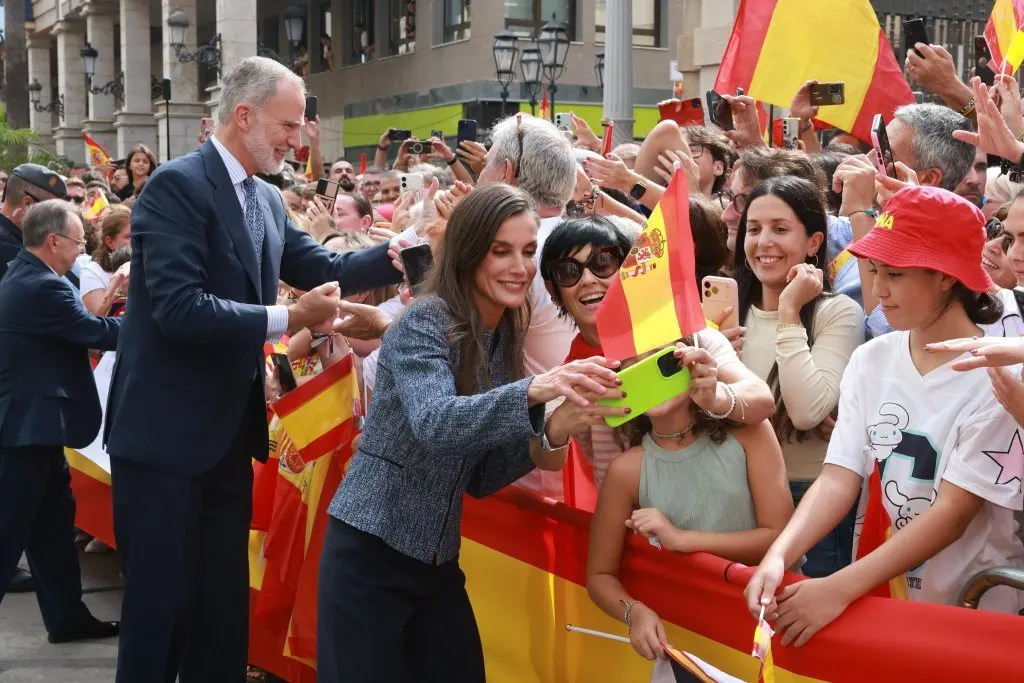
King Felipe VI and Queen Letizia have arrived in Ceuta, the Spanish enclave on the North African coast, on a visit heavy with symbolism. It is the couple's first trip to the city since Felipe became king, and the first by a Spanish head of state since 2007. They will also become the first monarchs to stay overnight in either of Spain's two autonomous cities during the democratic era, before travelling on to Melilla on Wednesday.
The timing matters. Ceuta is still recovering from an extraordinary two days in late July, when more than 70,000 migrants crossed into the city from Morocco — a huge number for a place with roughly 80,000 residents. Most returned to Morocco quickly, but thousands stayed, many sleeping on beaches or in the streets for weeks. Around 140 people died attempting the crossing, largely by swimming around the border fence.
The royal couple received a warm reception. After landing at the heliport just after midday, they walked from Plaza de la Constitución to city hall, a stretch of barely 200 metres that took nearly half an hour as they stopped to greet hundreds of flag-waving residents. They met local and national officials, received the keys to the city, and wrote in the Book of Honour that the visit settled a 'debt'.
The programme also had a sombre side: a visit to the Sidi Embarek Muslim cemetery, where many of those who died in July are buried — some still unidentified — alongside a stop at a local school that reflects the city's mix, with roughly 70% Muslim and 27% Catholic pupils.
Politics shadows the whole trip. Morocco claims sovereignty over Ceuta and Melilla, and the 2007 royal visit sparked a diplomatic crisis. This time Rabat has stayed quiet, though tensions simmer: Madrid's right accuses Morocco of orchestrating the July crossings, an allegation Rabat and Prime Minister Pedro Sánchez deny, and El País has reported that Moroccan warships repeatedly entered Spanish waters near the city. Ceuta's president, Juan Jesús Vivas, used the occasion to demand the return of those who arrived illegally and an end to the city's dependence on 'a third party', describing daily life as fundamentally changed.
For travellers, the takeaway is simple: Ceuta — a genuinely fascinating corner of Europe in Africa — remains open but tense, with border crossings to Morocco subject to disruption and the migration situation still being managed. Anyone combining a Ceuta visit with a Moroccan trip should check border status before travelling and allow extra time for crossings.