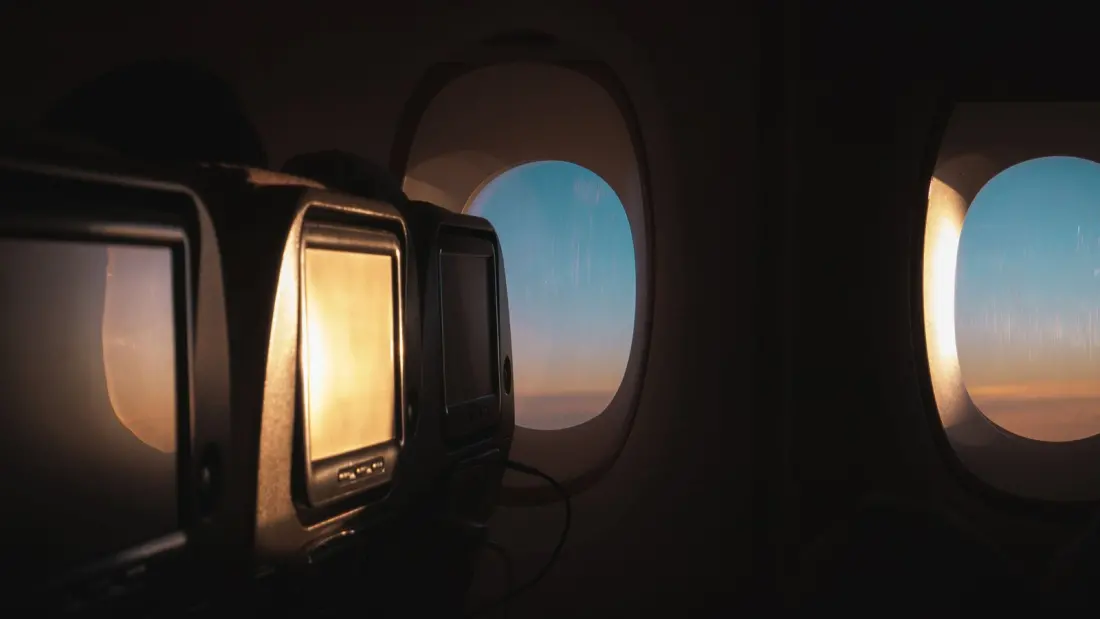
Airplanes are rarely the right temperature. Boarding is stuffy because the cooling system only kicks in once the engines are running, then things swing the other way: at cruising altitude the cabin can stay chilly for hours, especially on long-haul routes. That's awkward enough with a sweater packed — worse when you're flying to a hot destination and deliberately left the layers at home. Here's what actually works.
Start with your extremities. Hands, feet and your head lose heat fastest, so wrap whatever you have — a blanket, a scarf, a hood — around your head and neck first, not just your feet. It's the same logic as keeping your head covered in blazing sun: a disproportionate amount of comfort comes from covering it.
Then get strategic with the cabin crew. Every long-haul seat usually comes with a pillow and blanket, but flight attendants carry spares — and supplies run out. If the temperature starts dropping, ask for an extra blanket early rather than waiting until you're shivering. A face mask is an underrated ask too: cabin air is dry and cold enough to irritate your nose and sinuses, and covering your mouth helps you feel warmer.
If that's still not enough, try the hot water bottle trick. Crew members will sometimes fill an empty plastic bottle with the hot water used for tea and coffee — wrap it in something so you don't scald yourself, and it works as a mini-heater you can hold against your hands or feet. They're not obliged to do this, and may decline or only half-fill the bottle if supplies are tight. A polite workaround: ask for a cup of hot water instead and pour it into your own bottle, or just cradle the cup to warm your hands.
Two low-effort habits round it out. Walk the cabin regularly — it boosts circulation, warms you up and helps guard against the deep vein thrombosis risk that comes with sitting still for long stretches anyway. And if you travel with over-ear headphones, press them into service as makeshift earmuffs. They won't match real ones for warmth and aren't comfortable for hours straight, but when you're freezing in your seat, every bit counts.
Why it matters: most of us don't pack for the aircraft, we pack for the destination. Flying somewhere warm often means no jacket in your carry-on, leaving you at the mercy of the air conditioning for eight hours. These five moves cost nothing and turn a miserable cold flight into a manageable one — and none of them depend on remembering fuzzy socks.