Colombia's Caribbean coast is about to get some serious backup in the fight against plastic pollution. The Ocean Cleanup, the Dutch non-profit known for its river waste traps, has started work in Santa Marta, Cartagena and Barranquilla — making Colombia the first South American country, and the 13th worldwide, to join its operational network.
The three cities are still in the technical assessment and planning phase, but the scope is ambitious. In Santa Marta, the team is working with the local mayor's office and environment authority CORPAMAG to evaluate capture systems for the Manzanares and Gaira rivers, with input from the city's waste picker associations. Cartagena's assessment covers more than ten urban canals that drain into the Cienaga de la Virgen. Barranquilla's plan targets the lower basin of the Magdalena River and the Leon stream, protecting the Cienaga de Mallorquin wetlands and their mangroves.
The technology involved is called an Interceptor: floating barriers and vessels that use the current to funnel waste onto a solar-powered conveyor belt. Sensors flag when containers fill up, then local crews haul the waste ashore and pass it into recycling networks. The organisation already runs 25 of these systems across Asia and the Americas as part of its 30 Cities Program, which aims to intercept a third of the world's river-borne plastic emissions by 2030.
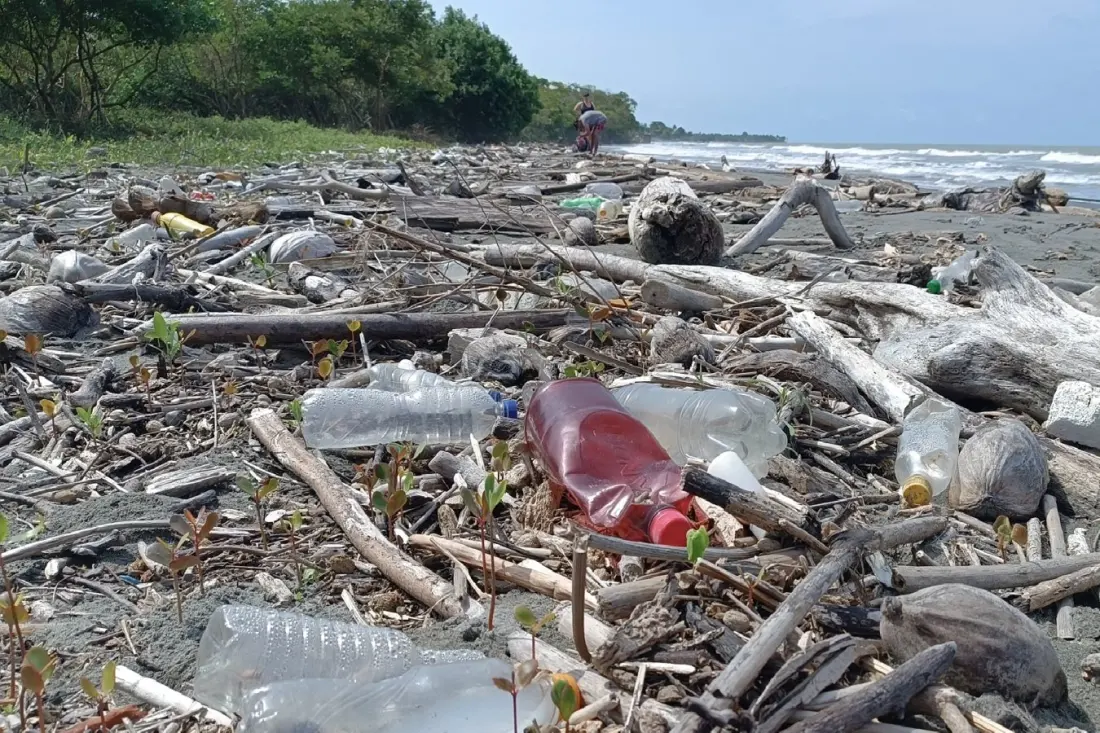
Why Colombia? The numbers are grim. According to a UNEP Global Plastic Hub report, the country sits among the world's 30 biggest contributors to ocean plastic, with over 47,000 tons accumulated along its coasts. It generates roughly 1.4 million tons of plastic a year and recycles only 20-25% of it. Research institute INVEMAR has measured an average of 2,014 pieces of litter per kilometre of Caribbean coastline — almost four times the global average.
That waste isn't just an ecological problem. It hits turtles, birds, mangroves and coral reefs, and it lands on the beaches and fish stocks that local tourism and fishing families rely on. Boyan Slat, The Ocean Cleanup's founder and CEO, called Colombia a focal point for the mission, and regional director Ricardo Restrepo says the country will be among the first with cities at an advanced implementation stage.
For travellers who know and love Colombia's Caribbean — the beaches of Santa Marta, the walled old town of Cartagena, Barranquilla's carnival energy — this is good news in the making. The project explicitly targets the canals and streams that act as informal dumps and flush rubbish onto coastal beaches when it rains. The organisation is also candid that hardware alone won't fix things: the plan includes better land-based waste collection, cooperation with waste pickers and riverside communities, and environmental education, though details on how visitors or volunteers can get involved haven't been announced yet.
Globally, The Ocean Cleanup has removed more than 64 million kilograms of waste and aims to cut floating ocean plastic by 90% by 2040. Colombia joining the network puts one of South America's most visited coastlines at the front of that effort.