Colombia is reopening one of the Caribbean's longest-running territorial arguments. President Abelardo De la Espriella has announced a decree, to be signed on 30 November during San Andrés celebrations, that will formally establish the archipelago's baselines — the coordinate points from which a country measures its maritime zones. The move challenges how Colombia interprets the 2012 International Court of Justice ruling that settled much of its maritime boundary with Nicaragua, and it puts the islands back at the centre of a diplomatic tussle.
The backstory matters. Nicaragua took the case to the ICJ in The Hague in 2001, disputing sovereignty over the archipelago and seeking a redrawn maritime border. The court's November 2012 decision kept the islands of San Andrés, Providencia and Santa Catalina firmly Colombian, but awarded Nicaragua sovereign rights over the natural resources of roughly 75,000 square kilometres of Caribbean sea that Colombia had long considered its own. For San Andrés fishermen — especially the Raizal community, whose livelihoods are tied to those waters — the ruling changed everything about where they could work.
The legal sparring never really stopped. In 2022 the court found Colombia had interfered with Nicaraguan-controlled fishing activities, then in July 2023 it rejected Nicaragua's attempt to claim an extended continental shelf beyond 200 nautical miles, reaffirming key parts of the 2012 line. Now Bogotá argues that a 1978 law required it to set baselines for the archipelago — a job completed for the mainland in 1984 but never done for the islands — and that drawing them now will cement the archipelago as a single territorial unit. The president insists the reef territory is integral Colombian territory, and that the waters between the islands should count as Colombian internal waters, a claim that sits awkwardly with parts of the 2012 ruling.
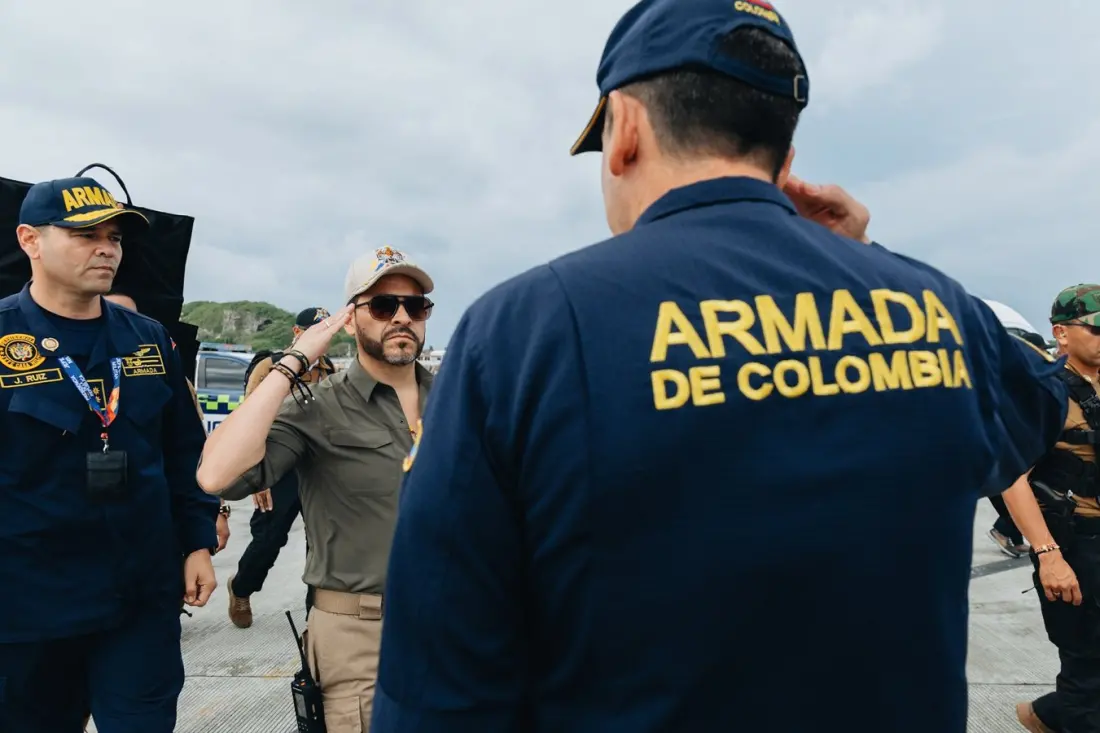
Lawyers will point out that a domestic decree does not rewrite an international boundary. But the symbolism is loud: the president, speaking from a Navy vessel, vowed Colombia would not cede "a single nautical mile" and promised stronger naval presence, modernised vessel registration, port investment, support for artisanal fishing and a push for nautical tourism — with the Raizal community promised a leading role and protection of fishing grounds within the Seaflower reserve.
Why should a traveller care? San Andrés and Providencia remain safe, fully Colombian destinations — white-sand beaches, duty-free shopping, and some of the Caribbean's best snorkelling around the Seaflower Biosphere Reserve. Nothing in this dispute changes access or visas. But the government's promised investment in ports, boating infrastructure and nautical tourism could mean better excursions, sailing trips and fishing charters in the coming years. Travellers interested in the islands' distinct Afro-Caribbean Raizal culture should also watch how the community fares in this new chapter — the decree's wording, due on 30 November, will show whether the promised protections hold up.