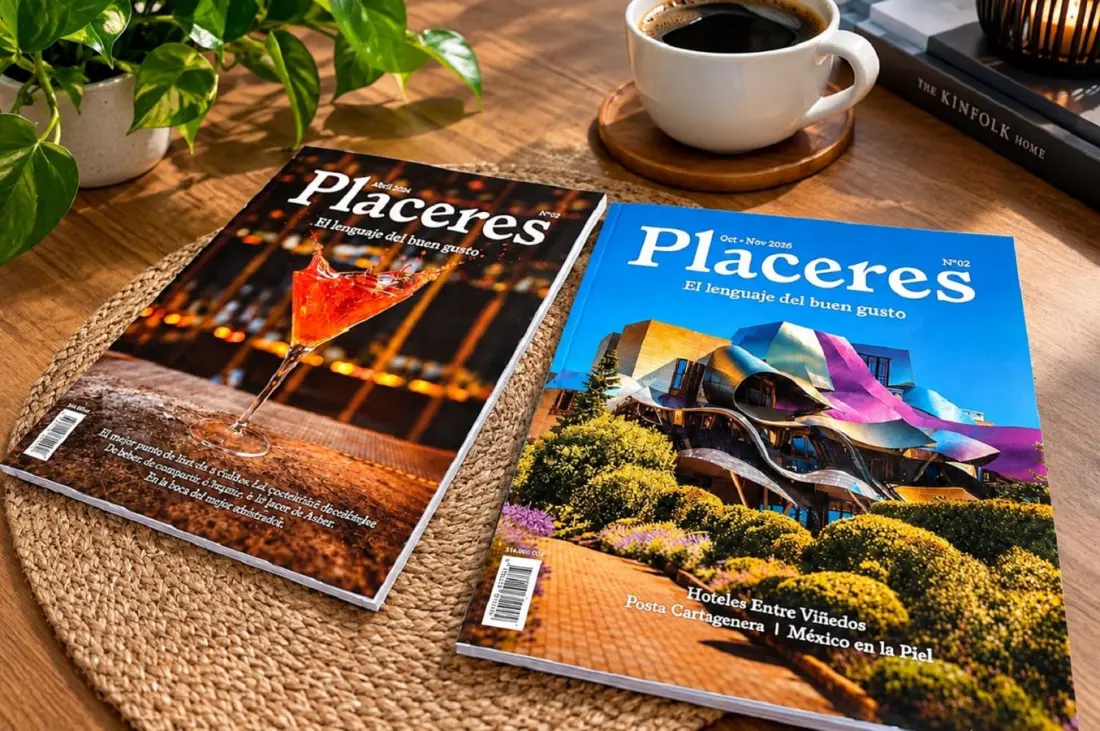
A glossy print magazine launched in Bogotá this month is betting that slow reading still has a place in a fast-scrolling world — and using Colombia's food and travel culture to make the case.
Placeres, founded by Spanish businessman Jaime de Polanco, unveiled its second issue at a launch event held at La Cometa art gallery in the Colombian capital. From January 2027, it will shift to a quarterly schedule, giving its writers time to produce long-form features rather than chasing the news cycle.
The magazine's pitch is "the language of good taste" — but Polanco is careful to distance the project from conventional luxury publishing. He describes pleasure as something built on curiosity, knowledge and noticing details, not on accumulation or ostentation. "Good taste is not inherited," he said at the launch. "It is cultivated, questioned, and shared around the finest of tables."
Gastronomy is the editorial engine. Coverage spans Colombia, Latin America and Spain, using cuisine as a way into the stories of places, their traditions and their transformations — chefs, producers and restaurants reshaping how a region eats. Wine and drinks coverage follows the same logic: less about the bottle, more about the landscapes, techniques and people behind it.
Around that core sit hotels with character, art, design, music, literature, fashion and watchmaking. It's a broad remit, but the connecting thread is storytelling about the crafts and characters behind an experience rather than a checklist of expensive things.
The man behind it has form in Spanish-language media. Polanco Soutullo spent years at Grupo Prisa working on international expansion, built ties with Colombia through Caracol Radio, and later took part in digital outlet Confidencial Colombia. He's refreshingly candid about the business model: "With this project, I'm not looking to make money, just to make sure it doesn't cost me money, and so far, I'm achieving that."
For travellers, why care? Because Placeres doubles as a cultural compass. Its pages point international readers beyond Colombia's headline destinations — Cartagena's old town, the coffee axis — toward regional cuisines, local products and experiences that get their value from how they're lived rather than how photogenic they are. Its Latin America–Spain axis also mirrors how many travellers actually move between the two, making it a useful companion either way.
In a media market dominated by instant digital consumption, a quarterly print title devoted to food, hospitality and the art of living well is a genuine gamble. But it's also exactly the kind of project that benefits a destination: slow, considered coverage that treats a country's food culture as an entry point to understanding it — and gives readers a reason to book a table, not just a flight.