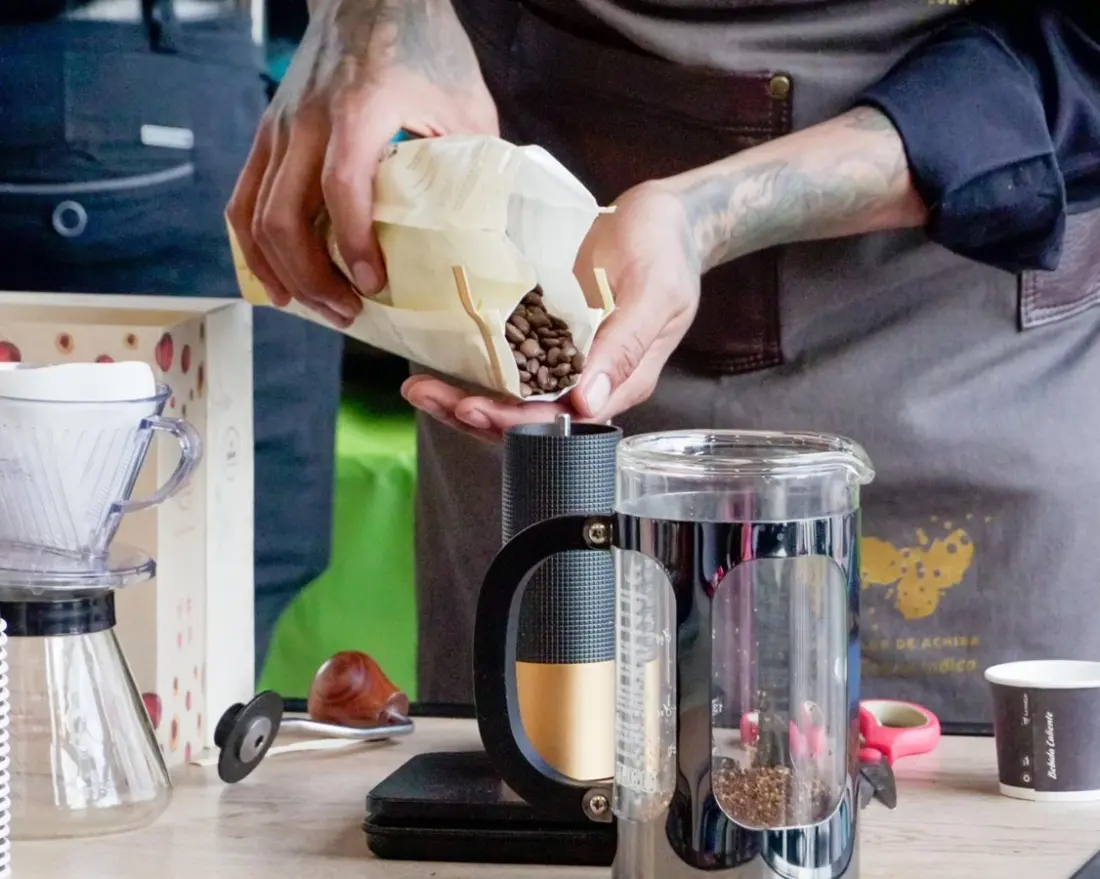
Colombia's coffee reputation travels the world, but the beans largely leave without the locals drinking much of them. New figures presented at the 90th Coffee Summit in Cartagena show each Colombian gets through just 2.67 kilograms of coffee a year — less than half of Brazil's 6.64 kilograms, well under Costa Rica's 5.71, and nowhere near Norway's 8.18. Gustavo Gomez Montero, who heads the exporters' association Asoexport, used the summit to argue that the country can't depend on foreign buyers alone and needs a stronger home market.
The push comes at a rough moment. Colombia harvested 12.56 million 60-kilogram sacks between November 2025 and October 2026, down 15% from the previous year, and exports fell 11% to 11.85 million sacks. A weaker dollar has squeezed earnings too — the currency lost 24.15% of its value against the greenback over the year, costing coffee-growing regions around US$620 million, while domestic prices dropped 32%. On top of that, exporters are fighting a proposed 19% tax on coffee at various processing stages, which they estimate would require more than US$1.2 billion paid upfront.
So what would it take for Colombians to drink more? Asoexport calculates that matching Brazilian consumption levels would push domestic demand to about 5 million sacks a year — more than double today's figure. The National Coffee Growers Federation, whose manager German Bahamon pegs consumption slightly lower at around 2.5 kilograms per person, thinks growth to 4 million sacks is realistic. Either way, meeting that demand while honouring export commitments would need production of 18 to 20 million sacks annually, roughly 50% above current levels.
One workaround already exists: Colombia imports about 1.6 million sacks of cheaper robusta coffee, saving its prized mild arabica for export. Asoexport suggests growing robusta domestically in the Altillanura, the eastern plains, to replace nearly 2 million imported sacks. Other ideas include putting coffee into school meal programmes, improving the coffee served in hotels, and marketing its health benefits.
For travellers, this is a good moment to pay attention. Visiting Colombia's coffee region — the rolling hills around Salento, Manizales and Armenia — means tasting some of the world's finest arabica at the source, often straight from the farms that grow it. And drinking coffee there genuinely supports an industry under pressure, from small growers to exporters navigating a tough year. Café culture in cities like Bogotá and Medellín is also thriving, with specialty shops showcasing beans you'd struggle to find abroad at the same quality-to-price ratio.