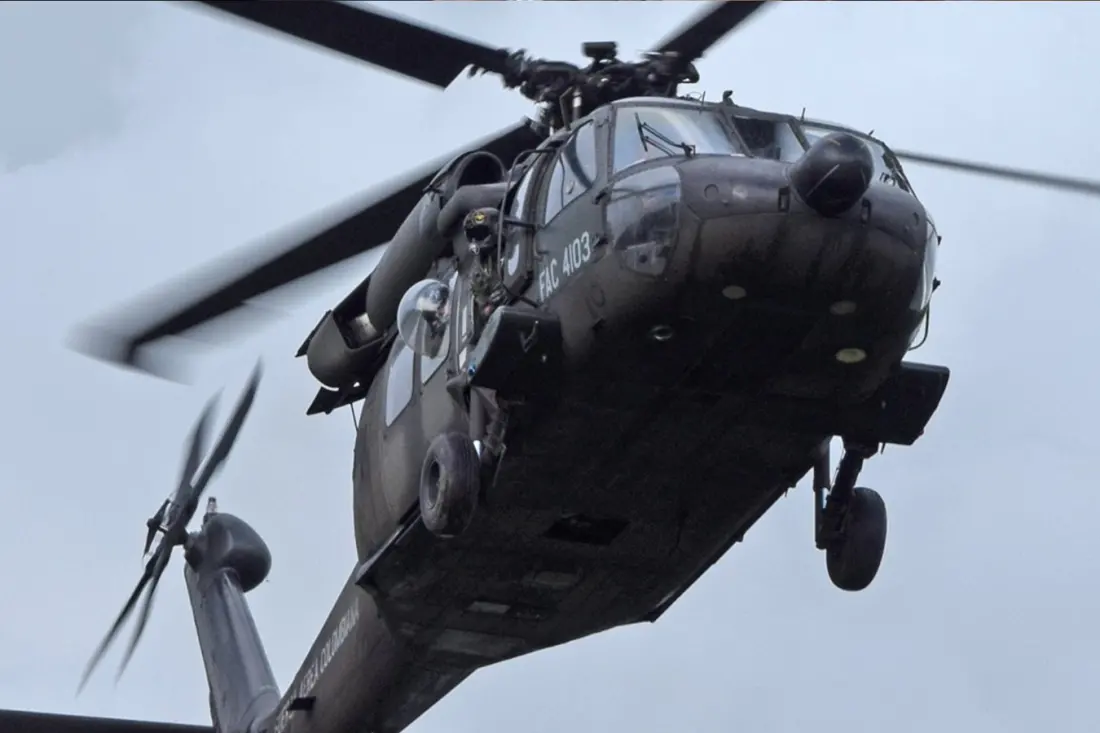
A Colombian Army UH-60 Black Hawk came down in the mountains near Inza, in the Cauca department of southwestern Colombia, on Monday, October 19. The helicopter — registration EJC 2175 — was flying a supply and personnel transport run from Popayán to Inza when it crashed with 19 military personnel on board: four crew members and 15 soldiers from the Báltico 2 platoon.
The good news is that nobody was killed. The Army confirmed all 15 soldiers survived, describing their condition as stable, though some were injured and others walked away unharmed. A report in El Espectador cited preliminary figures of four fractures and 15 cases of bruising, but the military has not confirmed that breakdown. The status of the four crew members was not clarified in the initial statement, and no hospitals or names had been released by Monday evening.
The Army has activated emergency protocols and sent specialists and technicians to investigate. No cause has been established — mechanical failure, weather and other factors all remain possibilities, and authorities have not suggested the aircraft was attacked. Inza sits in Tierradentro, a rugged, remote part of eastern Cauca where armed groups remain active and where helicopters are often the most practical way to move troops and supplies. That security context is real, but it is not, so far, linked to this crash.
So why should a traveller care? Cauca is off most foreign visitors' itineraries, but Tierradentro is home to one of Colombia's UNESCO World Heritage sites — the underground pre-Columbian tombs — and the department's capital, Popayán, is a handsome colonial city known as the 'white city'. Roads in this region are slow, mountainous and, in some areas, subject to security risks, so many travellers and locals alike depend on small aircraft. Any aviation incident here is a reminder to check current government travel advisories and local conditions before planning a trip into rural Cauca, rather than a signal to avoid Colombia's far safer mainstream routes like Cartagena, Medellín or the coffee axis.
The key things to watch as the story develops: the medical outcome for the four crew members, the final injury tally, and what investigators conclude about the cause. Until then, treat early figures as provisional — even the Army's own statements leave several questions open.