
Thirty minutes north of Green Bay, in the small city of Oconto, sits a 42-acre state park that packs in a staggering amount of history. Copper Culture State Park protects the oldest documented cemetery in northeastern North America, where burials date back roughly 6,000 years to between 4000 and 3000 B.C.E. The site belonged to the Old Copper Complex people, considered among the earliest metalsmiths in the world and the first metal artisans in the Americas.
The story of its discovery is charmingly low-tech: in the 1950s a 13-year-old stumbled across evidence at the site, prompting an archaeological dig that uncovered the cemetery and evidence of five distinct mortuary practices. The land became a state park in 1959, and today it remains free to enter, open seasonally from Memorial Day weekend through Labor Day.
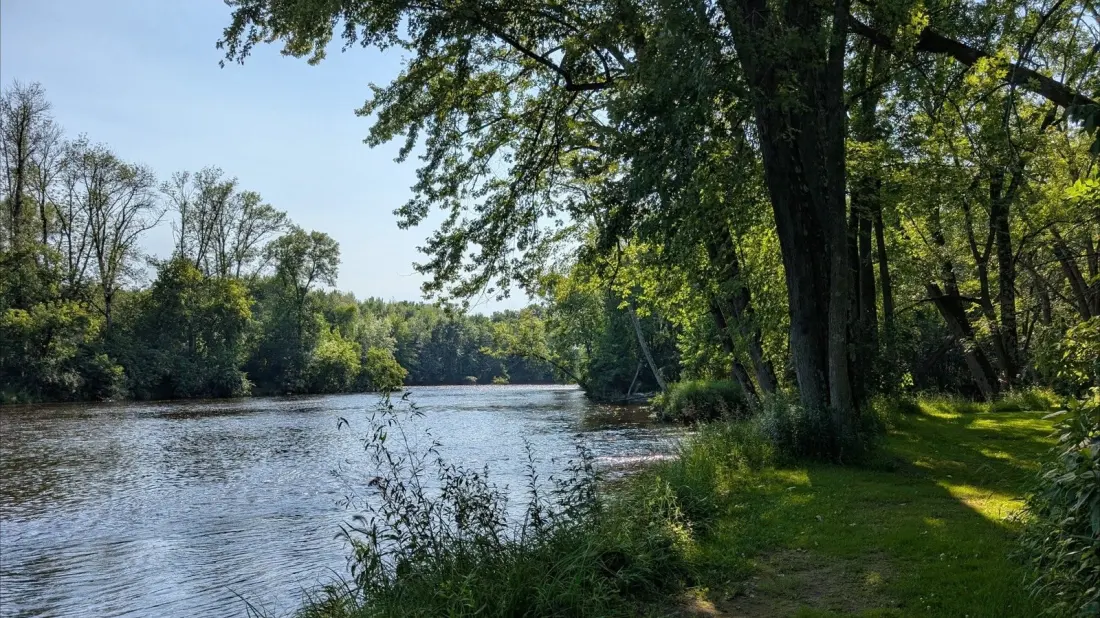
Don't come expecting epic hikes — the four trails here are short and flat, and you could walk them all in an afternoon. The 0.3-mile Story Book Trail loops an open prairie past the museum and into the woods. The 0.7-mile Woodland Path runs through pine forest along the Oconto River and passes the burial site, marked with a historical plaque; keep an eye out for jewelwing damselflies, honeybees, and the occasional snake. The Bluebird Trail, also 0.7 miles, crosses grassy fields dotted with bluebird houses, so binoculars are a smart pack. The 0.8-mile Copper Culture River Trail circles the park through shaded woodland and wildflowers with direct river access. Dogs are welcome on all trails on a leash.
The real draw is the Copper Culture Museum, housed in a red brick building from 1924. Inside are artifacts recovered from the excavations: copper spear points, knives, fishhooks, knives, and bracelets, plus non-copper finds like a swan bone whistle and a marine shell — objects suggesting these ancient people traded across a network stretching as far as the Atlantic. The museum also displays more recent Native American pieces, and it's genuinely family-friendly: outside there's a mock excavation pit where kids can sift sand like junior archaeologists, and a picnic shelter makes an easy lunch stop.
Why bother with a small park on Wisconsin's eastern edge? Because very few places combine an easy, accessible walk in the woods with 14,000 years of human history — Wisconsin's archaeological record runs from mammoth bones to mound-building cultures, and this park captures one of its most remarkable chapters. It suits families with young kids, casual walkers, birders, and anyone curious about Indigenous history. Pair it with a visit to Green Bay itself, a bayside city with affordable eats and plenty of entertainment to round out a day trip or weekend.
Just remember the basics: the park is only open in the warm months, admission is free, and standard state park etiquette applies — plan ahead and leave no trace.
Original reporting by Islands.