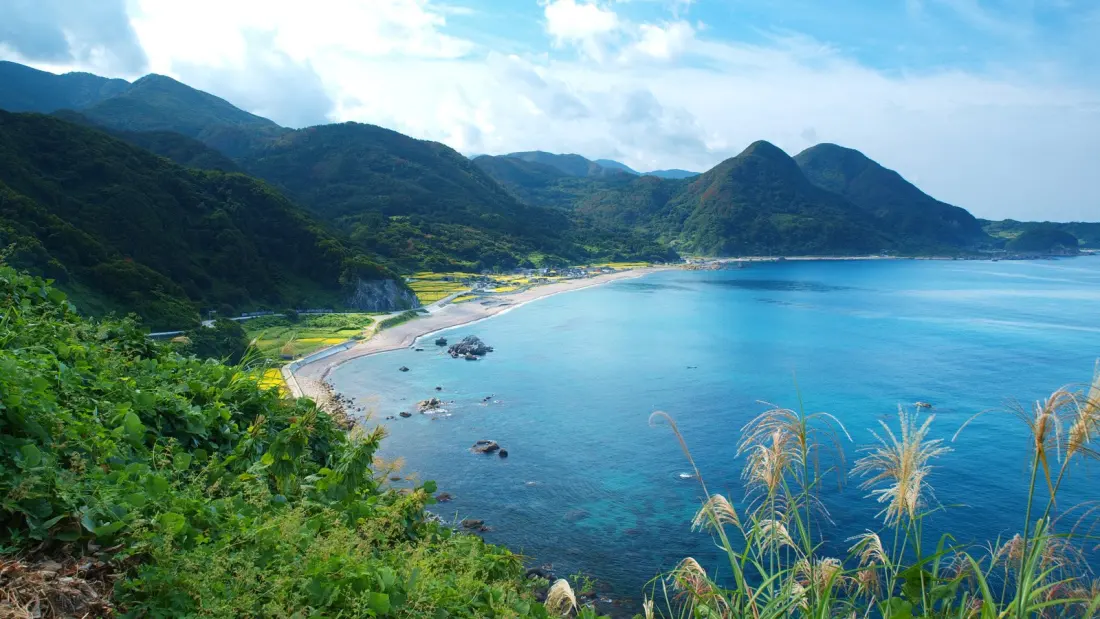
Swap the Caribbean for the Sea of Japan and you'll find Sado, a sizeable island off Niigata that most foreign travellers have never heard of. Locals have kept it busy for years, drawn by sandy beaches, 'Japan Sea Blue' water and a culture scene that punches way above the island's weight.
Sado's story is unusual. From around the eighth century it served as a place of exile, receiving Emperor Juntoku, the monk Nichiren Shonin and Noh theatre master Zeami Motokiyo. Later, a 17th-century gold rush transformed the island — you can still visit the Sado Gold Mines, now a UNESCO World Heritage Site, or pan for gold at Nishimikawa Gold Park. The whole island is designated a Japanese Geopark, with volcanic rock formations visible beneath its clear coastal waters.
The beaches are the headline draw. Futatsugame Beach on the northern tip is the most famous: at low tide a sandbar links the mainland to a small green island shaped, according to local lore, like two turtles. Sobama Beach in the southwest is quieter and has a campground, while Johagama sits beside a resort with hot-spring baths and calm swimming water sheltered by an offshore breakwater. Along the protected Ogi Peninsula, guides lead kayakers through rocky caves, and scuba diving peaks in August and September when the warm Tsushima Current brings maximum visibility — and fish like the Asian sheepshead wrasse.
Culture runs deep here. Sado is the only place in Japan where you can ride a Tarai-bune, a boat made from half a washtub, paddled by women just as they were for fishing generations ago — and yes, Ghibli fans, they appear in Spirited Away. The legendary Kodo taiko drumming group calls Sado home; the Sado Island Taiko Center (Tatakokan) introduces visitors to the giant drums, though it closes for much of winter. Noh theatre is another legacy of those exiled nobles: more than 30 stages host performances between April and October, and firelit nighttime Takigi Noh shows are especially atmospheric during Noh Month in June. Late summer stacks up festivals too — the Kouzan Festival honours the mining past, Akadomari Port Festival features floating sumo and fireworks, and August brings Kodo's Earth Celebration music festival in Ogi.
For travellers tired of crowded Caribbean routes, Sado is a genuine alternative: beach time, water sports and a packed summer cultural calendar without the international crowds. Aim for May to August, when temperatures climb to about 86°F and conditions suit diving and kayaking.
Getting there is simple if slightly indirect. A roughly two-hour ferry runs from Niigata City's Shin Nihonkai Ferry Terminal to Ryotsu Port on the island's east side; a three-hour summer-only route from Naoetsu reaches Ogi Port in the south. The Japan Rail Pass doesn't cover the ferry, but Niigata is about three hours by train from Tokyo. Once on Sado, rent a car or book a tour — the island is big and public transport is thin.
Original source: Islands