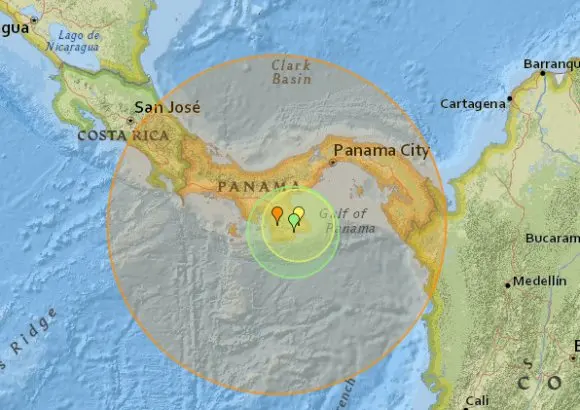
A glass of water shivers, the ceiling fan sways, and then everything goes back to normal. That's a fairly typical earthquake experience in Costa Rica, where the ground moves constantly — mostly without anyone noticing. The numbers from the country's volcanological and seismological observatory, OVSICORI, make the point: 14,481 earthquakes recorded in 2025, of which just 123 were felt at all. Only four exceeded magnitude 5. The biggest, a magnitude 6.2 on October 21, struck offshore near Manuel Antonio and Quepos.
The reason is geography. Costa Rica sits where the Cocos Plate slides beneath the Caribbean Plate along the Middle America Trench off the Pacific coast, at roughly eight centimetres a year. That same subduction engine builds the volcanoes, hot springs and mountains that draw travellers in the first place — the drama and the risk share a source. Not every tremor feels the same, either: a distant offshore quake might roll gently through a San José high-rise while a shallow local fault delivers a sharp jolt on the Nicoya Peninsula.
The country's worst quakes tell a clear story. The 1910 Cartago earthquake, magnitude 6.4 on a shallow fault, levelled the old colonial capital and killed around 700 people — still the deadliest in Costa Rican history, and the event that pushed the country toward modern seismic building codes. The 1991 Limón earthquake remains the strongest on record at magnitude 7.7, killing 48 and lifting the waterfront nearly two metres. But the 2012 Nicoya quake is the encouraging one: a magnitude 7.6 directly under a populated peninsula killed just two people, thanks to codes and engineering. Meanwhile, smaller shallow quakes near steep slopes can be nastier — the 2009 Cinchona event, a magnitude 6.1 near Poás Volcano, triggered landslides that killed at least 34, and helicopters evacuated 369 tourists.
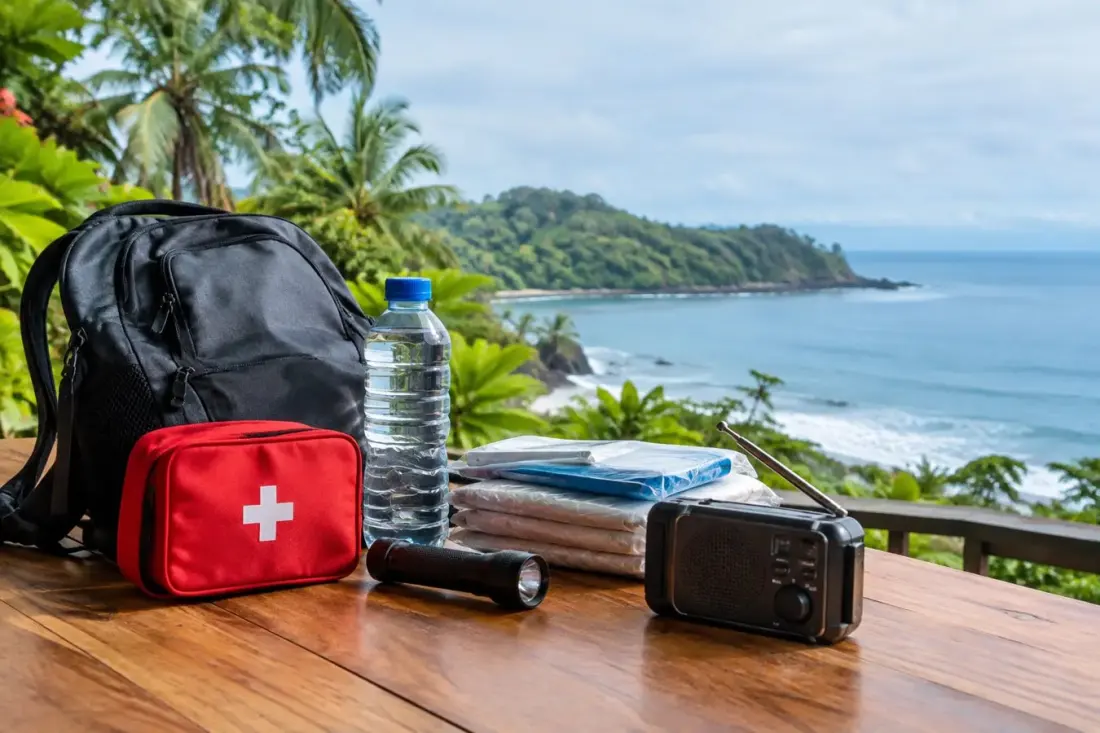
For visitors, the practical takeaway is modest, not alarming. Most felt quakes cause no damage. If shaking starts indoors: drop, take cover under something sturdy, hold on, protect your head — and don't run outside, where falling tiles and power lines are the real hazard. If you're on the coast and a quake is strong or long, head inland and uphill in case of a tsunami warning, without waiting to photograph the sea. When checking into a hotel or rental, note the exits and keep your phone charged. Expect aftershocks, and ignore anyone on social media claiming to predict the next big one — the official sources are OVSICORI, the Red Sismológica Nacional and the National Emergency Commission (CNE).
Why care? Because Costa Rica is a top destination for surfers, hikers, retirees and remote workers, and earthquakes are simply part of the package — like knowing to watch for rip currents. Travellers who understand the basics enjoy the volcanoes and coastlines with open eyes, and locals' calm after a tremor is the product of a century of drills, codes and hard lessons, not indifference.
Howler Costa Rica