Off the coast of Cozumel, in the waters around Chankanaab park, a quiet restoration project is giving one of the Caribbean's most important corals a second chance. The Cozumel Parks and Museums Foundation (FPMC) is tending roughly 1,500 coral fragments as part of its ongoing Coral Restoration Program — and travellers who snorkel or dive at Chankanaab are swimming right past it.
The effort concentrates on elkhorn coral (Acropora palmata), a once-dominant reef-builder that has suffered dramatic declines across the Caribbean and is now listed as threatened. Biologist Rafael Chacón Díaz, from the foundation's Conservation and Environmental Education directorate, says the team also monitors reproduction of other species, including the mountainous star coral Orbicella faveolata.
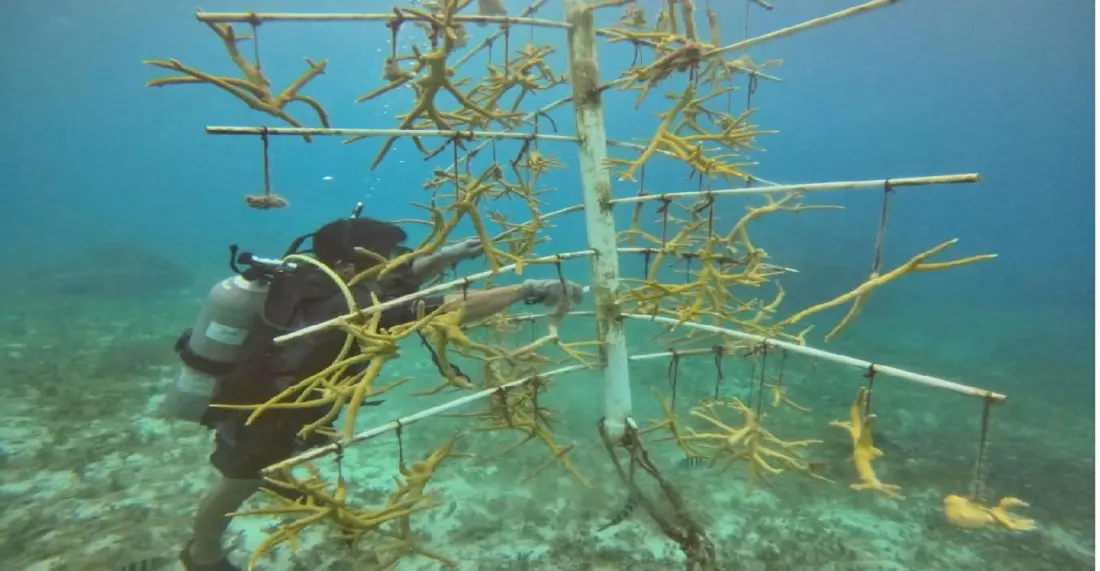
The method is hands-on. Fragments are mounted on underwater tree and grid structures, set up in coordination with the conservation organisation Oceanus AC. Volunteers visit the nursery twice a week to clean algae and debris off both the frames and the coral colonies themselves — unglamorous work, but crucial, since algae smothering is one of the main threats to young coral growth and survival. Citizen participation is baked into the programme, with volunteers doing much of the routine maintenance.
For visitors, this matters on two levels. First, healthy elkhorn thickets are what make Cozumel's shallow reef zones so dramatic — branching corals a metre or more across provide shelter for fish, and their loss changes the whole character of a reef. Seeing a nursery in the water is a rare window into how reefs are actively rebuilt, not just protected. Second, Chankanaab is one of the easiest places on the island to get in the water: the park has calm, sheltered snorkelling directly from shore, so even non-divers can appreciate the habitat this programme is working to restore.
If you're heading to Cozumel, it's worth building a reef-aware day into your itinerary. Snorkel or dive operators on the island increasingly talk about coral restoration, and asking about it supports the operators who engage with local conservation. If you want to go further, organisations like Oceanus AC and the FPMC are the local names to look up for volunteer or citizen-science opportunities — the Chankanaab programme itself runs on that kind of participation.
The bigger picture: coral restoration at this scale is slow, repetitive work, and the fact that a single park foundation is keeping 1,500 fragments alive and clean week after week says a lot about Cozumel's stake in its own reefs. Tourism here depends on the diving, and the diving depends on programmes like this one. Choosing reef-safe sunscreen, not touching coral, and buoyancy control underwater are small things that add up when you're floating above a nursery that volunteers scrubbed clean two days ago.
For snorkellers, divers and anyone curious about how a damaged reef gets put back together, a visit to Chankanaab is a chance to see the process up close — and to understand what's at stake beneath the surface of one of Mexico's most popular dive islands.
Story via Riviera Maya News.