Croatia has put pen to paper on its largest railway contract ever: a €900 million scheme to rebuild and double-track the 83-kilometre line between Dugo Selo, east of Zagreb, and Novska in the country's interior. The deal was signed at government headquarters in Zagreb on 1 October 2026, with Prime Minister Andrej Plenković and Transport Minister Oleg Butković looking on.
The winning contractor is India's Afcons Infrastructure Limited, in what is a notable crossover for Croatian infrastructure work. A separate supervision contract went to Eptisa Adria, and several Croatian firms are expected to join as subcontractors. For HŽ Infrastructure, the state rail network operator, it is the biggest single contract in its history.
The works are split into four sections — Dugo Selo–Ivanić Grad, Ivanić Grad–Popovača, Popovača–Kutina and Kutina–Novska — and are expected to take five years and ten months. In practice, that means rebuilding the existing line and adding a second track along the whole route, a corridor that carries much of the east-west traffic between Zagreb and Slavonia. Money is coming from Europe: the Connecting Europe Facility and the Competitiveness and Cohesion Programme are footing the bill, so no purely national financing here.
Transport Minister Butković put the project in context by pointing out that Croatia currently has around €1.5 billion of railway investment in progress — the rail sector is now getting the kind of spending spree the country's motorways, ports and airports enjoyed in previous cycles. And there's more to come: completing the wider corridor still requires the Okučani–Vinkovci section, for which HŽ Infrastructure is already preparing documentation.
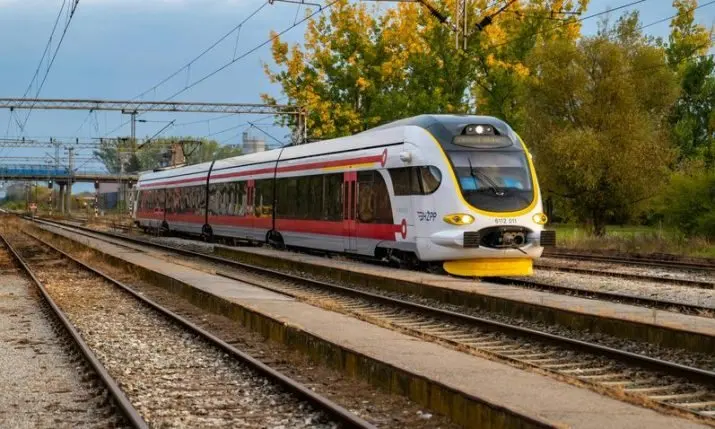
What does this mean for travellers? In the short term, expect some disruption or slower journeys on trains between Zagreb and eastern Croatia as the five-year-plus construction phase rolls out. But the end result matters: a modernised, double-tracked line should mean faster, more reliable and more frequent services on one of Croatia's key domestic routes, useful whether you're heading to Slavonia, connecting towards Budapest, or just avoiding airport hassle on a Zagreb-to-eastern-Croatia hop.
The project also fits into Croatia's broader push to slot into key European transport corridors — good news if your future holiday plans involve arriving by train rather than plane. Keep an eye on Croatian Railways' timetables during construction, and consider building in a buffer if you're catching connections in Zagreb.