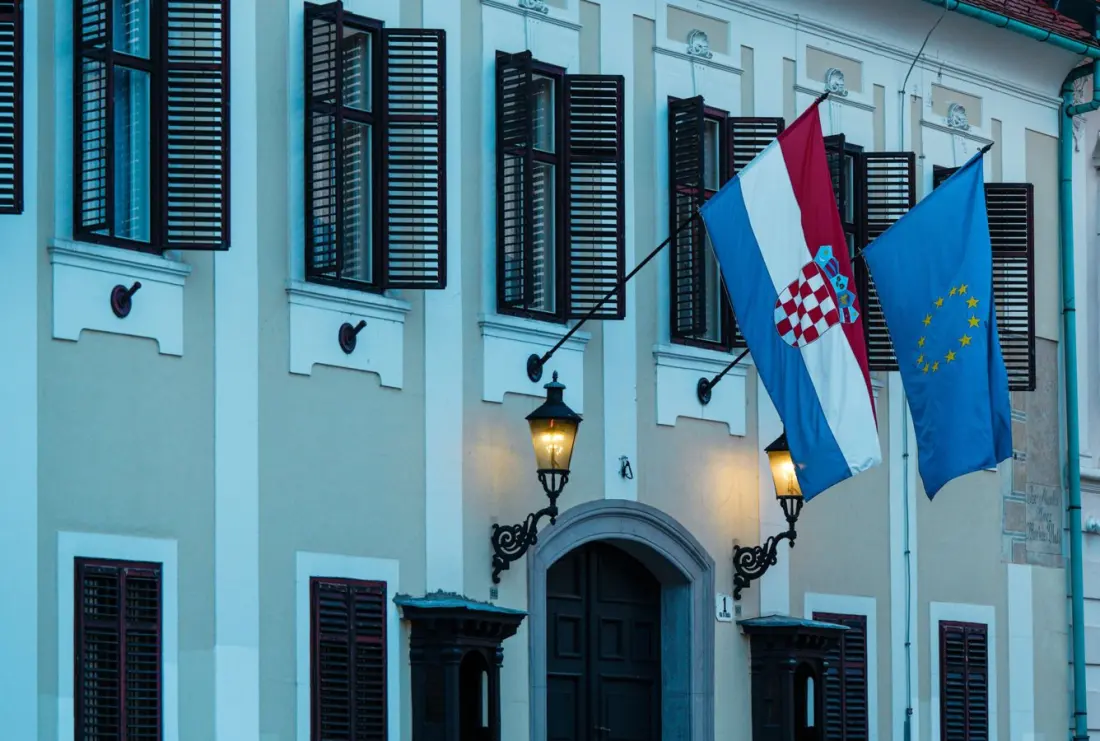
Croatia used its moment at the 81st UN General Assembly in New York this September to make a pitch to two audiences at once: world leaders and the large Croatian-American diaspora. Prime Minister Andrej Plenković led a delegation of more than 70 Croatian companies through B2B matchmaking sessions and a high-profile reception at Delmonico's, framing the country not just as a dependable ally but as one of the EU's fastest-growing economies.
The numbers Plenković cited at the UN were the core of the pitch. Croatia has doubled its nominal economy over roughly a decade, picked up six consecutive sovereign credit-rating upgrades from all three major agencies, earned an A-category rating, and now sits at about 78% of the EU average GDP per capita. Debt has fallen sharply, and the country holds full membership of the EU, the Eurozone and the Schengen Area — a triple lock of integration that seemed implausible a generation ago.
For Americans with Croatian roots, the practical upshot is straightforward. A Croatian passport means EU citizenship: the right to live, work, study and invest across all 27 member states without visas or Schengen time limits. Pair that with a US passport and, as the argument goes, you get a mobility and wealth-planning combination — an EU base, a backup nationality, and multi-generational optionality — that's increasingly attractive in an uncertain world.
The bureaucratic friction is also dropping. A protocol amending the US-Croatia Double Taxation Treaty has been signed and is going through ratification in both countries, clearing up overlapping income tax exposure for anyone earning or investing on both sides of the Atlantic. Croatia's entry into the US Visa Waiver Programme already made short trips painless.
American business has noticed. Annual bilateral trade sits near US$1 billion, and big names are scaling up locally: Vertiv has made Croatia an engineering and production hub for data centre infrastructure powering AI, Pfizer anchors pharmaceutical manufacturing in the region, and IBM runs client innovation and technical service centres there. Croatia's demographic and emigration problems haven't vanished — the source is candid about that — but the old story of pure brain drain is shifting.
The reason travellers should care: if you have a Croatian parent, grandparent or direct ancestor, you may already qualify for Croatian citizenship by descent, essentially for the cost of paperwork. That's a lifetime of visa-free EU living, shorter queues in European airports, and the option to base yourself on the Adriatic for a summer or a decade. Services like Croatian by Descent, staffed by diaspora members, now handle eligibility assessments and the notoriously paperwork-heavy application process.
Croatia itself rewards the effort. Beyond the famous Dalmatian islands, inland towns like Rijeka, Zadar and Istria's hill villages offer far lower costs than Italy or France across the Adriatic, and a Croatian passport makes seasonal island-hopping logistics simpler.