Day three of a southbound John Muir Trail thru-hike delivers a proper taste of what the Sierra Nevada does best: a long, quiet climb to a high pass, a string of glacier-fed lakes, and weather that refuses to behave.
The day starts gently, with three flat miles along the Lyell Fork meadow before the real work begins. Donohue Pass is the first major pass heading south on the JMT, sitting at 11,073 feet. The trail is kind about it, spreading a 2,200-foot gain over 3.5 miles, starting in conifer forest around 9,000 feet and climbing patiently past the treeline into a world of granite and wind-bent whitebark pines. The hiker in this account saw no one else on the whole ascent — a reminder of how empty this stretch can feel even in season.
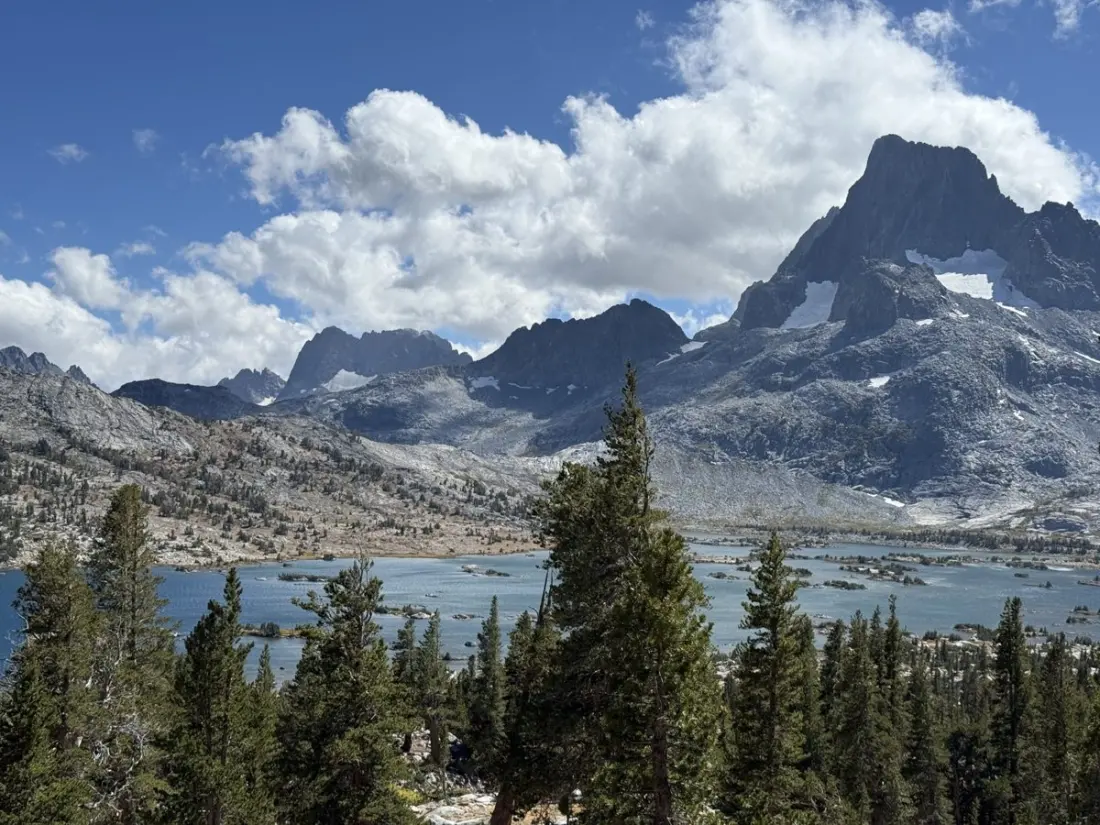
From the top, the trail drops toward the Ansel Adams Wilderness lake chain that makes this section famous. Thousand Island Lake, best seen from above with glaciated peaks behind it, dots brilliant blue water with granite islands. Then come Emerald and Garnet lakes — beautiful, but exposed. On this particular day, relentless wind made lakefront lingering impossible, even blowing hikers around on the log bridge at Garnet's outlet. Ruby Lake, more sheltered, was packed with campers wedging tents onto its small banks.
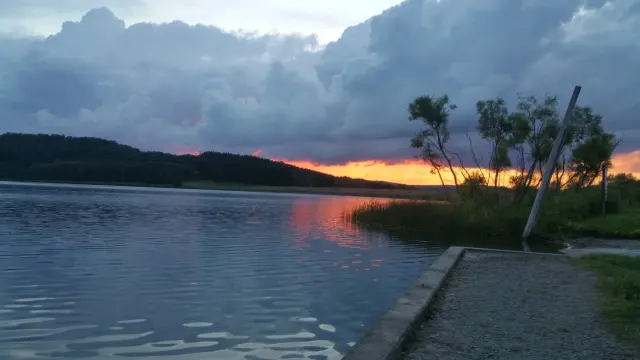
The hiker pushed on to a big day's tally: 18.43 miles with roughly 3,500 feet of gain and descent, ending near Shadow Creek junction at around 6pm. Even camp offered no shelter drama-free — the only site was a sandy, exposed pit, and the evening's entertainment was watching a fellow hiker's tent take a battering in the open. A one-minute brilliant red sunset closed things out before the clouds dimmed.
For travellers, the takeaway is simple: this is one of the JMT's classic sections, easily hiked as part of a longer thru-hike or sampled on shorter trips from the Mammoth Lakes area. Expect cold nights even in the meadows, serious wind at the exposed lakes, and crowds clustering at any spot with shelter. Permits are required for the JMT and are famously hard to get — plan well ahead. And if you're pacing yourself, this account shows what a solid mid-trip day looks like: nearly 19 miles over a pass, doable when you've found your trail legs.