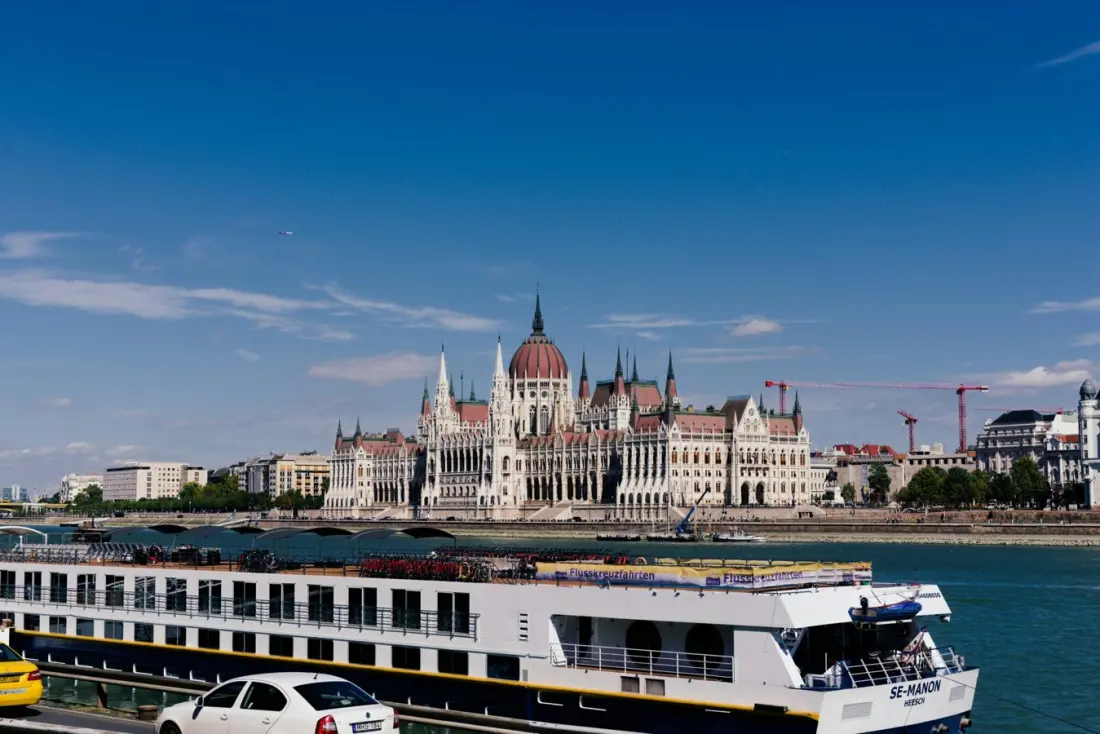
Low water levels on the Danube left several TUI river cruise ships stranded this September, and the fallout has turned into a consumer rights story worth knowing before you book any European sailing.
The BBC reported on affected British holidaymakers, including Richard Pearson, who flew to Budapest expecting to board TUI's river boat Isla — only to find the vessel stuck in Vienna. Instead of sailing, he spent what he describes as 14 to 15 hours on coaches, plus more time waiting around for them, during a trip that cost him £3,300 (over €3,800). Another couple, Sue Crosby and her husband, tried to decline a similar swapped-around itinerary on their 14 September sailing, asked for their money back, were refused, and reluctantly travelled anyway.
TUI's position is straightforward: its booking terms state that if the itinerary can still be completed by coach, no refunds are due — and those changes can happen before departure or mid-cruise. In a statement, the operator said it reviews each affected sailing and arranges adjusted travel to minimise transfer times, so customers could still see Budapest, Vienna and Bratislava. It apologised that some guests didn't get the river cruise experience they'd expected, but pointed to its standard booking conditions.
Pearson's take is the crux of the dispute: he accepts the operator can't control the weather, but still feels a partial refund is fair when the core product — a cruise — becomes a series of long bus rides. That tension between the letter of the terms and what customers reasonably expect is what has made the story resonate.
There's a bigger picture too. Travel Tomorrow has reported previously on how shifting climate conditions are disrupting travel, and with the World Meteorological Organization forecasting El Niño-driven weather problems ahead, low-water events on major rivers like the Danube, Rhine and Rhône look set to recur. That matters both ways: operators need to anticipate disruptions and be upfront about what customers are entitled to, while travellers should actually read the cancellation and itinerary-change clauses before paying several thousand pounds for a cabin with a view.
The practical lesson for anyone eyeing a river cruise in late summer: these trips are most exposed to low water in August and September, so it's worth asking the operator what happens if sailing is impossible, and whether partial refunds or rebooking options exist. If you'd rather not gamble on a bus substituting for a boat, shoulder season outside peak low-water months, or travel insurance that covers significant itinerary changes, may be the safer bet. River cruising remains one of the loveliest ways to see central Europe — just know what you've signed up for if the river doesn't cooperate.