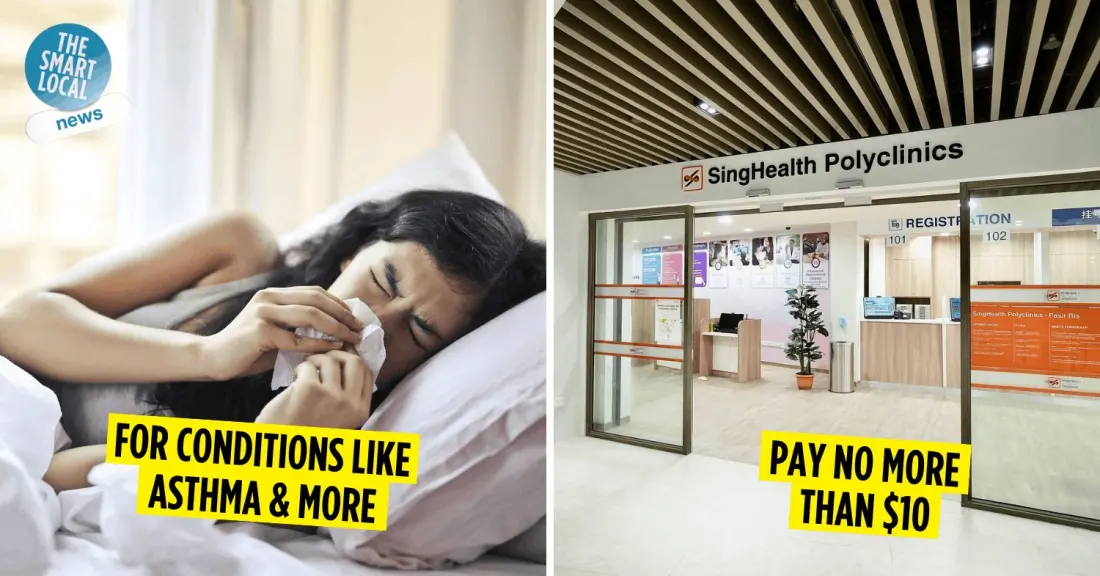
The haze has returned to Singapore, and with it the sore throats, itchy eyes and coughing fits that come with poor air quality. To ease the burden of getting checked out, the government switched on the Haze Subsidy Scheme (HSS) from 12 October 2026, capping what eligible patients pay for haze-related treatment at clinics across the island.
The scheme runs through the Public Health Preparedness Clinic (PHPC) network, a system first set up in 2014 so clinics can respond quickly to public health emergencies. It was last activated during the COVID-19 pandemic in 2020, and it now covers outpatient care for conditions the haze tends to trigger: allergic rhinitis, asthma, bronchitis, conjunctivitis, chronic obstructive pulmonary disease, upper respiratory tract infections, and complications from any of these. A doctor decides whether your symptoms are haze-related, which determines whether the subsidy applies.
Eligibility depends on where you go. At polyclinics, every Singapore Citizen can claim the subsidy. At participating PHPC GPs, it's narrower: only citizens aged 18 and under or 65 and over, plus holders of Public Assistance, Pioneer Generation, Merdeka Generation, Medical Fee Exemption Cards, and CHAS Blue or Orange cards.
The fees are straightforward. Most eligible patients pay $10 or the total bill, whichever is lower. Pioneer and Merdeka Generation cardholders pay just $5, and Public Assistance cardholders pay nothing at all, with no out-of-pocket costs. No extra GST is charged on the subsidised fee. Participating clinics display a PHPC decal or HSS poster, and you can search for them on the GPGoWhere website.
There's a virtual option too. Teleconsultations qualify for the same subsidies if you're eligible, diagnosed with a haze-related condition, and your doctor agrees a video visit is clinically appropriate. If they need to examine you in person, the subsidy simply carries over to the clinic visit instead.
For travellers, the picture is a bit different: the subsidies are for Singapore Citizens only, so visitors will pay full GP rates if the haze hits during their trip. But the scheme is a useful signal — when it's activated, air quality is bad enough that the government expects a wave of respiratory cases. If you're in Singapore during a haze episode, it's worth limiting outdoor exercise, carrying any inhalers or medications you need, and knowing that clinics across the city are geared up for haze-related visits. HealthHub lists the covered conditions, so you can check your symptoms against the eligible list before paying for a consultation.