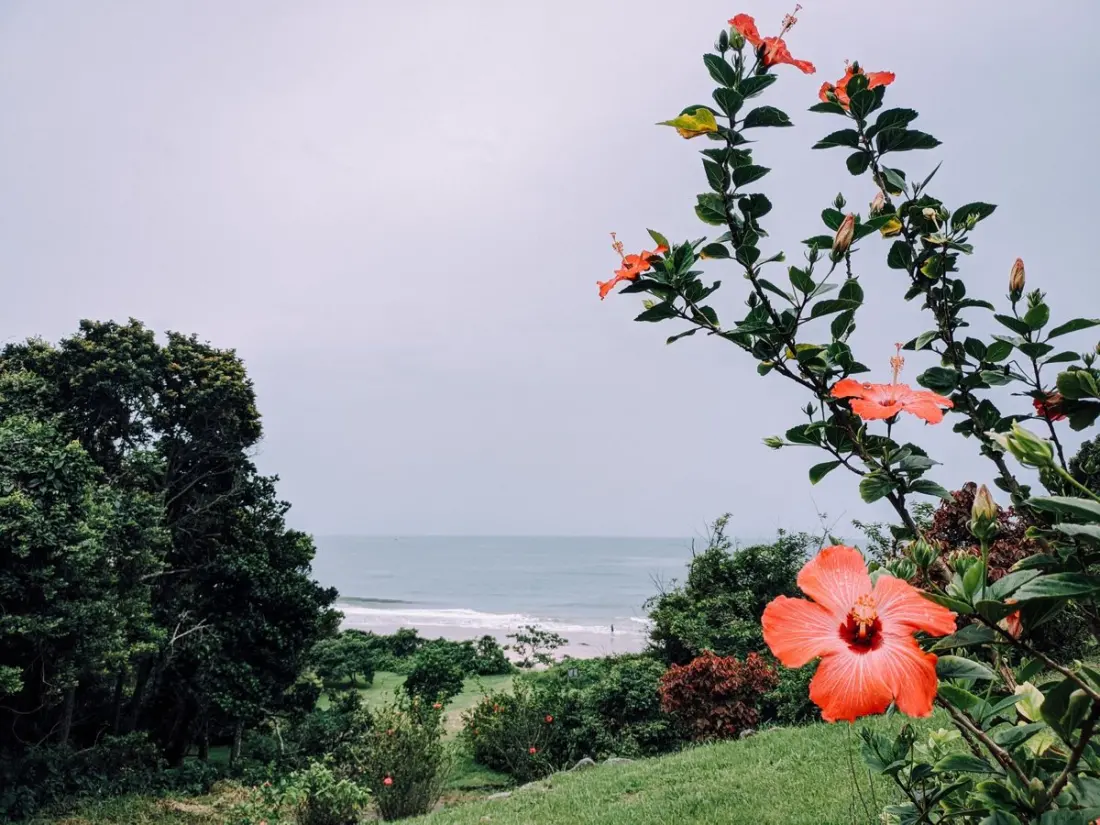
KwaZulu-Natal has two very different versions of a beach holiday, and the gap between them keeps widening. Up north, the Dolphin Coast — Ballito, Umhlanga, Salt Rock — has effectively become an extension of Greater Durban: high-rise apartment blocks, multi-level malls and peak-season gridlock along the M4 and M4 corridors. Down south, the Hibiscus Coast stretching from Hibberdene through Margate to Port Edward still runs on village-scale development, green belts and dune forest. If your idea of a holiday is quiet rather than buzz, the southern shoreline is where you'll find it.
The difference comes down to planning. On the South Coast, main roads run inland, buffered by subtropical forest and river ravines, so what you hear from your balcony is surf and birdlife rather than traffic. Beaches are spread across more than 120 kilometres of coastline, so even in mid-December you're rarely shoulder-to-shoulder with anyone. Walkable holiday pockets face the ocean, not a parking lot.
Water quality and safety tip the scales further. The South Coast holds 11 full-status Blue Flag beaches — against roughly 4 on the Dolphin Coast — including Marina Beach, Trafalgar, Southport and St Michael's, all regularly tested for water quality and patrolled by lifeguards. Northern and central Durban beaches have faced repeated storm-water runoff problems and occasional closures after heavy rain. The southern shoreline also boasts over 20 tidal pools for calm, enclosed swimming, plus protected estuaries like the Umtamvuna and Mpenjati where you can paddleboard or kayak without sharing flat water with powerboats.
Accommodation follows the same pattern. Northern rentals skew toward stacked apartment complexes with shared pools and thin walls. The South Coast's model is low-rise: self-catering villas in gated eco-estates. San Lameer is the flagship example — a 169-hectare subtropical conservancy with freestanding villas, an 18-hole championship golf course and footpath access straight to Marina Beach, no car keys required once you're in.
Weather seals the deal. Winters sit at a comfortable 18–24°C with lower humidity than summer, calm offshore winds and excellent water visibility. That season also brings the famous Sardine Run and the humpback whale migration, both watchable from coastal trails and rocky headlands. Golfers get year-round conditions at Southbroom, Port Shepstone and San Lameer, largely free of the wind funnels that hit flatter northern courses.
To be fair, the North Coast has its own appeal: nightlife, café culture and big-city convenience. But if a successful holiday is measured in uncrowded sand, swimmable water and green space, the Hibiscus Coast is KZN's stronger bet — especially for families and anyone who'd rather decompress than navigate traffic.
Story via Unusual Places.