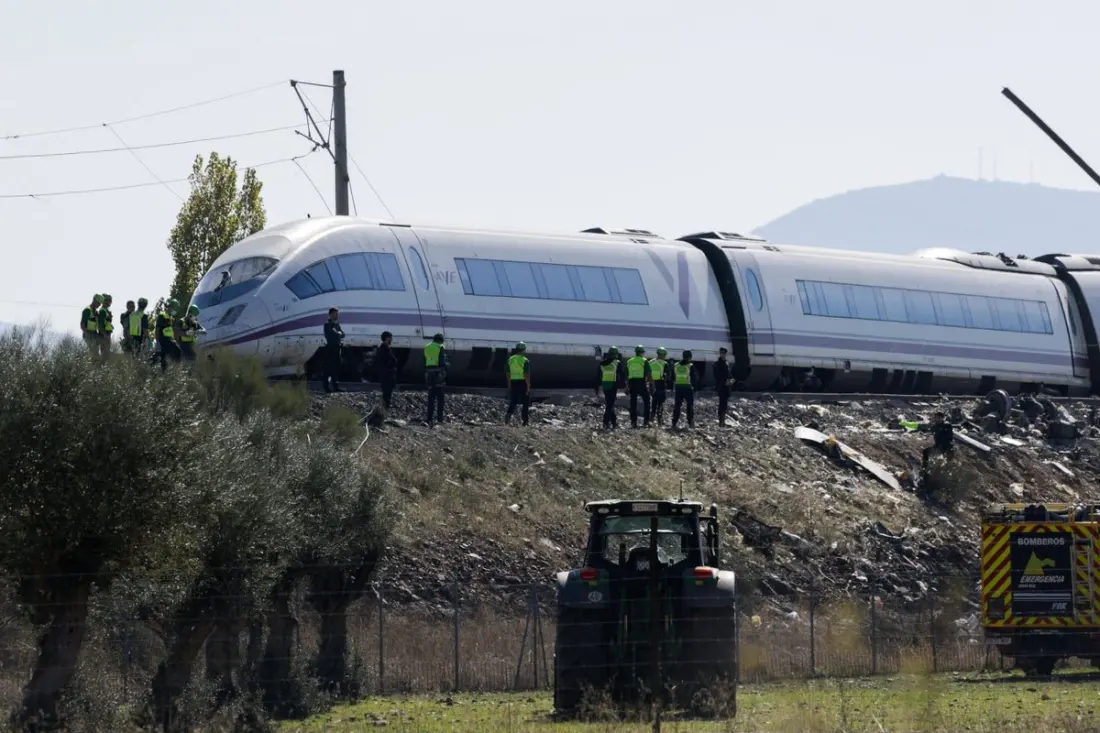
Rail travel across central and southern Spain has been thrown into chaos after two high-speed trains collided between the towns of Mora and Orgaz, near Toledo, on Wednesday morning. The crash happened shortly after 9am and involved trains operated by Renfe and the private operator iyro. It is being described as Spain's worst rail disaster since 2013, with dozens reported killed.
The impact on the network was immediate. All high-speed services on the Madrid to Andalusia line were suspended, knocking out trains from Madrid to Ciudad Real, Cordoba and Sevilla. Interrail flagged the disruption to pass holders, while Adif, Spain's rail infrastructure manager, said by early afternoon that limited service had resumed on some high-speed sections between Madrid and Toledo and between Málaga and Sevilla — but the picture remained patchy.
It is not just the state operator affected. iyro cancelled all services from Madrid Puerta de Atocha towards the Southern Corridor with no estimated time for resumption, and Ouigo — the budget high-speed brand owned by France's SNCF, which runs trains between Madrid and Barcelona among other routes — scrapped all its Madrid to Andalusia services because of the line closure.
Renfe is offering free changes and cancellations to anyone with a ticket on an affected journey, so travellers should not be out of pocket for rebooking. The UK Foreign Office has updated its Spain advice, warning that significant rail disruption is expected and giving two useful contacts: Renfe's passenger line on +34 900 10 10 20, and the British embassy consular line on +34 91 714 6300 for anyone affected by the accident.
If you are booked on a train in this corridor over the coming days, the practical advice is simple: check directly with your operator — Renfe, iyro or Ouigo — before heading to a station, and build serious slack into any connections, including onward flights or hotel check-ins. Spain's high-speed network is normally one of Europe's most reliable ways to move between Madrid and the south, so a full closure of this line is a rare and major event with knock-on effects that can linger as the investigation runs its course.
Travellers with flexibility may find alternative routing via conventional (non high-speed) services or buses for shorter legs, though capacity will be tight while everyone displaced competes for seats. Those holding Renfe tickets should take advantage of the free rebooking policy rather than cancelling outright if their trip can shift by a day or two.
This is a developing story, and service status is changing hour by hour — the source report will have the latest.