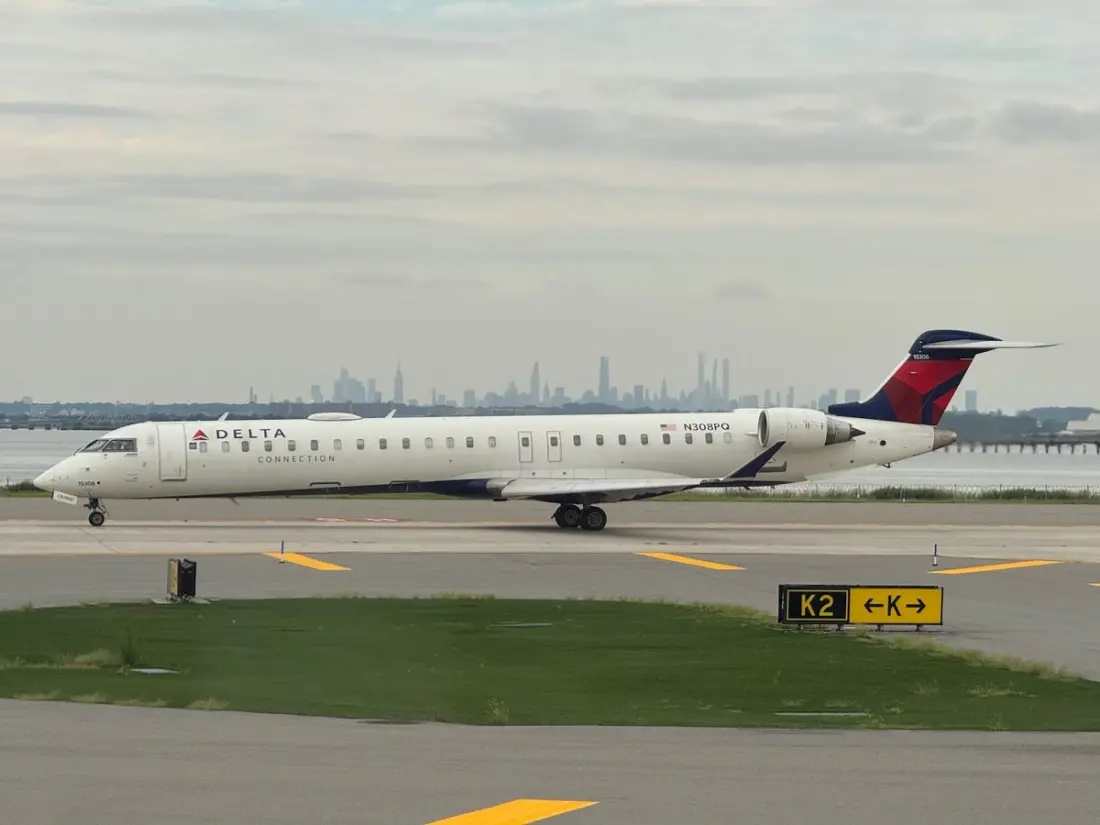
Delta will fly its last nonstop between Washington Dulles and New York JFK on 10 February 2027, ending a route the airline has operated for more than three decades. Once it goes, the two airports will have no direct link at all — JetBlue dropped the pairing in 2019 and United in 2014.
The route has long existed mainly to feed Delta's JFK hub, where the airline runs a large international operation. But the math never quite worked. Load factors ran below Delta's network average, and when United axed the same route in 2014, it was blunt about why: two-thirds of passengers were connecting traffic that didn't generate enough revenue to justify the aircraft and slots. Delta hasn't said that publicly, but the commercial logic is comparable.
Travellers aren't exactly stranded. Delta still serves Dulles from the New York area via other points in its network, and Washington-area passengers can reach JFK-bound Delta flights by starting at Reagan National instead, or by connecting through hubs like Atlanta or Detroit. The JFK cut is part of a broader Delta pattern: with slot restrictions and air traffic control congestion at Kennedy, the airline is prioritising local and premium-coastal traffic over thin domestic feeder routes.
There's an interesting subplot, too. United is preparing to return to JFK through its JetBlue partnership, which had some speculating it might revive Dulles–JFK itself. Unlikely — United already covers Washington–New York abundantly through Newark and LaGuardia, and its initial JFK access will be limited, with transcontinental flights a far better use of scarce slots. United has already tried and abandoned this exact route once.
For holiday planning, the practical takeaway is simple: if you're booked to connect between Dulles and JFK after February 2027 — or booking a Washington departure that relies on a Kennedy transfer — route yourself through Atlanta, Detroit, Reagan National or Newark instead. For everyone else, this is a tidying-up exercise rather than a real loss of access between two major cities that are already well connected by air and rail.