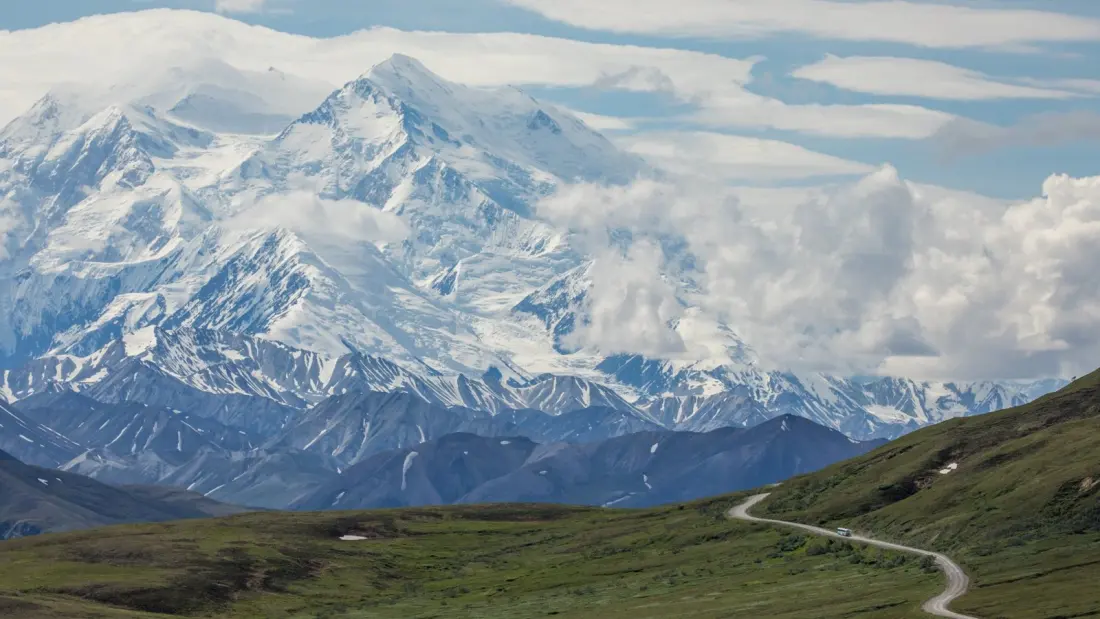
For six years, anyone visiting Denali National Park could only travel the first 43 miles of its single road. A landslide at a spot called Pretty Rocks cut off the back half of the park, leaving its wildest stretches reachable only by helicopter. That changed on September 2, 2026, when the new Pretty Rocks Bridge was completed, clearing the way for full public bus service to resume for the 2027 summer season.
The new crossing is a serious piece of engineering. The steel single-span truss bridge is 475 feet long and 24 feet wide — just enough room for a park bus to squeeze through. The wider $230 million federal project also includes 23 underground thermosiphons, a passive cooling system that keeps the permafrost beneath frozen year-round, since the landslide beneath the old road is still active. For now, hikers and cyclists can already cross; buses and vehicles return in 2027.
So what's at the end of the road? Kantishna, a remote former mining camp, and Wonder Lake — the spot Ansel Adams photographed on a rare cloudless day in 1947. Until now, only guests at the three wilderness lodges out that way could see any of it. One of them, the all-inclusive Denali Backcountry Lodge, has been flying guests in by helicopter on a 45-mile route. From 2027, lodge guests arrive by private bus, and day visitors can book guided experiences at the lodge for the first time.
The wildlife is the draw. On one recent drive along the road — two-thirds of which is single-lane gravel, with a 35 mph speed limit — travellers reported a blonde Denali grizzly on the tundra, caribou running, a moose in the willow marshes, a porcupine and a bear cub. Almost everything shows up from the road itself, which is why the park bus ride is considered the best way to experience the park.
Even with buses returning, Denali will stay far quieter than its famous cousins. Yellowstone gets over 4 million visitors a year with private-car road access; Denali draws around 500,000 across a 6-million-acre park the size of Vermont, and strict limits remain in place to protect the landscape.
One practical reality: the mountain itself is shy. Only about 30 percent of visitors see the 20,310-foot peak completely clear, and fewer than ten percent get a full base-to-summit view, because Denali generates its own weather. Stay several days, though — as lodge guests in Kantishna do — and the odds jump to roughly 85 percent. If seeing The Great One matters to you, book more than a day.
The reopening matters because it puts the park's deepest backcountry within reach of ordinary travellers again, not just those with lodge budgets or bush-plane fares. For six years the second half of Denali has been a near-mythical destination; from next summer, a bus ticket gets you there.
Outside Online