Slovenia and Croatia make one of the most satisfying two-country road trips in Europe, and a new ranked guide from World of Wanderlust lines up the 20 best stops north to south so you can drive them in order. The logic is simple: Slovenia is compact — roughly the size of Wales, half forest — and can be covered in a week from Ljubljana. Croatia is long and thin, running from Zagreb and Istria down the Dalmatian coast, ending with a ferry hop to the islands from Split.
Slovenia first. Ljubljana is a walkable capital with a Plečnik-designed car-free centre, a castle funicular and a genuinely good food scene — two days is enough. Lake Bled, 45 minutes away, delivers the postcard: island church, cliff castle, Julian Alps. Better still, time it for May, June or October to dodge the summer crush. Nearby Lake Bohinj is the wilder, undeveloped alternative where Slovenians actually swim, and Vintgar Gorge — a 1.6km wooden walkway through a canyon, open since 1893 — needs a timed ticket and an early start in summer.
Further afield, the Soča Valley on the Italian border is the adventure base: rafting, canyoning and the Vršič Pass, Slovenia's most dramatic mountain road (closed in winter). The Logar Valley, a glacial valley ringed by 2,000-metre peaks, is the country's quietest stunner. Then there's the oddball pair of Postojna Cave — 24km of passages with an underground train — and Predjama Castle, built into a cliff-face cave mouth. Piran, on Slovenia's 46km sliver of coast, is a car-free Venetian town and the best seafood stop in the country.
Into Croatia, the guide argues the north deserves more than a drive-through. Zagreb is a proper Central European capital — Austro-Hungarian boulevards, the Dolac market, the Museum of Broken Relationships — and the cheapest city on the list. Plitvice Lakes, a UNESCO park of 16 terraced lakes joined by waterfalls, rewards an opening-time arrival or an October visit when the beech forest turns. Istria follows: Rovinj, a Venetian fishing town widely called the Adriatic's prettiest, and Motovun, a walled hilltown above Europe's best truffle forests — described as Tuscany twenty years ago, at a third of the price.
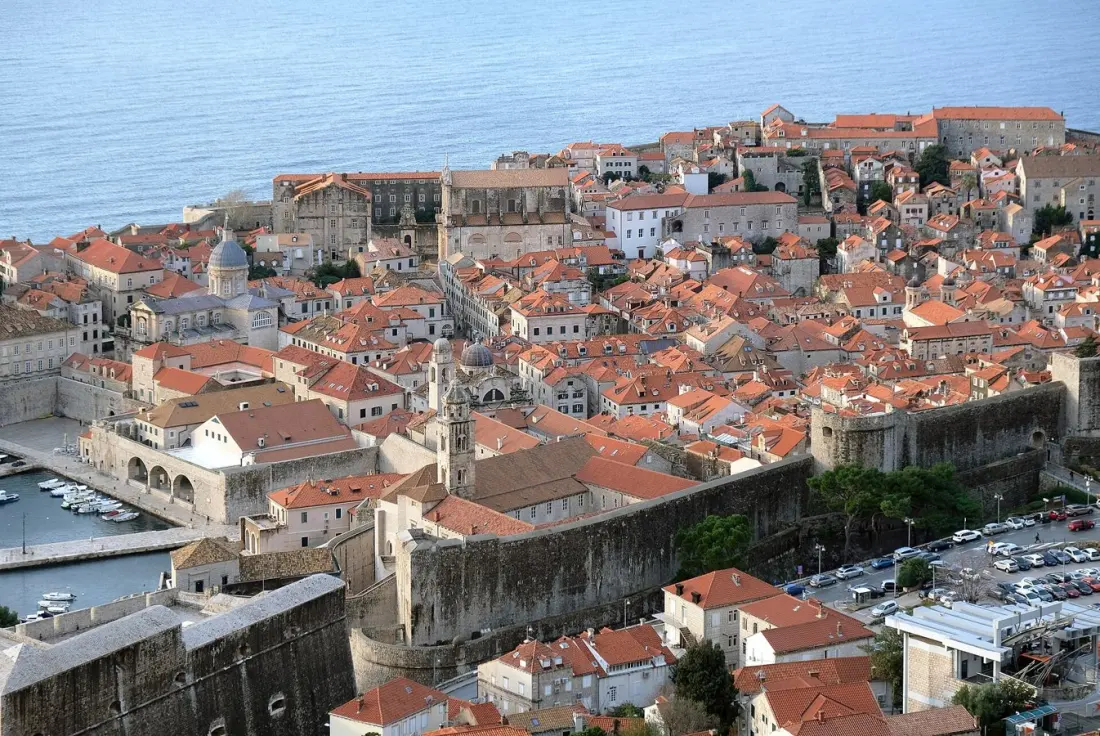
The southern leg runs down the Dalmatian coast to Dubrovnik's famous walls — the pick for history — with island time reserved for the end: Hvar for honeymoons, Vis for the best beaches.
Why it matters: the pairing works because the two countries complement each other almost perfectly — alpine lakes and caves in the north, beaches and walled cities in the south, all within a two-week drive with no internal border checks. If you'd rather pick one country, the guide's quick-picks table matches each stop to a trip type, from food and wine (inland Istria) to fewest tourists (the Logar Valley).
Story via World of Wanderlust.