A travel writer returning from an Aer Lingus cabin event in Ireland recently faced a common dilemma: a $420 online check-in offer to upgrade his overnight Air France economy flight from Europe to Rio de Janeiro. He declined, and reckons he slept better for it. The logic is worth hearing before you tap "upgrade" on your next red-eye.
The argument hinges on how premium economy cabins are configured. On many aircraft, tray tables are stowed in fixed armrests, which means those armrests can't be raised. Add a leg rest that can actually make getting comfortable harder, and you're often locked into sitting bolt upright for the whole flight. Crucially, fixed armrests also rule out the holy grail of budget long-haul sleep: stretching across an empty row. That option simply doesn't exist in premium economy, no matter how quiet the cabin is.
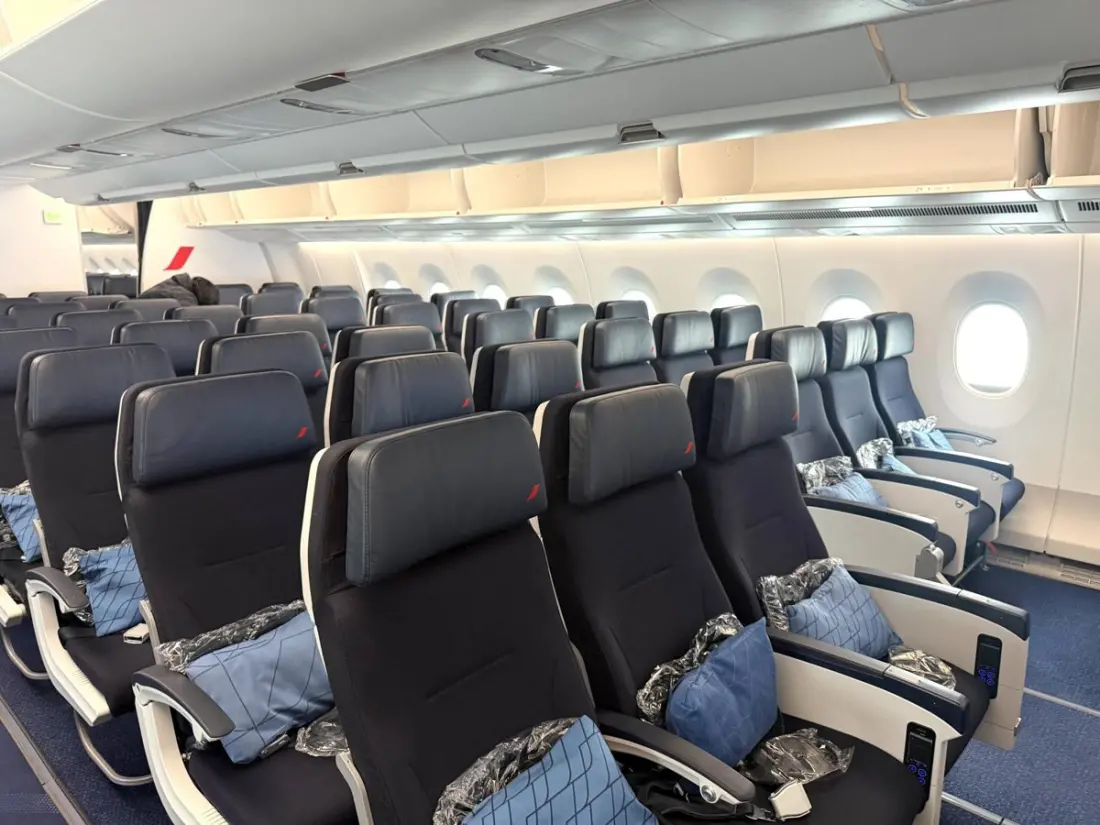
Economy, by contrast, at least gives you a shot at a row to yourself, and cabins are big enough that you can move around if a neighbour lets you spread out. On the writer's Air France Boeing 777-200ER, his seat strategy almost worked. With Flying Blue Gold status he could pick any economy seat free from 72 hours out, and he deliberately avoided exit-row seats (fixed partitions, same problem as premium) and empty rows of four that might fill up. He settled on a row of three with an empty middle, used a pillow brought from home, and managed some passable curled-up sleep against the fuselage. The kicker? Passengers at the back who gambled on empty four-seat rows were found fast asleep across all of them.
The takeaway isn't that premium economy is bad. On carriers with genuinely good products, like Emirates, it's a clear step up and worth the money. And on a long day flight, where you're sitting up anyway, extra recline and leg room make far more sense than they do on a night leg when your real goal is lying flat somehow. The writer admits that on the daylight return leg, he actually wished he'd upgraded.
So the rule of thumb: match the cabin to your sleep style and the flight timing. If you're someone who can only sleep lying down, and you can roll the dice on a sparse economy cabin, the cheaper seat on an overnight flight may genuinely serve you better. If you sleep fine upright, or the cabin is likely to be full, premium economy's extra inches are worth every cent.
For seat-pickers, a few practical pointers emerge from the story. Status or paid seat selection that opens 72 hours before departure is a real advantage, since you can see what's actually empty. Bring a travel pillow or cushion to protect your back from seat edges. And if boarding completes with empty rows nearby, it never hurts to politely ask a flight attendant or neighbour about moving, even if your seatmate doesn't grasp the logic.
Full credit to One Mile at a Time for the original piece.