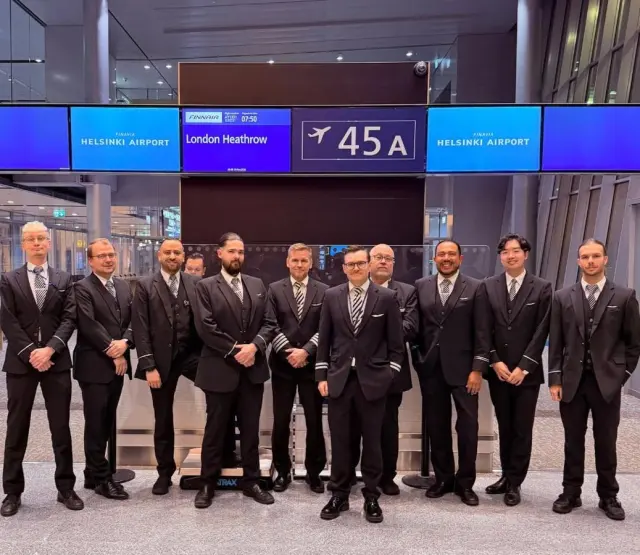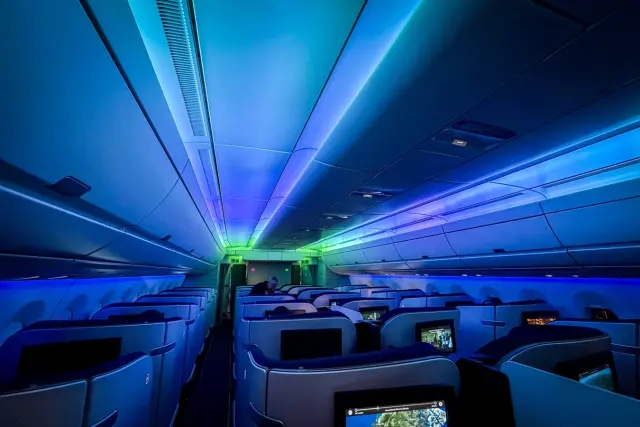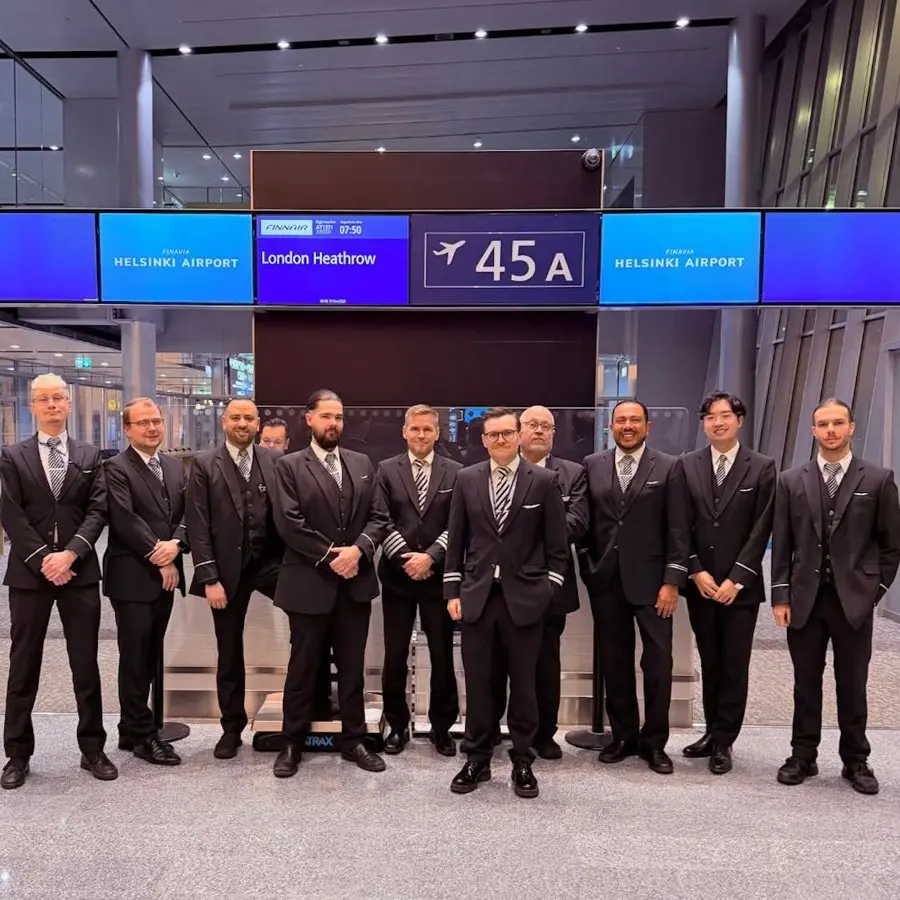
On 19 November, International Men's Day, Finnair operated flight AY1331 from Helsinki to London Heathrow with an entirely male crew: two pilots and eight flight attendants on an Airbus A350-900, plus male gate agents at the departure gate. It was a symbolic flight, but it pointed at a real number — only around 10% of Finnair's cabin crew are men, and the airline says it would like that share to grow.
The contrast with other carriers is striking. Frequent flyers on European airlines are used to seeing male cabin crew; on Finnair, many regulars struggle to recall a single flight staffed by one. Hence the point of the exercise: showing young men that cabin crew work is a career actually open to them.
The commentary around the flight highlights a sharper paradox elsewhere. India's IndiGo proudly announced in March that it employs more than 1,000 women pilots — 17.5% of its pilot workforce — yet its entry-level cabin crew recruitment criteria explicitly specify female Indian nationals aged 18 to 27. So women are encouraged into a role once considered male territory, the cockpit, while men are barred outright from applying for the cabin. There's a meaningful difference, the argument goes, between who chooses to apply and who is allowed to apply.
The piece also draws a historical parallel. In the 1972 US case Moritz v. Commissioner — later dramatised in the film On the Basis of Sex — Ruth Bader Ginsburg represented a never-married man denied a tax deduction for caring for his elderly mother because the benefit was framed as something women (and only certain men) could claim. Winning that case helped establish that rigid assumptions about men's and women's proper roles can hurt both sexes. The same logic applies to airlines that treat in-flight hospitality as inherently female work: qualified men get excluded, and everyone else loses out on the talent pool.
Importantly, none of this is a knock on service culture. Cabin crew are, first and foremost, safety professionals, and there's nothing wrong with an airline taking pride in elegant uniforms and polished service — the Singapore Girl image, for instance, coexists with Singapore Airlines employing male crew. The argument is simply that gracious hospitality isn't a gendered skill. For travellers, this story is a small window into how airlines recruit, brand themselves and, in some cases, still legally restrict who can even apply for a job serving you at 35,000 feet.