Health officials in the Dominican Republic logged 76 new confirmed dengue cases in the week of October 18 to 24, pushing the country's year-to-date total to 556, according to the latest epidemiological bulletin from the Ministry of Public Health. That works out to an incidence rate of 6.24 cases per 100,000 people.
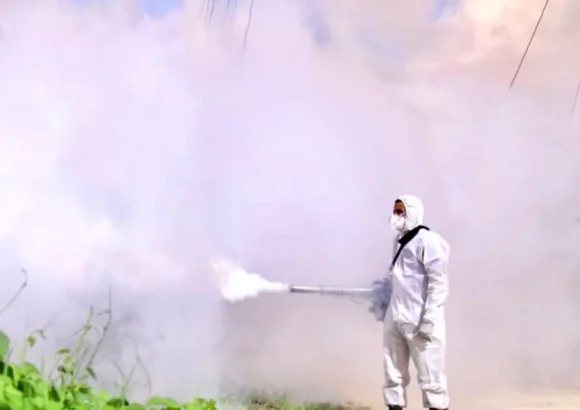
The number sounds alarming until you zoom out. Citing the Pan American Health Organization, the ministry points out that the Dominican Republic now has one of the lowest dengue rates in the Americas — far below the levels being reported in Brazil, Colombia, Peru, Mexico and Ecuador. So while dengue is present, the country is in a comparatively good position regionally.
There's also encouraging news on malaria. Just two new cases were confirmed in the same week, bringing the annual total to 140 — roughly an 82 percent drop from the 842 cases recorded at the same point the previous year. The trend is described as downward and under control, with an incidence rate of 1.57 per 100,000.
Other health indicators from the bulletin are mostly stable or improving. No new leptospirosis cases were confirmed in the week, though the year-to-date count of 297 is higher than last year's 154 at this point. Cholera remains at zero cases for the year. Flu-like illness is running low and below expected levels, with only limited detections of influenza A, A(H3N2), RSV and COVID-19 in circulation.
The bulletin also touched on maternal health, reporting five maternal deaths in the week (133 for the year, down from 155 previously) and 32 infant deaths (1,623 year-to-date), with authorities saying hospital monitoring is being intensified.
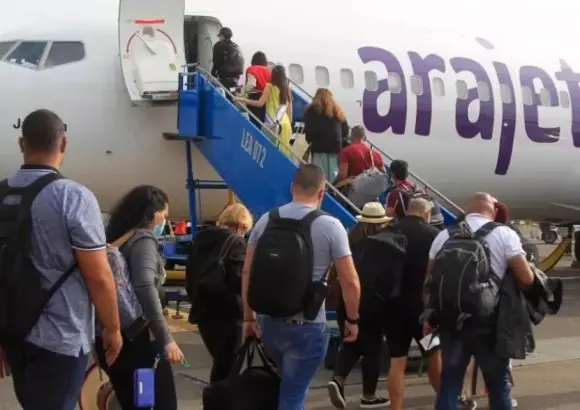
For travellers, the practical takeaway is that none of this should derail a Dominican Republic holiday, but the usual mosquito precautions still apply — dengue is endemic across the Caribbean, not just here. The Dominican Republic is one of the most accessible Caribbean destinations for many travellers, with direct flights into Punta Cana and Santo Domingo, and the resort-heavy east coast sees the bulk of international arrivals.
If you're heading there in the coming months, pack insect repellent with DEET or picaridin, opt for long sleeves at dawn and dusk, and consider accommodation with air conditioning or screened windows. Mosquito-borne illness risk tends to be lower in the drier months and higher during and after the rainy season. As always, check your country's travel health advice before departure — but on these numbers, the DR is holding up better than most of the region.
Reported by Dominican Today