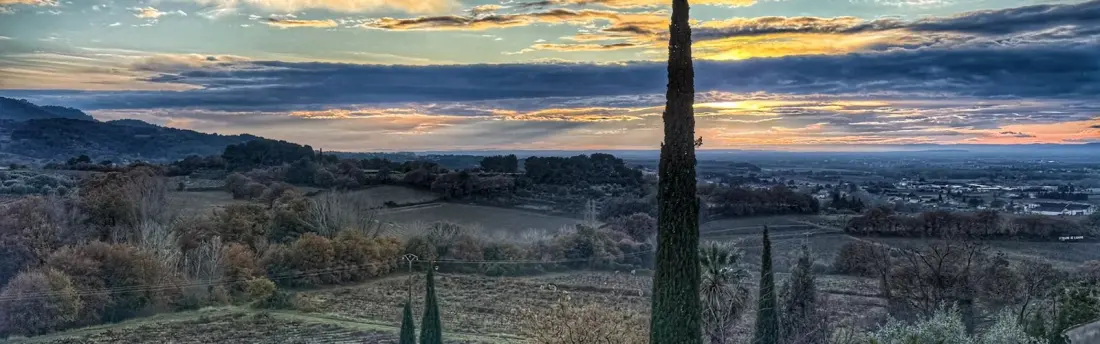
Provence in summer means queues, heat and cicadas. Come winter, the Vaucluse swaps lavender scent for truffles, and you can wander cobbled medieval streets in soft sunshine without fighting for space. Writer Janine Marsh's route through four spots shows just how much is actually open and running between November and March.
Start in Pernes-les-Fontaines, nicknamed the village of forty fountains after a spring discovery some 500 years ago sparked a building craze — the oldest surviving fountain dates to 1475. It's also an arts-and-crafts hub with more than 25 artisans, from gold-leaf jeweller Clement Landy to milliner Véronique Bahuaud and Didier Bougon, one of France's few remaining barrel organ makers. A marked Workshop Walk links their studios. Refuel at Au Marché de Provence, a husband-and-wife café famous for its pain perdu, or grab chocolates at Belle Epoque pâtisserie Maison Battu. There's a Saturday market, a costume and bike museum, and 12th-century frescoes in the Ferrande Tower.
Richerenches is the winter headline act: one of France's biggest truffle markets runs every Saturday morning from late November to early March, all whispered prices, cash only, no haggling — an estimated 300-400kg of black gold changes hands weekly. Skip the hushed trading and book the communal lunch at the town hall instead: long tables, kir, help-yourself Côtes du Rhône and a cheap multi-course meal cooked by a rotating local association. For the full experience, Domaine Saint-Alban runs daily truffle hunts by appointment (November to end of March) with Christian Allègre and his dog Holly, finished with a wine tasting — and truffle butter on bread if you're lucky.
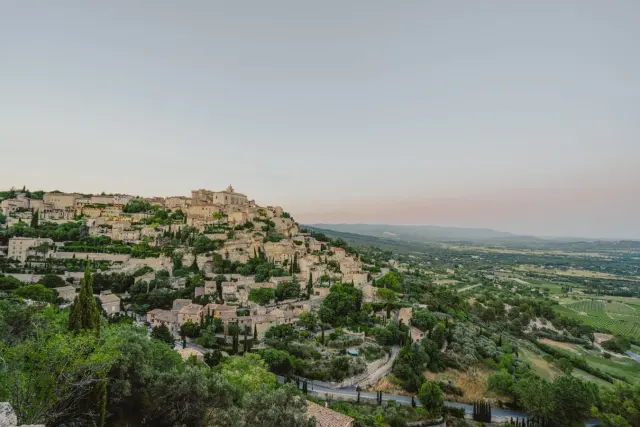
Thirty minutes away, Séguret looks like a painting come to life: cobbled lanes, hilltop views, tearooms and artists' studios. On Christmas Eve the village stages a living nativity with real people, and local santon-maker Denis Voeux sculpts the figurines — and the surrounding scenery — based on actual villagers. His workshop doubles as a good place to start a collection of the hand-me-down Provençal figurines.
Finish in Avignon, where the Pont d'Avignon and the vast Gothic Palace of the Popes are blissfully quiet in winter. From late November through December, pop-up artisan shops appear, and the UNESCO-listed Petit Palais — packed with 13th- to 16th-century paintings — is often nearly empty. Eat at Les Halles, the covered market where cheese stalls stock 250 varieties and Cuisines centr'halles serves seafood platters and risotto (cooking classes available). For something more polished, there's afternoon tea at the 5-star La Mirande, or dinner and Rhône wine tastings at Carré du Palais in an 18th-century mansion.
For travellers, the pitch is simple: lower prices, thinner crowds, festive lights, and a truffle season you can't get any other time of year. Pack a coat, bring cash for the market, and book the Richerenches town hall lunch well ahead.