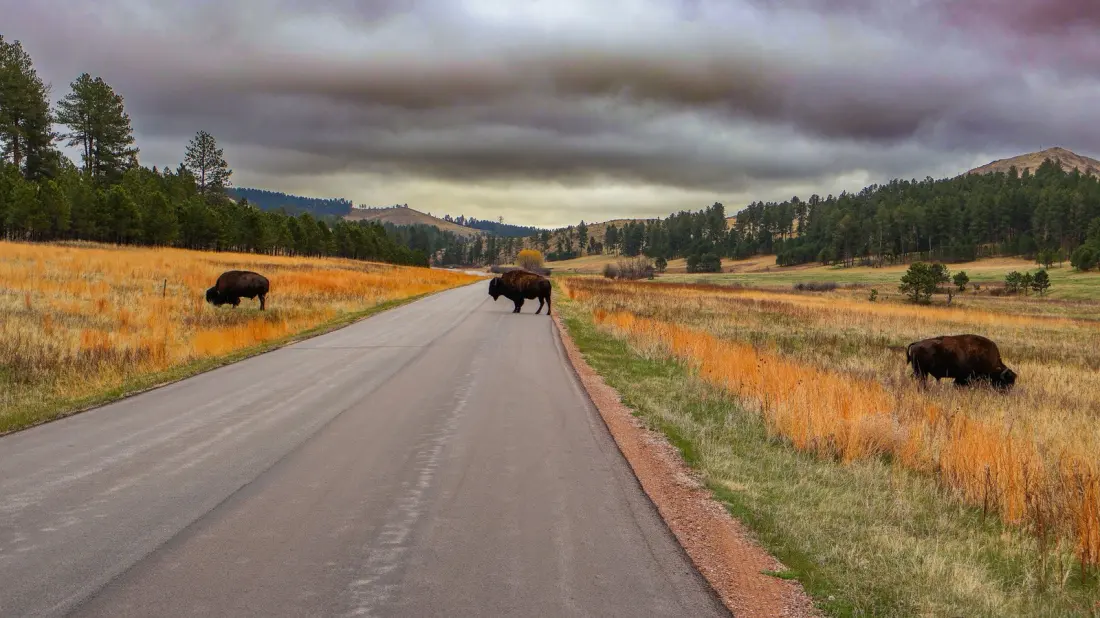
Florida has monopolised the American retirement conversation for decades, but a corner of western South Dakota is making a quiet case for itself. Custer County, home to roughly 9,500 people spread across 1,573 square miles of the Black Hills, offers something the Sunshine State can't: mountain views, free-roaming bison and genuinely dark, uncrowded nights.
The practical numbers stack up. The county gets around 226 sunny days a year, South Dakota charges no state income tax, and Niche rates the cost of living as above average for affordability. More than a third of residents are 65 or older, so newcomers aren't short of neighbours in the same stage of life. Rapid City, with its regional airport, hospitals and city attractions, sits about 50 miles away — close enough for appointments and big-box runs, far enough to keep the rural calm intact.
The real selling point is what's outside the front door. Custer County contains two of the Midwest's most underrated cave destinations: Wind Cave National Park and Jewel Cave National Monument, both home to some of the world's longest cave systems, with rare formations like boxwork. Ranger-guided tours suit a range of fitness levels. Above ground at Wind Cave, bison graze the mixed-grass prairie — the 2.7-mile Cold Brook Canyon Trail is a gentle way to spot them, along with prairie dogs.
Then there's Custer State Park, South Dakota's largest and most-visited state park, where nearly 1,400 bison roam alongside elk and the famously friendly "begging burros." The 18-mile Wildlife Loop Road is the easy route — visitors often compare it to a safari. The park also covers lake fishing, picnicking and cycling for anyone building a full retirement calendar.
For hikers, the Black Hills deliver what flat Florida never could. The 7.2-mile Black Elk Peak Loop climbs to South Dakota's highest point for panoramic granite-country views, while the 3.3-mile Coon Hollow Loop keeps things gentler through conifer forest. The 70-mile Peter Norbeck National Scenic Byway threads the same hills, lined with lodges worth an overnight.
As for where to settle, the Gold Rush town of Custer has a compact, walkable downtown with restaurants and coffee shops, plus a reputation for warm locals. Sleepier Hermosa offers a more rural-suburban feel. The honest catch: South Dakota winters are cold and windy, so seasonal visitors or snow-lovers will adapt more easily than beach devotees.
Even if full retirement relocation isn't on your radar, this story works as a trip-planner. Cave tours, a bison safari by car, a state-high-point hike and a scenic byway add up to a well-rounded Black Hills itinerary — no beaches required.