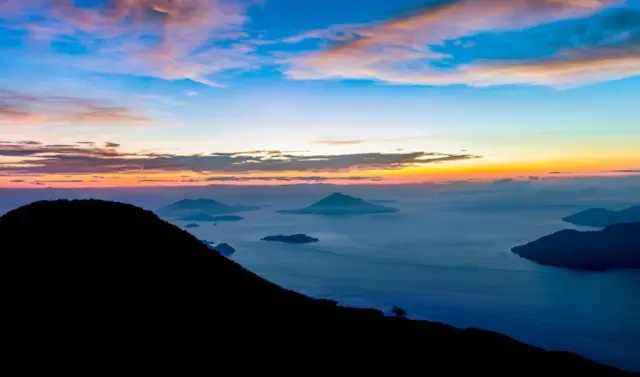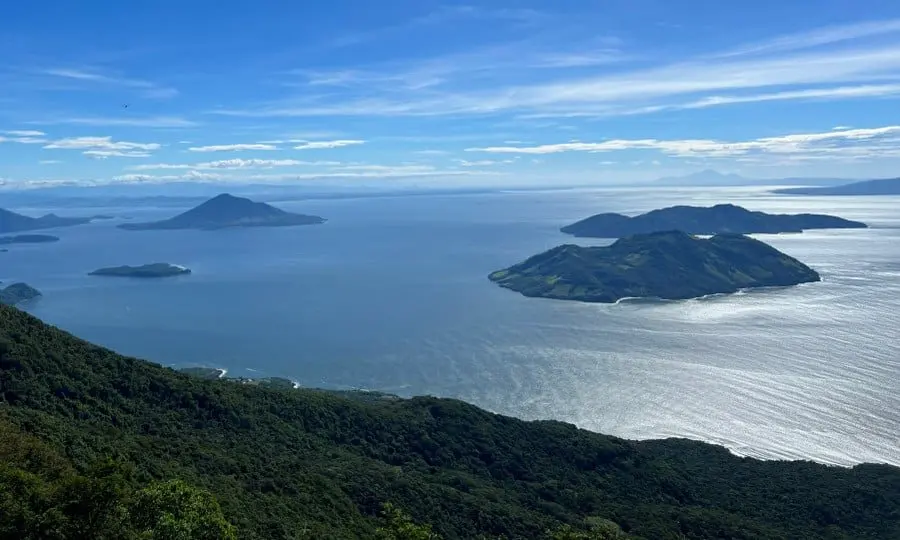
Most visitors to El Salvador head straight for the surf breaks. But on the country's eastern edge sits the Gulf of Fonseca, a 3,200-square-kilometre Pacific inlet shared with Honduras and Nicaragua, where the water is calm, the islands are volcanic, and the pace is set by fishing boats rather than surfboards.
The Salvadoran gateway is La Unión, roughly three to four hours by road from San Salvador. From there, local boat operators run trips to a handful of islands, each with its own character. Meanguera, the best known, is mountainous and home to fishing villages where fresh seafood is the main event. Conchaguita stands out for steep green volcanic slopes and a layered Indigenous and colonial history. Zacatillo, closest to the mainland, makes an easy half-day excursion — you can watch the local fishing fleet at work and take in views across the water.
Beyond the islands, the mainland coast rewards slower travel. Conchagua Volcano towers over the eastern shoreline, and on a clear morning or at sunset its viewpoints stretch as far as neighbouring countries. Near La Unión, Las Playitas beach is a convenient no-boat-needed intro to the gulf, lined with seafood restaurants serving fried fish, rice, salad and tortillas with islands on the horizon. Further along, Playas Negras draws travellers with dark volcanic sand and an undeveloped feel — though swimming here demands caution, as tides, currents and rocks can shift conditions, so ask locals before getting in.
The gulf's mangrove forests are another draw, sheltering herons, egrets and pelicans, along with the fish and crustaceans that sustain coastal communities. Birdwatching here is seasonal and patience-dependent, but the setting alone is worth a boat ride.
History runs deep in these waters. Indigenous communities fished and traded here long before Spanish explorer Gil González Dávila arrived in 1522; the gulf was later named for Juan Rodríguez de Fonseca, a Spanish bishop tied to colonial exploration. El Salvador, Honduras and Nicaragua have long disputed islands and maritime boundaries in the gulf, so travellers should stay in Salvadoran waters and not cross international lines without proper arrangements.
Practically speaking, this is a destination that needs a little preparation. Island transport is informal and weather-dependent — confirm your return boat before leaving the mainland. Carry cash, since ATMs are scarce and card payment unreliable in small coastal towns, and pack drinking water, sunscreen and light clothing. Travel in the dry season, November to April, for the most reliable boat-trip weather; the May-to-October rains turn the hills lush but bring afternoon storms. Choose experienced operators, wear a life jacket, and treat the fishing communities you pass through with respect — no littering, no trespassing on private land.
For travellers who have already seen El Salvador's famous surf beaches, or who simply prefer calm bays to breaking waves, the Gulf of Fonseca offers a genuinely different side of the country: maritime history, island-hopping, volcano viewpoints and some of the freshest seafood you'll eat anywhere on the Pacific coast.