Every year, brown mats of sargassum drift onto Caribbean beaches, choking the shorelines that travellers book flights for. Now the Dominican Republic is pushing a coordinated regional answer. At the close of the High-Level Global Forum on Energy Transition — part of the 11th Energy Week in Santo Domingo — the government unveiled the Santo Domingo Ministerial Declaration on the Sustainable Valorization of Sargassum.
The declaration asks Caribbean nations to work together on ways to manage the seaweed that are scientifically sound, financially viable and environmentally responsible. Energy and Mines Minister Joel Santos framed the problem bluntly: sargassum doesn't respect borders, and it hits ecosystems, coastal communities and tourism economies across the region. His argument is that the macroalga could shift from nuisance to resource — a raw material for the circular economy, possibly even for energy production.
Foreign Minister Víctor Bisonó said the goal is to convert political promises into actual projects through joint research, investment and development. He pointed to work already under way with universities, businesses and civil society to improve how sargassum is monitored, collected and processed. The country is looking at agricultural and industrial uses, new materials and energy applications — as long as anything meets technical, environmental, health and economic standards.
There's money behind the talk, too. A US$6.3 million financing package involving the European Investment Bank, the European Union and Adopem Savings and Credit Bank will offer loans and technical assistance to Dominican micro, small and medium-sized enterprises working in the sargassum value chain. The declaration also urges governments, research institutions, development banks and companies to coordinate on research, responsible harvesting, policy, funding and market development — with environmental safeguards intact.
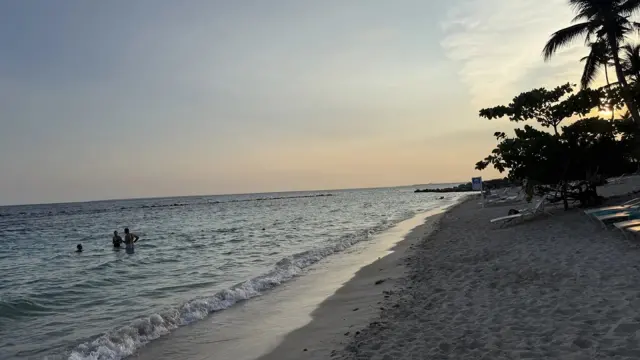
Why should holidaymakers care? Because sargassum is one of the biggest wildcards in a Caribbean beach trip. Heavy influx years can turn postcard-perfect stretches of sand in Punta Cana or Mexico's Riviera Maya into piles of decaying seaweed. A serious regional effort to collect and repurpose the stuff — rather than just trucking it off the beach — could mean cleaner shorelines and more predictable conditions for travellers. It's early days, but the fact that governments are treating sargassum as an industry rather than just a cleanup bill is a genuine shift.