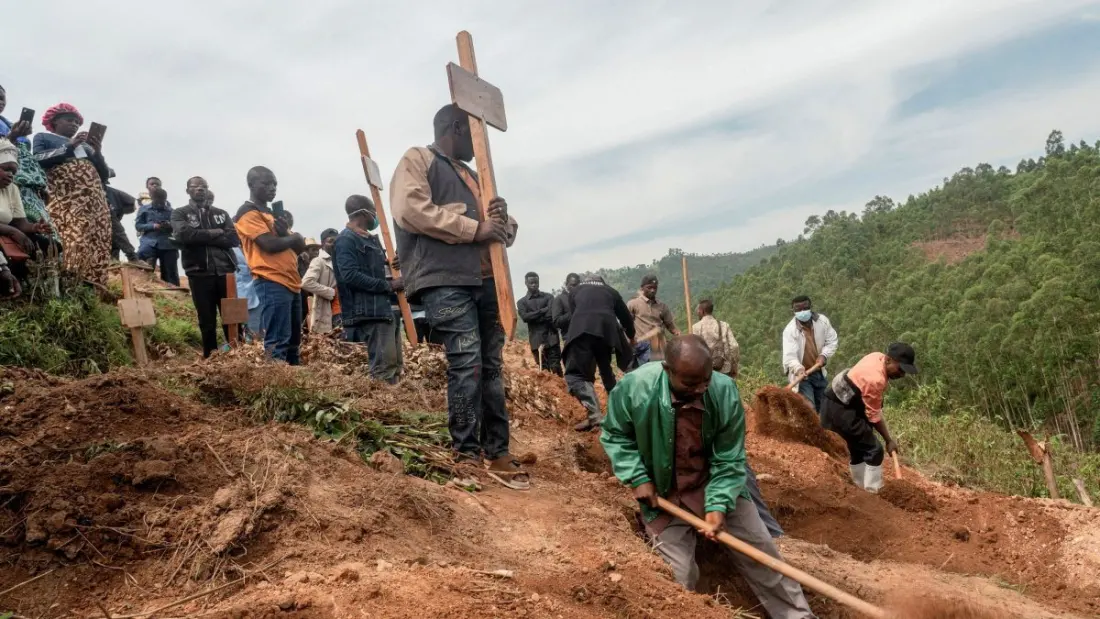
An Ebola outbreak in the Democratic Republic of Congo has now killed more than 5,000 people, making it the second-deadliest Ebola epidemic on record after the 2014-2016 West African crisis that claimed roughly 11,000 lives.
According to figures from the Congolese health ministry released in late October 2026, 5,026 people have died among 10,351 confirmed and suspected cases — a fatality rate close to 50%. The outbreak, caused by the Bundibugyo virus, was declared in mid-May and has since spread to 67 of the country's 178 health zones across eight of its 26 provinces. Ituri and North Kivu provinces in the east are the hardest hit, accounting for 9,782 of the confirmed cases and 4,792 deaths.
What makes this outbreak unusually alarming is its geographic reach. Cases have now been confirmed in Kenya (eight cases, two deaths) and Nigeria, following an earlier outbreak in Uganda — the first time Ebola has been recorded across three African regions. Only 2,788 patients have recovered, and because the Bundibugyo virus has no known vaccine or specific treatment, medics can offer supportive care only.
The response is struggling on several fronts. Africa CDC estimates that about 80% of new cases are appearing outside monitored transmission chains, meaning most infections cannot be traced to known contacts. Roughly a third of deaths occurred outside treatment centres before patients were ever tested.
Eastern Congo's security situation is a major obstacle. The Rwanda-backed M23 rebel group is fighting government forces in the region, while the Allied Democratic Forces insurgency near the Ugandan border restricts health workers' movement. Community distrust has turned violent: a nurse was killed responding to an Ebola alert, and a ruling-party politician was murdered in September after promoting health measures on radio. Health workers have also gone on strike over unpaid wages — staff at a treatment centre in Tchomia downed tools in late October demanding four months of salary, while the centre held five confirmed and ten suspected patients. Similar stoppages have hit Beni in North Kivu, where officials say a lack of fuel and funding from the central government is letting cases spiral.
Why does this matter to travellers? Anyone planning trips to east or central Africa should track the situation closely. Health authorities in the region are screening travellers at borders and airports, and several countries impose entry restrictions or health declarations for visitors arriving from affected areas. Even if your itinerary avoids eastern DRC entirely — which is the sensible default given the armed conflict there, independent of Ebola — connecting flights or overland routes via Uganda, Kenya or Nigeria may trigger additional screening. Check your foreign office's travel advisories for the DRC before booking anything, and make sure your travel insurance covers medical evacuation. If you do have a trip planned to East Africa, stay informed about confirmed cases in your destination and avoid contact with anyone showing symptoms.
The situation remains fluid, and containment depends heavily on funding, security conditions and rebuilding trust with local communities.