If you're planning a road trip in Mexico, one letter can make or break your schedule: D. Toll highways in Mexico carry the same number as the free federal road running alongside them, but with a 'D' after it. Take the Mexico City to Cuernavaca corridor: highway 95 is the free freeway, while 95D is its tolled, faster twin. Google Maps and Apple Maps flag which stretches are tolled, so check your route before you set off — you often can't cover an entire journey on toll roads alone.
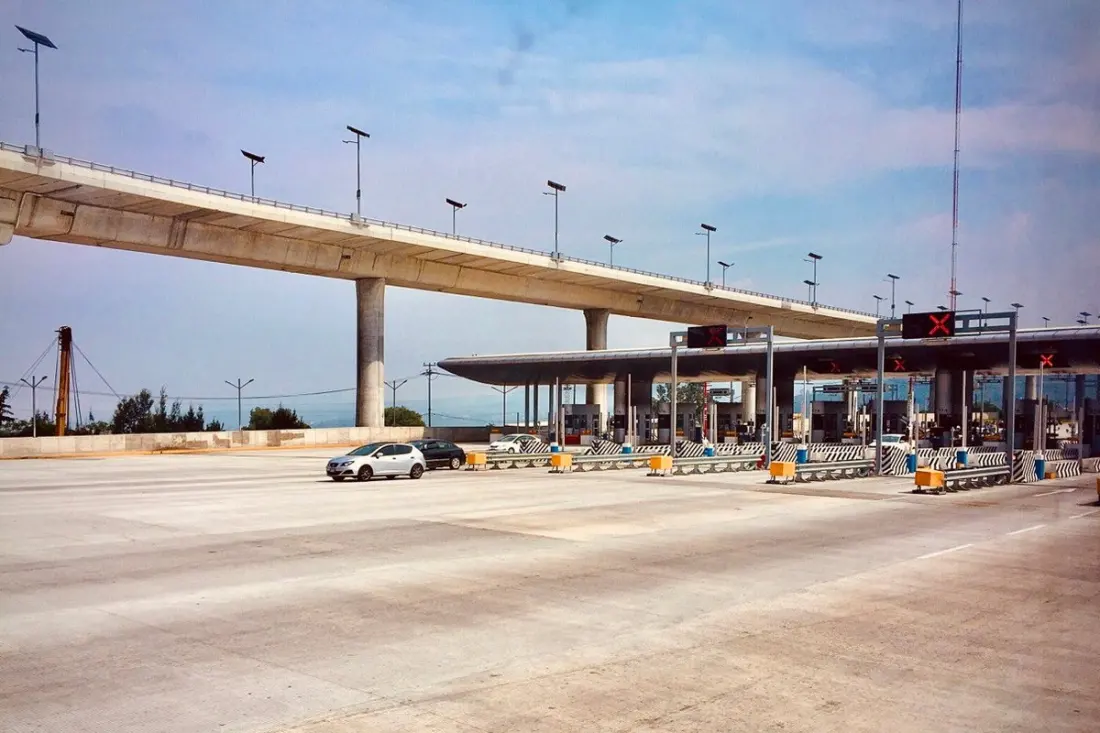
Intercity toll roads ('cuota' roads) are generally four lanes, except in mountainous stretches where terrain narrows them to one lane each way. You pay as you go: toll booths sit at major towns or turnoffs, and each fee covers you up to the next booth. Costs rise in small increments through the year, and route-checkers like the CAPUFE tables give you quotes in advance. Crucially, no credit or debit cards are accepted at booths — it's cash in Mexican pesos only, or a windshield-mounted electronic TAG linked to a card.
The TAG becomes mandatory in one place: Mexico City's elevated beltway, the Anillo Periférico's 'Segundo Piso' (second floor). Built starting in the early 2000s and extended several times, it now arcs from the north of the capital — where the Querétaro road comes in — around to the south, with a spur connecting to the 95D toward Cuernavaca. Its automated ramp gates take no cash and no cards, only TAG transponders. Charges (under the AUSUR system) are calculated automatically from your entry and exit gates based on distance travelled. Two TAG brands work nationwide and on the beltway: TAG IAVE, run by the toll-road agency, and TeleVia. You can top either up with cash at participating shops, or link a credit or debit card so fees are charged automatically as you pass through gates.
Signage is its own language, and knowing three words saves real confusion. 'Libre' marks the free road — slower, often single-lane each way, less well maintained, and best avoided after dark, though it's your route to smaller towns the toll roads bypass. 'Cuota' points you to the toll road. 'Libramiento' signals a bypass around a town or city; some stretches are tolled, others free. And 'Segundo Piso' is that elevated beltway. Watch out for the numbering trap: you can be on the correct highway number, heading the right way, and still be trundling along the free road when you meant to be on the toll one.
Who is this for? Anyone renting a car or driving their own into Mexico — especially travellers combining Mexico City with Cuernavaca, Querétaro or beyond, where the beltway and 95D come into play. If you'll use toll roads more than occasionally, buy a TAG before or at the start of your trip; if you're touching Mexico City's Periférico at all, it's non-negotiable. And before you drive, sort proper insurance: foreign policies often aren't valid in Mexico, so look for a Mexican-valid policy covering third-party liability and legal assistance. Get the payment and signage basics right, and Mexico's toll network is a genuinely fast, comfortable way to cover long distances.