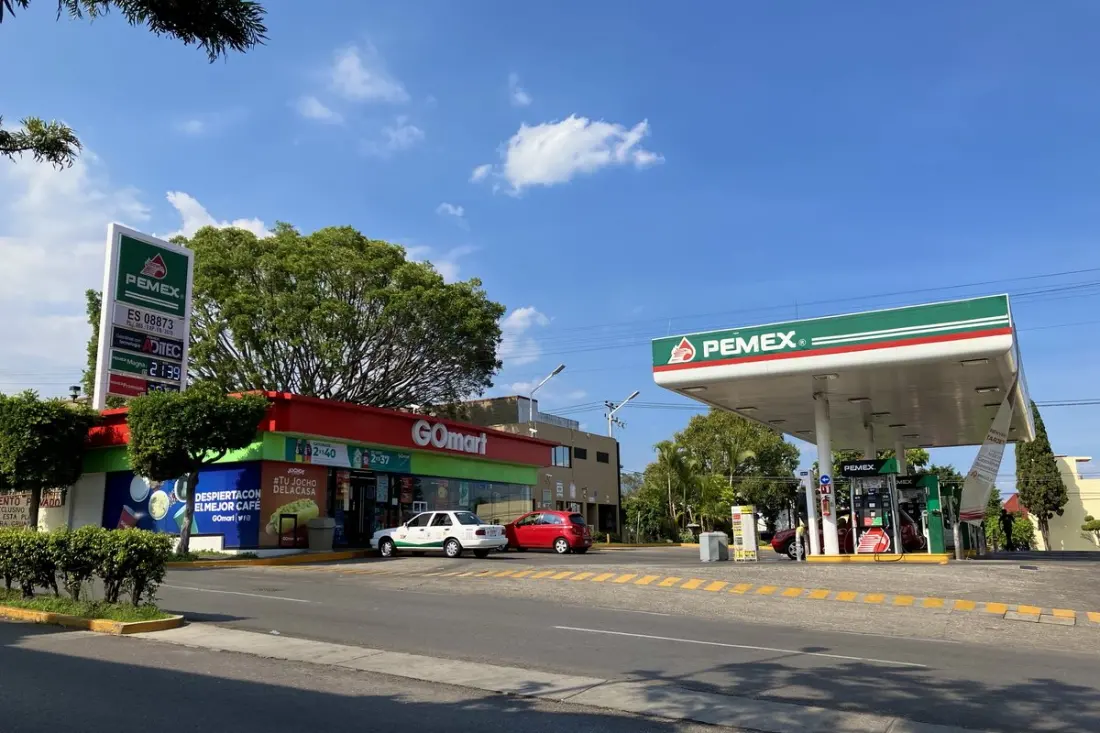
Filling up in Mexico isn't quite the same as back home. For decades, every litre of petrol and diesel came from state-run PEMEX stations, with government-set price caps. That ended with a phased deregulation completed in 2017, and today a range of private station brands compete — each setting its own prices. Costco even sells fuel at some locations. Locals watch the price boards and hunt for discounts, and prices can differ noticeably between stations in the same town.
For road-trippers, the practical upshot: fill up in cities and towns where competition keeps prices down, because stations out on open highways charge more. If you want to compare prices before you roll, the government energy regulator CRE publishes nationwide fuel prices on its website (gob.mx/cre) under the 'Precios y tarifas' section.
Every station in Mexico is full-service — you won't pump your own fuel. An attendant waves you into a bay and dispenses the petrol for you. Watch that the pump meter is reset to zero before fuelling starts (good attendants will show you unprompted), then say 'lleno' for a full tank or name a peso amount, like 'doscientos pesos'. Attendants will also clean your windscreen, check tyre pressure, top up oil or coolant, even swap wiper blades — agree a price for any consumables first, and tip around 10 pesos for a windscreen wash. A fair tip is 3-5% of the fuel bill, rising to 5-10% if they've done extra jobs.
Most stations have a convenience store alongside, similar to the neighbourhood tienditas — snacks, coffee, phone top-ups, basic pharmacy items and a restroom. One caution: don't leave the vehicle unattended at highway stops. If you're travelling with others, keep someone with the car; solo drivers should take valuables (passport, cards, phone) with them and keep store visits brief.
Payment is where it pays to be streetwise. Cash always works, and it's smart to carry some on remote stretches where card systems fail. Costco pumps are card-only. Petrol stations are prime territory for card skimmers, so use a credit card rather than a debit card, never let the card leave your sight — the attendant should bring a portable terminal to you — and be wary if your chip-and-PIN card gets swiped instead of inserted. Apps that let you freeze a card between purchases are a neat defence, and checking your transactions regularly on the road means you can flag anything odd immediately.
If you're bringing your own vehicle across the border, remember that Mexican law requires valid local auto insurance — US or Canadian policies generally don't cover you. A little pump-side know-how, plus a few basic precautions, and Mexico's highways are a genuinely rewarding way to see the country.