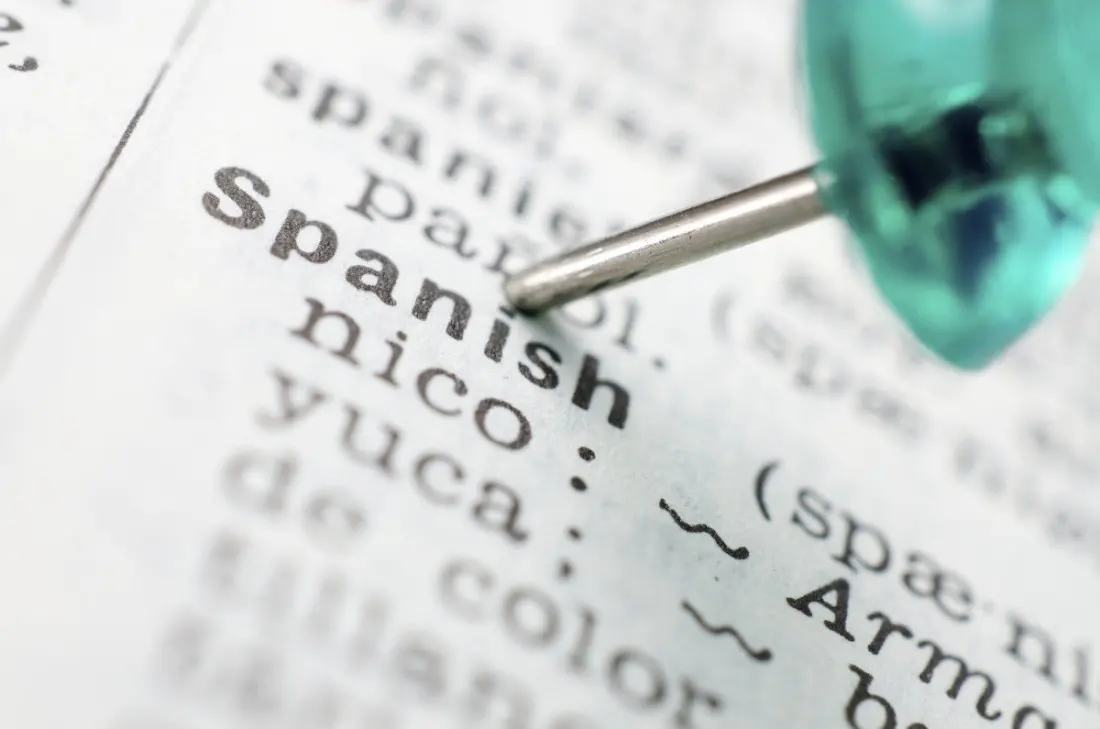
If you're heading to Mexico or anywhere else in the Spanish-speaking world and worried about the language barrier, here's some good news: Spanish has only five vowel sounds, and they never change. That's it. Five. Compare that to English, where the same letters can be pronounced a dozen different ways — think of rough, bough, though, thought and thorough — and you can see why Spanish is often considered one of the friendlier languages for beginners.
Each Spanish vowel keeps its sound no matter where it appears in a word. The 'a' sounds like the a in cat, the 'e' is closer to the first e in Peter, the 'i' is like a long English 'e', the 'o' is the short o in dog, and the 'u' is like the u in flute. Once you've locked those in, you can pronounce pretty much any word you see written down — a huge advantage over English, which even native Spanish speakers find baffling for its unpredictability.
Vowel combinations work logically too. When two vowels join into one syllable, the sound is simply a blend of the two originals. The 'ai' in a word like amainar (to wane) squashes the a and i together into something like the long i in 'high'. The 'au' sounds like the 'ou' in 'out', and 'oi' or 'oy' comes out as the 'oy' in 'boy'. Even borrowed foreign words follow a pragmatic path — the English word 'voucher' appears in Spanish as 'vou' but the Royal Spanish Academy (RAE) actually spells it 'váucher', and most locals will just say cupón or vale instead.
There's one small wrinkle worth knowing before you order your first taco. The 'e' at the end of a word sounds slightly sharper than it does elsewhere — closer to 'ay'. So the Mexican peso is pronounced closer to PE'-soh than PAY'-soh, but a word ending in 'e', like depende (it depends), lands roughly on de-PEN-day. Perderé (I will lose) comes out as pair-de-RAY, and impenetrable as EEM-pe-ne-TRA-blay. It's a subtle shift, and locals will understand you either way, but picking it up makes your Spanish sound noticeably more natural.
For travellers, this is one of the most practical bits of pre-trip prep you can do. Unlike languages where spelling gives you no clue to pronunciation, Spanish is almost entirely phonetic. Spend twenty minutes learning the five vowel sounds and a handful of diphthong combos, and you'll be able to read menus, bus destinations, street names and prices aloud with reasonable accuracy — and be understood. It's a small effort that pays off in every market, restaurant and bus station from Cancún to Oaxaca.
Mexexperience