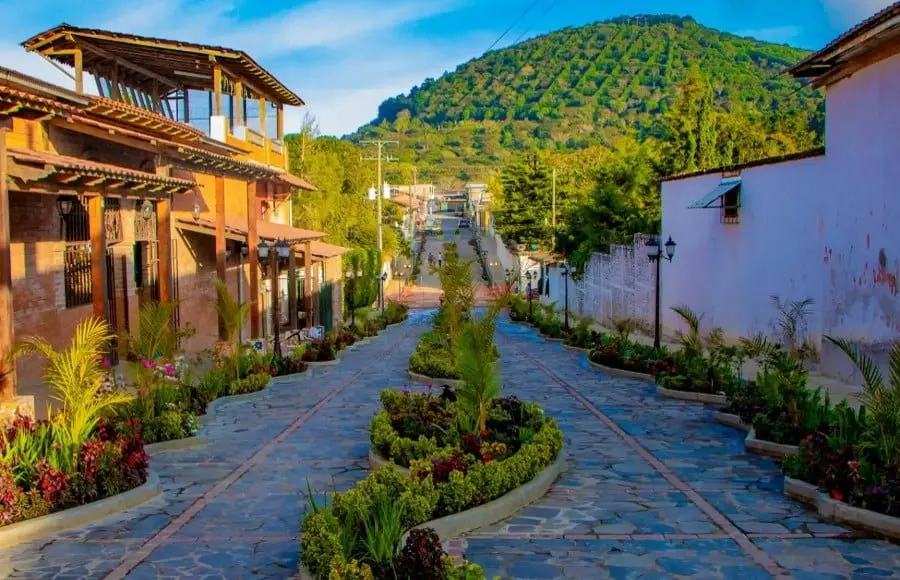
Perched at roughly 1,470 metres in the Apaneca-Ilamatepec mountain range, Apaneca is one of the highest towns in El Salvador — and one of the coolest, literally. While the coast swelters, mornings and evenings here are refreshingly mild, with mist drifting over volcanic ridges and coffee fields. It sits in the department of Ahuachapán, about 90 kilometres from San Salvador, and forms a key stop on the country's much-loved Ruta de las Flores.
The town's name comes from Nahuat and is usually read as a reference to a place of winds — fitting for a ridge-top settlement. Farming here long predates the Spanish; nearby Santa Leticia is an archaeological site with pre-Hispanic stone sculptures tied to the Indigenous communities of western El Salvador. Coffee arrived in the 19th century and never left: plantations still shape the hillsides, the economy and daily life.
There's plenty to fill a weekend. Laguna Verde, a mountain lagoon set in volcanic terrain, is the town's best-known natural attraction, and the smaller Laguna de las Ninfas sits in forested volcanic surroundings — access conditions vary, so check locally before you go. For views over town, hike up Cerro de las Tres Cruces (also called Cerrito Texisal), where three crosses mark the summit. Adventure operators run hiking, mountain biking, ATV and buggy tours through the surrounding mountains.
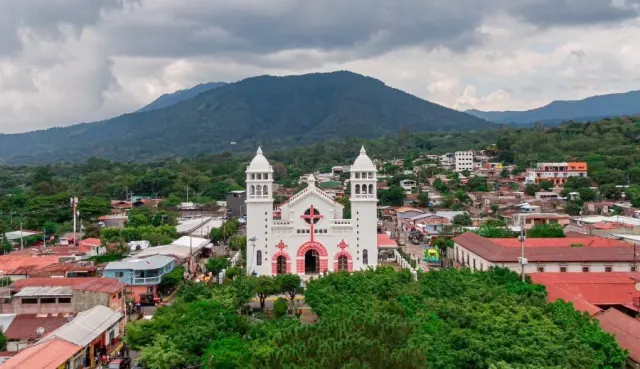
Coffee is the real draw for many visitors. Several farms open their doors for guided tours covering the full process, from growing and harvesting through to processing and roasting — and you can drink the results with a plate of pupusas or tamales in a local café. The town itself is compact and walkable, centred on a park and church with traditional buildings and small family-run shops.
Apaneca also works as a base for the wider Ruta de las Flores. Concepción de Ataco, famous for its colourful murals and artisan shops, is close by, as is Juayúa with its popular weekend food festival and nearby waterfalls. Accommodation ranges from small hotels to mountain lodges with gardens and views, and if you want more options, Ataco and Juayúa both have additional places to stay and eat.
Timing matters mostly for the weather. The dry season runs roughly November to April and offers the most reliable conditions for hiking and sightseeing. From May to October, rain makes the hills intensely green and the mist adds atmosphere, though you'll want a rain jacket. Either way, pack sturdy walking shoes and a light layer — the elevation keeps things cooler than most of El Salvador.
This is a good pick for travellers who want rural El Salvador rather than resort El Salvador: slow mornings, farm-to-cup coffee, volcano lagoons and small-town festivals, all within easy reach of San Salvador by road. Drivers typically head west towards Sonsonate before climbing into the Ruta de las Flores; buses also connect through western El Salvador, but confirm current schedules as they change.