
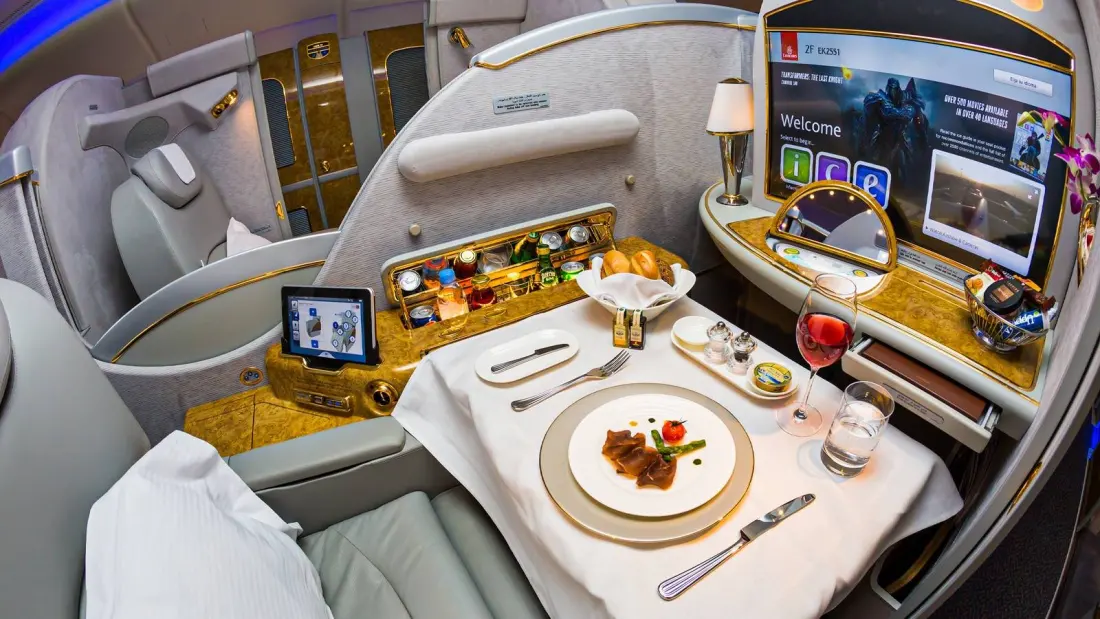
Emirates' A380 first class is aviation's most famous flex: private suites, showers at 40,000 feet, unlimited caviar and Dom Pérignon P2 poured by the glass. Fares reflect the theatre — long-haul one-ways typically start around $8,000-10,000, and ultra-long routes like Dubai to Los Angeles or New York can push past $15,000, sometimes $20,000. Yet the actual cost of all that pampering per passenger is startlingly small.
Industry estimates put Emirates' first class catering spend at roughly $30 or more per passenger, even on a 16-hour flight like EK215 from Dubai to Los Angeles. With just 14 first class suites on the A380, the cabin's total food and drink bill may only hit a few hundred dollars per flight. Add up the retail value on offer — caviar worth around $350, multiple $100 glasses of vintage Champagne, rare Hennessy Paradis at nearly $1,500 a bottle — and a single passenger can consume what looks like well over $1,000 in food and drink alone.
The amenity math tells the same story. Passengers receive a Bulgari amenity kit with a retail value of about $130, hydra-active pajamas at roughly $110, Voya spa products worth around $80, and even a Moleskine notebook and pen. Factoring in airport escorts and chauffeur transfers, the perceived value of the experience climbs beyond $1,600 per person. But airlines buy at scale: wholesale contracts, bulk purchasing, and promotional deals with luxury brands keen on exposure to wealthy flyers mean Emirates may pay only tens of dollars for amenities that would cost a customer hundreds.
The broader flight economics also put things in perspective. A Dubai–LA A380 operation costs an estimated $322,000 to run — fuel alone eats about $192,000 — against roughly $947,000 in potential revenue across 489 seats. Emirates only needs to fill about 34% of the plane to break even, before cargo income even enters the picture.
There's one clever loophole for ordinary travellers: Emirates rarely charges anyone full fare for the cabin. Its Skywards programme lets business class passengers upgrade into first on routes like London–Dubai or New York–Milan for fewer than 40,000 miles in some cases, plus cash and day-of-departure release options. The airline wins by filling empty premium seats; savvy redeemers get five-figure luxury for a fraction of the sticker price.
Why does this matter if you're not flying in a suite? Because it explains how premium cabins work everywhere: the price is anchored to perceived exclusivity — scarcity, branding, choreographed service — rather than the raw cost of the champagne and pajamas. If a $10,000 seat costs the airline a few hundred dollars in extras, upgrades and award redemptions are far better value than they look. For anyone sitting back in economy, where the catering spend is estimated at just $2-5 per head, it's a reminder of where airline money actually goes — and that the gap between what luxury feels like and what it costs is the entire business model.