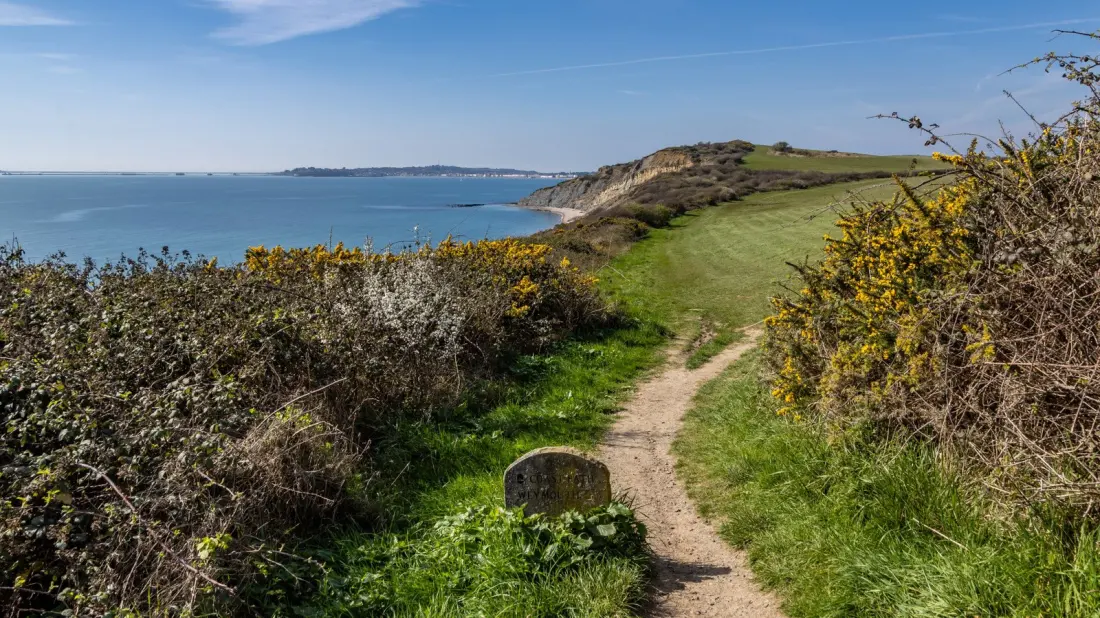
England has quietly pulled off one of the biggest trail projects in the world. In March 2026, King Charles III personally inaugurated the coast path that bears his name: roughly 2,700 miles of waymarked shoreline, billed as the longest coastal trail on the planet. It stitches together about 1,700 miles of existing paths with around 1,000 miles of new route, the result of nearly two decades of work, with the last gaps expected to close by the end of 2026. Crucially for walkers, it also opens up stretches of coastline that were previously private land — no detours inland, no turned-back-at-the-fence moments.
The route is split into eight regional sections, and you don't need to commit to the full circuit to get something great. In the northeast, Longsands Beach near Tynemouth offers half a mile of sand and a surfing scene, while Robin Hood's Bay inside the North York Moors National Park pairs cobbled streets with a pretty beach. The East Anglia leg, within easy reach of London, crosses the Deben Estuary's salt marshes — prime territory for birdwatchers, since several species overwinter there.
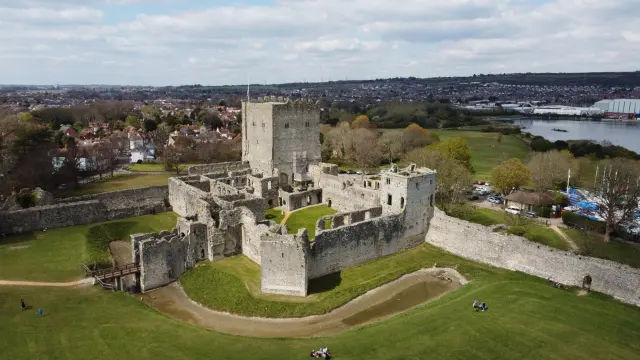
Head southeast and you hit the classics: the White Cliffs of Dover and the wilder Seven Sisters in the South Downs National Park, plus stops in Hastings (about seven miles from the 1066 battlefield) and Brighton with its Victorian pier and exotic Royal Pavilion. The southern stretch loops around the Isle of Wight and passes Portchester Castle in Portsmouth Harbour — Roman fort from the 3rd century, royal palace by the late 1300s.
The southwest delivers the drama. Dorset's Jurassic Coast serves up fossil-rich cliffs and Durdle Door, the famous limestone arch you can reach by a side hike down to a pebble beach. Further along the Bristol Channel, Berrow has a seven-mile beach and a medieval church, Clevedon its 1869 pier, and on a lucky day you might spot dolphins or porpoises in the water. Up on the northwest coast near the Welsh border, Southport and Crosby Beach await — the latter home to Antony Gormley's "Another Place," 100 cast-iron figures standing at the tide line. The final stretch along the remote Solway Coast, tracing Scotland's edge, is all salt marsh, dunes and cliffs.
The long-term play is even bigger. The path connects near the Welsh border with the 870-mile Wales Coast Path, and while Scotland has no official full circuit, most of its land is open to walkers — meaning a complete loop of Great Britain is now a realistic, if ambitious, undertaking.
Who is this for? Anyone who likes their holidays on foot. You can base yourself in one town and walk a section for a few days, or go full end-to-end. The eight-section structure makes trip planning simple: pick a region, walk what suits your fitness and schedule, and the transport links back are usually short.