Day ten of a John Muir Trail thru-hike often marks a small turning point: you've just left Muir Trail Ranch, the last proper resupply before the trail's final stretch, and everything ahead feels wilder. One hiker's account of that exact day captures what the middle of the JMT actually feels like — and it's a useful read for anyone dreaming about California's most famous long-distance walk.
Muir Trail Ranch, usually shortened to MTR by hikers, sits roughly at the halfway mark of the 211-mile trail, tucked along the San Joaquin River in the Sierra Nevada. Hikers can mail themselves buckets of food ahead of time, and the ranch offers hot showers, a cabin for the night and a hiker lounge — a brief return to civilisation in the middle of weeks of dirt. The morning this hiker left, horses were grazing outside the cabin, breakfast was enormous, and the hiker boxes (the communal shelves where people swap out extra supplies) proved they had badly overestimated how much food a week on trail requires. The lesson: pack less, and raid the boxes for what you actually crave — in this case, a large squeeze tube of peanut butter.
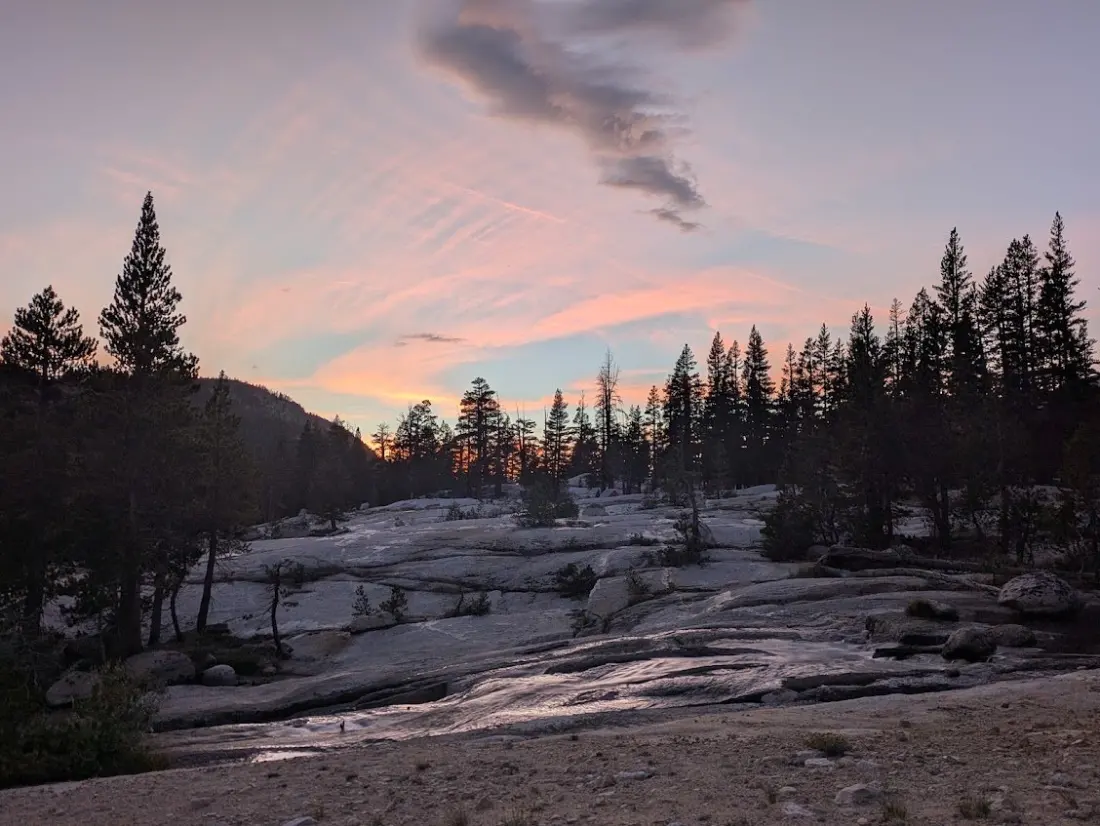
The day itself was a long, gradual climb out of the river valley toward Evolution Valley, one of the trail's best-loved sections. The hiker was retracing ground covered on a Pacific Crest Trail hike the previous year, and the contrast was instructive. Evolution Creek, which had been a waist-deep fording problem the summer before, was now only shin high — manageable in sandals without drama. It was also the last wet crossing of the trip, a reminder that Sierra creek levels swing wildly depending on snowpack and the time of season. By the end of the day they'd pushed to the far edge of McClure Meadow, camping just before dark with Evolution Lakes promised for the following morning and another big-sky Sierra sunset closing things out.
What makes this worth reading if you're considering the JMT is the practical texture. Resupply planning is one of the biggest sources of stress and error on the trail, and this entry underlines a common mistake — sending too much food — along with the fix. It also shows the rhythm of the trail: a slow, late-morning start after a resupply day, steady uphill miles, and camps timed to scenic water features. And it hints at conditions to expect. A crossing that nearly stopped a hiker one year was trivial the next; anyone planning this route should check current creek reports and snowpack before setting dates.
For travellers, the JMT sits at the demanding end of the holiday spectrum — permits are hard-won, the route takes two to four weeks, and you'll need to arrange resupply buckets to ranches like MTR months in advance. But the payoff, even a few days in, is meadows, alpine lakes and sunsets you don't have to share with crowds. Full trip diary over at The Trek.