
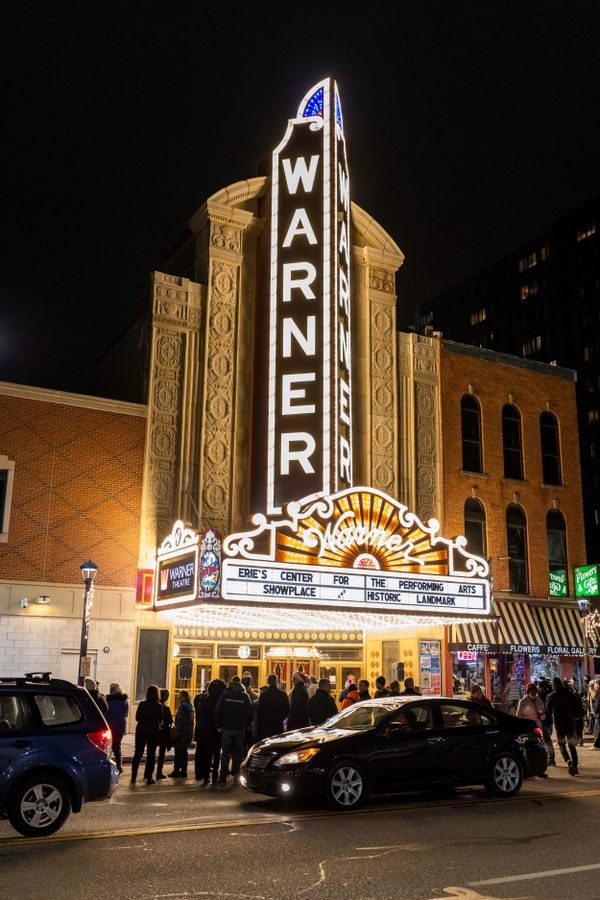
Most of Warner Bros.' 360-plus movie palaces from the studio's golden age closed decades ago. In downtown Erie, Pennsylvania, one of the few survivors is still very much in business — and it's as over-the-top as the day it opened.
The Warner Theatre debuted in 1931, a $1.5 million commission (roughly $33 million in today's money) from Warner Bros. Studios, designed by Chicago architects Rapp & Rapp. The French Renaissance styling is full-on: Persian marble archways, gold-backed mirrors, silver leaf gilding, ruby red curtains, and a famous 10-ton electric marquee once lit by 8,000 bulbs. The studio's design brief for its palaces was, apparently, to be "twice as rich, three times more fanciful than life" — the Warner delivers.
The building stopped screening films in 1976, but instead of fading it changed gears. Restored and expanded over several decades, it kept its original period details while gaining modern sound and lighting, an extended stage, a new orchestra shell, rehearsal space, and a rebuilt marquee. It now anchors Erie's downtown revival, alongside a busy shopping and events district and refreshed green space.
Today the 2,250-seat venue is home to the Erie Philharmonic and the Lake Erie Ballet, and its calendar mixes touring Broadway productions — recent runs have included Chicago, Mamma Mia!, Hairspray and Kinky Boots — with concerts, dance, weddings and graduations. For visitors, the theatre is worth a look even without a ticket in hand: bronze staircase, chandeliers and towering ceilings make the lobby an attraction in itself.
Erie isn't usually top of a US road trip list, which is exactly the appeal. Pair an evening show with the city's lakefront setting on Lake Erie, and you get a slice of 1930s showbiz glamour in a small city that's quietly investing in its downtown. Travellers with a taste for historic cinemas and architecture will find few better-preserved examples still operating.
Practical notes: the concession stand pours beer, wine and mixed drinks alongside the usual popcorn and coffee, and the venue offers ADA-compliant seating with elevators for full accessibility. Check the schedule ahead of a visit — the mix of philharmonic nights, ballet and touring musicals means there's usually something on, but big shows sell out.
Story sourced from Atlas Obscura.