A dusk walk on Secret Beach in southern Oregon nearly ended in tragedy on November 8, when a powerful long-period swell dragged a visiting woman into the Pacific. She ended up clinging to rocks 50 to 70 feet offshore, swept 200 feet down the coast, while her husband called 911 at 5:18 P.M. as light faded.
The rescue fell to Curry County Aquatic Safety — an operation of exactly two lifeguards, Luke Martinez and Shannon Ingram, responsible for roughly 100 miles of coastline plus several rivers. Ingram, wetsuited and helmeted, reached the beach just after sunset, judged the churning water safe enough to enter, swam out to the stranded woman, checked her for injuries and brought her back in with a rescue tube. The woman walked off the beach with assistance and was hospitalised for evaluation.
The backdrop matters: the National Weather Service had a high surf warning up that day, with breaking waves of 25 to 33 feet forecast. Big winter swells are a regular feature of the Pacific coast from October through March, when offshore waves can top 30 feet. November 8 was busy elsewhere too — at Cannon Beach a young girl was nearly swept away, and at Winchester Bay two people scrambled ashore while their dog was briefly washed out to sea. Another round of 30-to-35-foot waves is forecast for November 13 and 14, with officials telling everyone to stay off beaches, rocks, jetties and piers.
Martinez's warning is worth remembering if you're drawn to wild coastlines: beachgoers watch a set of smaller waves, think they know how far the water reaches, and then a longer-period swell surges far further up the sand than anything they've seen. Low tide offers no protection — the rescue happened with the tide out, visibility poor and surges running up and down the whole beach.
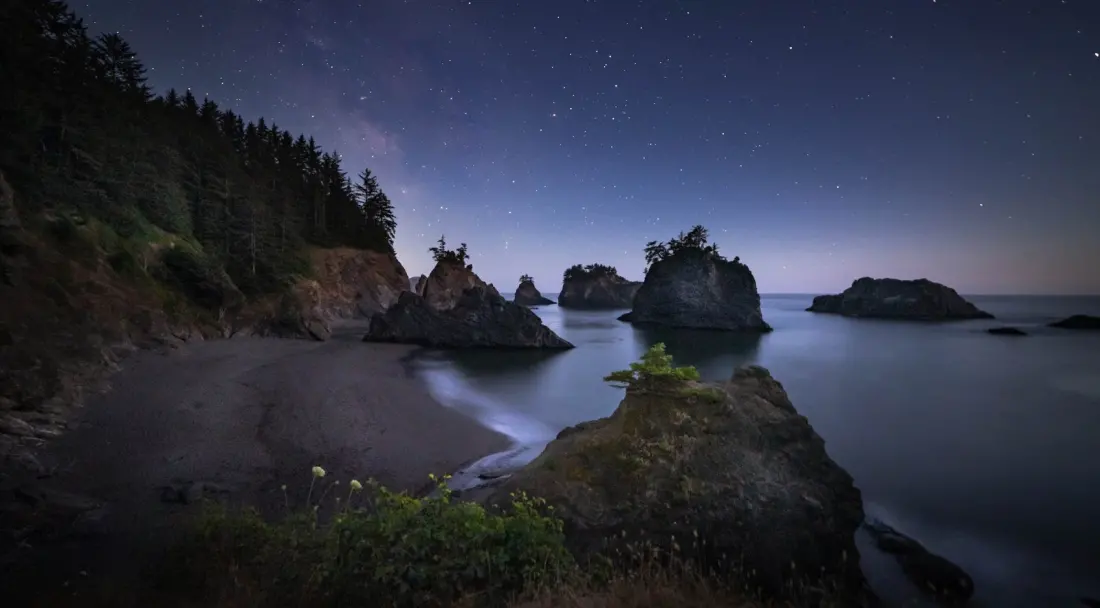
Secret Beach sits in the Samuel H. Boardman State Scenic Corridor, a 12-mile ribbon of cliffs, hidden coves and sea stacks about 20 miles north of the California border. It has boomed on social media, which is exactly the problem: the photography is spectacular, but the geography is genuinely rugged. Martinez compares it to tourists tackling big mountains without appreciating what they're taking on.
For travellers, the takeaway is simple. Oregon's southern coast is worth the trip — but during winter storm season, watch big surf from designated viewpoints, keep well back from the waterline, never turn your back on the ocean, and don't assume a calm interval means the risk has passed. Help may be a long way off: two lifeguards cannot cover a hundred miles of coast.