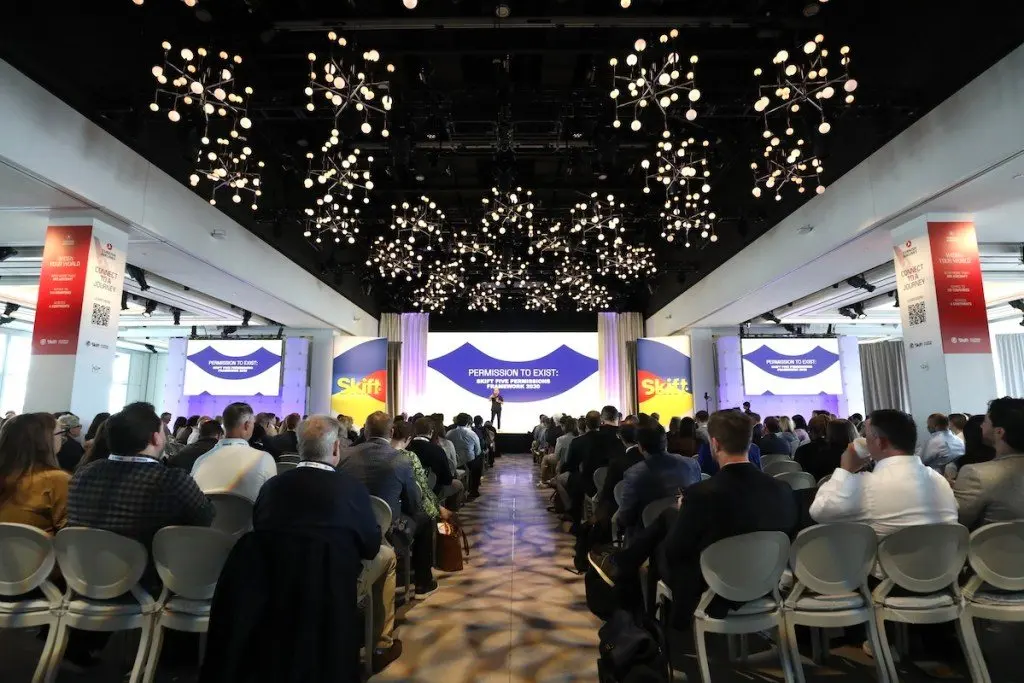
The travel industry's growth numbers look healthy, but the shape of that growth is shifting in ways that make old playbooks useless. That's the backdrop for this year's Skift Global Forum (September 22–24), which organises its entire programme around five concrete decisions travel leaders are wrestling with right now. For travellers, these decisions will quietly determine how we book, what we pay, and how much human service we get.
The first tension is incumbency versus reinvention. Established brands are getting real returns from AI on efficiency — Airbnb cut its support cost per booking by around 16% in a year — but almost none from new AI-driven bookings: AI agent referrals account for fewer than 1% of room nights at Booking.com. Meanwhile, venture capital has swung hard the other way, with AI-enabled startups taking 45% of travel funding by mid-2025, up from 10% in 2023. Brian Chesky is rebuilding Airbnb as AI-native while Booking Holdings and Expedia protect profitable distribution empires. Watch this space.
Second, the booking funnel itself is changing. Skift Research finds discovery is moving from search-scroll-compare to ask-shortlist-decide, and 30% of travellers now use AI extensively for trip planning — a share that more than doubled in a year. Yet trust to actually pay through AI lags: sentiment on AI booking is net negative, and direct and OTA channels remain most trusted. Brands face a dilemma: structure their data so AI agents can find them (losing some control over their story) or guard the direct funnel and risk invisibility.
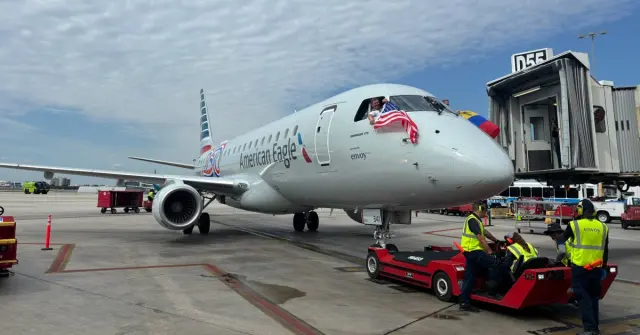
Third, premium versus volume. Delta's premium cabin out-earned economy for the first time in company history in Q4 2025, with premium revenue up 7% while main cabin fell 5%. American and United are reconfiguring aircraft so premium seats make up roughly half of future cabins. The catch: 62% of global travellers say cost will make them adjust or cancel plans. Betting on the affluent few is the surest revenue story today — and a wager that holds only if their demand survives the next downturn.
Fourth, human versus machine. Hotels want to trim headcount with AI, but if personal service becomes something only luxury guests can afford, mid-market brands lose a differentiator that's nearly impossible to rebuild once frontline staff are gone. AI investment is flowing to reservations efficiency even as labour shortages persist exactly where human touch matters most.
Finally, certainty versus speed. U.S. domestic travel has stalled at 2019 levels in real terms while international volume dropped 5.5%, and forecasters pushed full inbound recovery from 2025 all the way to 2029 in one revision. Geopolitics keeps resetting the map quarterly, forcing leaders like Accor's Sébastien Bazin to commit capital without reliable forecasts.
Why does this matter to holidaymakers? Because these five decisions decide whether your next trip is discovered by an AI agent, priced into a thinner economy cabin, or handled by a chatbot instead of a person. The industry's answers are being made now — the forum's line-up, from Chesky and Booking's Glenn Fogel to Hilton's Christopher Nassetta and Carnival's Christine Duffy, is where the fault lines show.
Story via Skift.