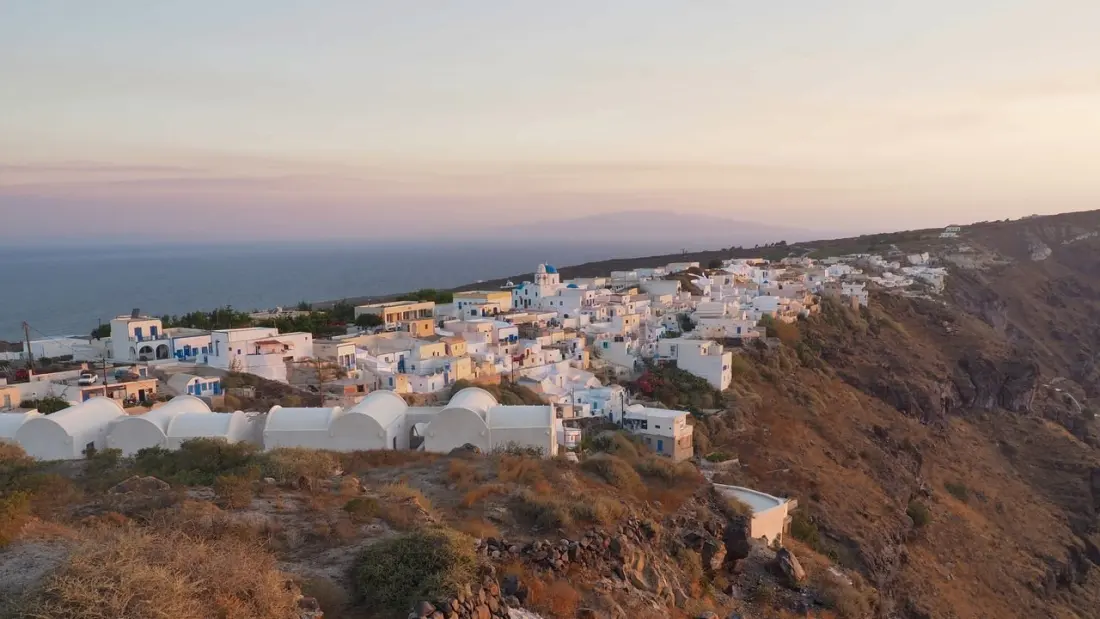
Santorini has two lives, according to winemaker Michael Kouloglou — and the second one starts around October. Kouloglou, who moved from Piraeus to the island eleven years ago and now makes Orycton, a small-batch Assyrtiko that won at the 2023 Decanter World Wine Awards, lives in the quiet eastern village of Monolithos. His verdict on timing: come anytime from late September through May, and you'll meet the Santorini that locals actually know.
His argument is simple. Summer Santorini belongs to millions of day-trippers and cruise crowds. Off-season Santorini belongs to hikers, winery visitors and people who want to wander small villages without a schedule. By late November the seasonal workers have gone — locals say "the last boat has sailed" — and the island settles into long conversations and unhurried evenings.
Autumn has its own rhythm. Harvest ends, the fierce Meltemi wind softens, evenings turn sweater-cool, and restaurants throw closing parties where friends resurface after months of work. The party scene then shifts to the year-round villages of Karterados and Messaria rather than the caldera viewpoints.
There's food to plan around, too. Kouloglou's local pick is Pentozali, a taverna serving meze from Santorini and Crete that fills up with vineyard workers at the end of the day. The island staple is fava with sautéed onions, and if you time a spring visit right, you might score an omelette made with wild asparagus — only available when someone has foraged it that morning.
For a quieter kind of sightseeing, he points to the Askitaria, old stone monk dwellings perched on the cliff between Perissa and Kamari. In spring, locals sit there for hours looking out at the sea towards Anafi and Ios.
The surprise for many travellers: the island stays genuinely active through winter. Kouloglou kitesurfs on the island's consistent winds and surfs on winter swells — and when the sea is empty of catamarans and cruise ships, paddleboarding inside the caldera past the old quarries becomes something special.
Expect warm, sunny days through autumn and winter, with one caveat: March is moody, swinging between strong winds and cold snaps. And it's worth noting how deeply island life runs on Orthodox tradition — villages hold a panigyri festival for each chapel's patron saint, and farmers still time vineyard work by saints' days rather than the calendar. Visitors in summer can catch these feasts running late into the night with music, dancing and plenty of local wine.
For anyone who has written Santorini off as a summer-only, queue-for-the-Oia-sunset destination, this is a compelling case for the opposite trip: quieter lanes, working tavernas, vineyards with room to breathe, and locals who actually have time to talk.