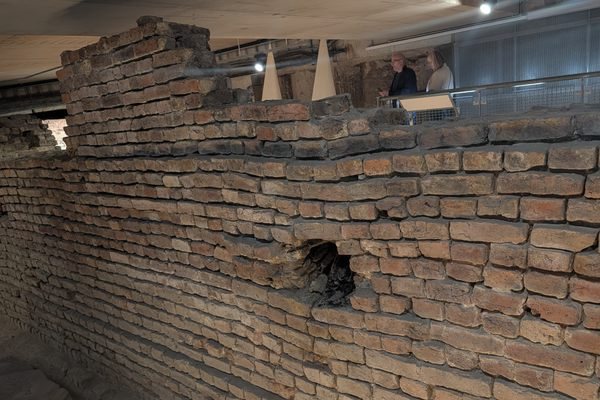
Head down an unassuming stairwell inside Liverpool ONE, the city's big open-air shopping complex, and you'll find something no mall anywhere else can claim: the brick walls of the world's first commercial enclosed dock, preserved in a subterranean chamber beneath the stores.
Liverpool received its royal charter in 1207 with port ambitions, but for centuries it underperformed. Chester, up the river, stole much of its trade, and loading a ship was painfully slow work. Vessels anchored in the tidal estuary while small boats ferried cargo back and forth — a single ship could take weeks to unload.
Everything changed with a bold engineering proposal in 1710: dam the tidal estuary beside the town and build a huge enclosed basin inside it. When the brick-lined dock opened in 1715 — roughly 100 by 200 metres — ships could finally moor, unload and reload within about a day, regardless of the tide. That simple idea rewrote the economics of maritime trade and set Liverpool on its path to becoming one of the world's great ports, the departure point for millions of emigrants and a powerhouse of the British Empire.
The Old Dock, as it's now known, was overtaken by bigger facilities through the late 1700s and was filled in by 1825, with a grand customs house built on top. That building was destroyed in German bombing during the Second World War, and the original dock walls re-emerged during the redevelopment that eventually created Liverpool ONE. Today you can glimpse them through a porthole window at street level, though honestly there's not much to see that way.
The proper way to experience it is the guided tour run by National Museums Liverpool, which takes you into the chamber itself to stand beside 18th-century brickwork in the middle of a modern city. One catch: tours run irregularly and frequently sell out, so check the schedule and book ahead rather than turning up on the day. Pair it with the Merseyside Maritime Museum on the Albert Dock and you get the full arc of Liverpool's seafaring story — from experimental dock to global port — in a single visit.
It's a quirky, genuinely historic detour for anyone who thinks they've done Liverpool. Five minutes from the high street, you're looking at the structure that invented modern dock engineering.