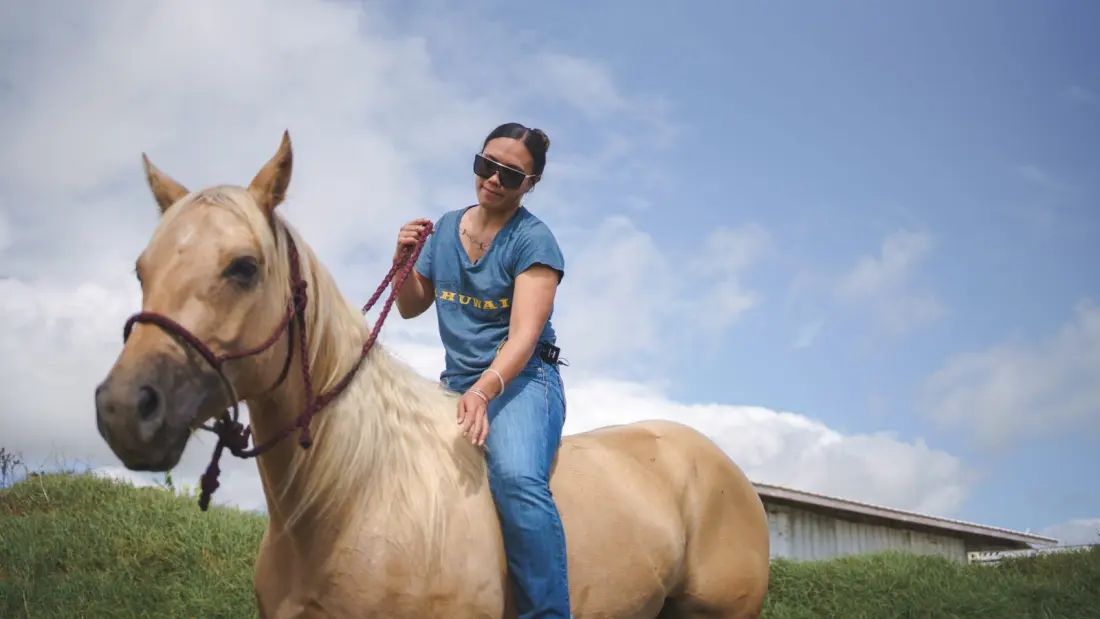
On a ranch homestead outside Waimea on Hawaii Island, a young paniolo (Hawaiian cowboy) named Nahe Keakealani is showing that conservation can look a lot like cowboy life. Adventure.com spent a day with her for its 2026 profile of the island partnership between ranchers and forest defenders, and the portrait that emerges is refreshingly unpolished: a gun couch set up for target practice in a field, a diva-ish horse named Gypsy, a loyal dog called Sister shadowing her every step, and a fledgling wiliwili tree — a deciduous species found only on this island — planted with care.
What makes Nahe interesting to travellers is not just the work but the worldview behind it. Her mornings start with kilo, the Hawaiian practice of quiet, close observation of nature. Reading the clouds, she can call rain hours before it arrives. She describes kilo as almost prayer time, and pairs it with aloha ʻāina — love of the land. In her framing, you cannot love the land without first understanding how it moves, and you cannot understand it without slowing down enough to watch.
That mindset sits at the heart of a broader story on Hawaii Island: the links between paniolo ranching culture and native forest conservation. Waimea, in the island's lush green upcountry, has long been ranch country — Hawaii's cowboys predate the American West's by decades. The partnership highlighted here suggests the next chapter belongs to a generation like Nahe's, blending traditional ecological knowledge with hands-on land stewardship.
For visitors, this is a nudge to experience the Big Island beyond the beaches. Upcountry Waimea offers paniolo heritage, working ranches, native tree species you will not see anywhere else on Earth, and a chance to learn concepts like kilo and aloha ʻāina from the people living them. Even a simple stop to watch the clouds roll over the Kohala hills becomes richer once you know it is a practice, not just weather-watching.
This is one for slow travellers, culture-curious hikers and anyone who wants their Hawaii trip to mean more than a resort pool. Support ranch-to-table food in Waimea town, ask about conservation-focused ranch tours, and give the native forests the same attention locals like Nahe give them. The original reporting comes from Adventure.com.