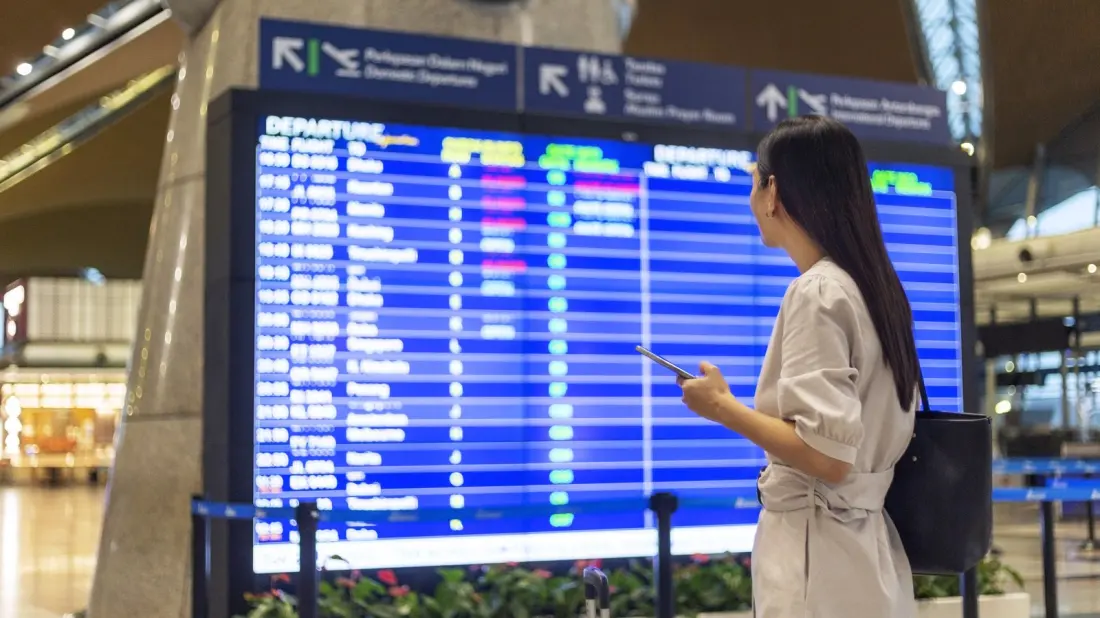
A delay notice pops up on your phone the night before travel. Tempting to sleep in, right? Not according to the people who work the cabin. Delta flight attendant Taylor Shearer's advice, shared in a widely circulated TikTok, is blunt: always show up at the airport for the originally scheduled departure time, delay or no delay. The logic is simple — delays aren't set in stone, and flights do get un-delayed.
The numbers back that up. After crunching data on more than 22 million flights in 2025, the tracking app Flighty found that the average delay worldwide was just 23 minutes. And the US Bureau of Transportation Statistics sorts every delay into five buckets: carrier issues, extreme weather, late-arriving aircraft, security problems, and National Aviation System issues. Late-arriving aircraft is the biggest single cause, responsible for pushing back 10.9% of all US flights in July 2026. That kind of delay can evaporate fast once a plane lands early or gets swapped.
So what should you actually do when the dreaded alert lands? If you're already at the airport, head straight to your airline's service desk — but expect a queue, because everyone else had the same idea. The faster route is often digital: your airline's app can connect you to a chat agent, and flight trackers plus weather apps frequently flag delays before any official announcement comes over the tannoy.
Once you've got the latest information, resist the urge to wander far from the gate. Weather clears, mechanical issues get fixed quicker than expected, and suddenly your 6pm departure is back on schedule. Travellers on Reddit report exactly this — being told a flight was delayed, only for the airline to snap back to the original itinerary an hour later.
Use the waiting time productively instead. The US Department of Transportation's Cancellation and Delay Dashboard spells out what each airline owes you when things go wrong: free rebooking, meal vouchers, sometimes cash. Worth knowing before you need it. One caveat for American travellers: from October 19, a new US rule will reclassify certain disruptions as outside airline control, making compensation harder to claim. If your trip involves US carriers, read the fine print now rather than mid-crisis.
The takeaway for anyone with a flight in their future: treat a delay alert as information, not an instruction to change plans. Keep your original timing, stay reachable, lean on the app, and hold your position near the gate. It's less fun than a long duty-free browse, but it's how you avoid being the passenger sprinting to a gate that reopened when nobody expected it to.