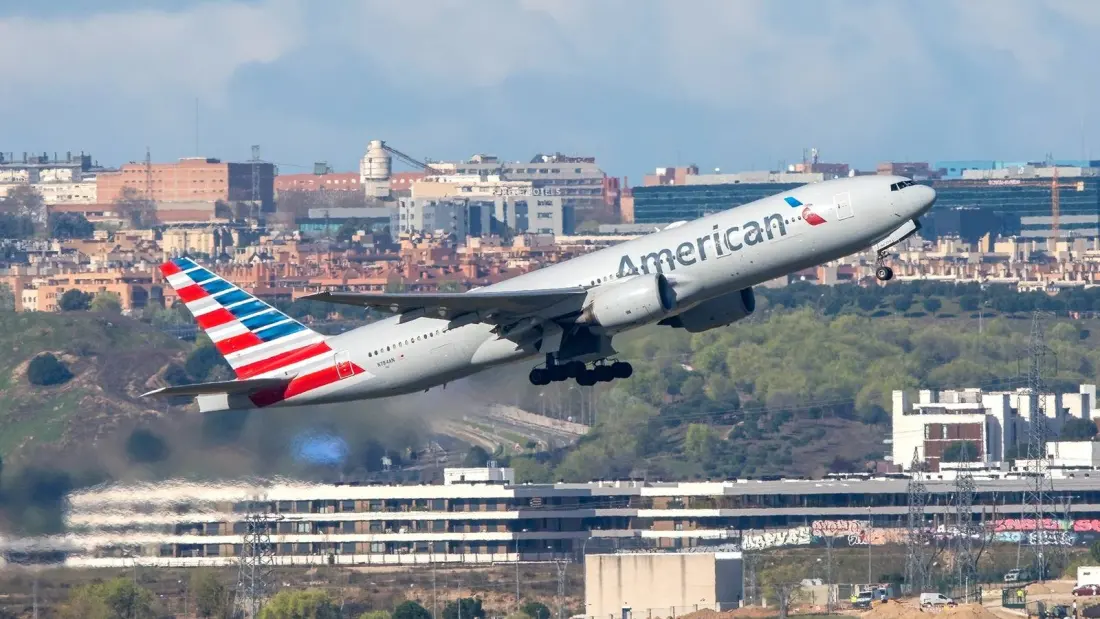
A ten-and-a-half-hour flight to Buenos Aires ended barely two hours after it began last Friday night, when an American Airlines Boeing 777 turned back over the Gulf of Mexico because a lavatory overflowed on board.
Flight AA997 left Dallas/Fort Worth at 8:12 PM on November 20 — 42 minutes behind schedule — bound for Ezeiza International Airport, with arrival set for 9:00 the next morning. About an hour into the leg, the crew elected to return. Flightradar24 flagged the reason as a lavatory overflow, and the aircraft, a 26-year-old 777-200ER registered N782AN, touched back down at DFW at 10:20 PM. American hasn't said how many people were on board or what caused the problem.
It's the second lavatory-related drama for an American 777-200ER in roughly six weeks. On October 6, a 777 flying from Madrid to Dallas diverted to New York JFK after six of its eight toilets failed, leaving 287 people to share two working lavs for the rest of the trip. And just over a week before the Dallas turnback, a Frontier flight from Denver to Detroit diverted to Chicago O'Hare after a leaking faucet flooded the cabin floor — the crew even declared a Mayday, telling controllers they were worried about the electronics.
Why does a bathroom end a flight? Airlines are permitted to dispatch planes with some lavatories already out of service, but the plumbing has to be isolated, the door locked and the unit signed as unusable. A fault that develops mid-flight is different: an overflow counts as a biohazard risk, potentially spreading wastewater onto the cabin floor, and a leak near electrical systems raises real safety questions. American's 777-200ERs seat 273 passengers — 37 in business, 24 in premium economy, 212 in economy — across about eight lavatories, roughly 34 people per toilet on a full flight.
Returning to DFW was the sensible call. It's American's largest hub, with maintenance staff and spare widebody aircraft on hand, so stranded passengers had the best possible chance of being re-accommodated quickly. One open question: with fuel loaded for a 10-hour flight, the crew either dumped fuel before landing or made an overweight landing, which triggers a maintenance inspection. American has not confirmed which happened.
For travellers, the practical takeaway is modest but real. If you're flying American to Buenos Aires this winter, the route runs daily from Dallas/Fort Worth on the 777-200ER, with additional service from New York JFK (one daily 777-300ER flight) and Miami (two daily flights). Mechanical turnbacks are rare, and aircraft age alone doesn't predict them — but if a long-haul flight does return to a major hub, rebooking options are far better than at a small diversion airport. Keep essentials in your cabin bag, track your flight number in an app, and know that a same-evening rebooking is often realistic when the airline has spare metal at its hub.